
used car buying guide USA shoppers need more than a clean photo and a payment estimate. The safer purchase comes from a repeatable process: budget the full cost, verify the VIN, check title and recalls, inspect the car, compare financing, read every fee, and keep the paperwork clean before money changes hands.
This Carvul pillar is built for U.S. drivers who want a practical path through dealer lots, private sellers, and online listings. It does not replace legal, financial, or mechanical advice, but it gives buyers a clear checklist for avoiding hidden costs and weak deals.
Quick answer for U.S. buyers
- Used car buying guide budget: compare full ownership cost, not only payment.
- Used car buying guide VIN: check the VIN before visiting the seller.
- Used car buying guide recalls: use NHTSA before relying on the vehicle.
- Used car buying guide title: confirm owner, lien, mileage, and brands.
- Used car buying guide inspection: pay for a mechanic before signing.
- Used car buying guide test drive: use city, highway, braking, and parking checks.
- Used car buying guide financing: compare APR, term, fees, and total interest.
- Used car buying guide fees: ask for the written out-the-door price.
- Used car buying guide insurance: quote the exact VIN before purchase.
- Used car buying guide paperwork: keep every promise and fee in writing.
- Used car buying guide online: verify delivery, returns, and title timing.
- Used car buying guide final step: walk away if proof does not match the promise.
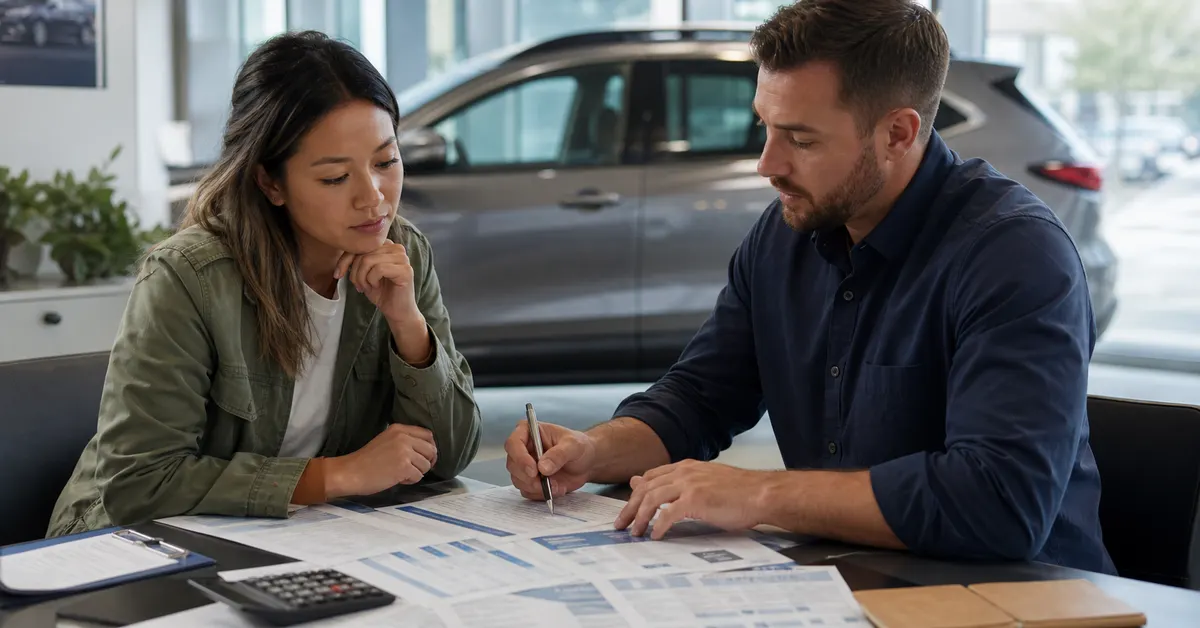
In this used car buying guide USA
- 1. Define the real job of the vehicle
- 2. Set a total ownership budget
- 3. Choose the buying channel before choosing the car
- 4. Build a shortlist from reliability and safety first
- 5. Read the listing like a buyer, not a fan
- 6. Verify the VIN before you travel
- 7. Check open recalls through NHTSA
- 8. Use the FTC Buyers Guide at the dealer
- 9. Separate vehicle price from financing
- 10. Ask for the out-the-door price in writing
- 11. Compare dealer fees and add-ons
- 12. Review the title before money changes hands
- 13. Study the vehicle history report without trusting it blindly
- 14. Check service records and maintenance timing
- 15. Inspect the car in daylight
- 16. Test drive with a planned route
- 17. Pay for an independent inspection
- 18. Negotiate from evidence, not pressure
- 19. Protect yourself with safe payment steps
- 20. Read every warranty and service contract line
- 21. Decide whether GAP insurance fits the loan
- 22. Confirm insurance before signing
- 23. Check fuel economy and real operating cost
- 24. Plan registration, taxes, and state paperwork
- 25. Prepare the first 30-day ownership plan
- 26. Know the red flags that mean walk away
- 27. Make the final decision from evidence
Quick decision table
| Stage | Buyer action | Why it matters |
|---|---|---|
| Define the real job of the vehicle | A used car buying guide USA process starts with the job the vehicle must do every week. | Write down proof before you decide. |
| Set a total ownership budget | The sticker price is only one line in the deal. | Write down proof before you decide. |
| Choose the buying channel before choosing the car | Dealer, private-party, certified pre-owned, rental resale, and online retailers each change the risk profile. | Write down proof before you decide. |
| Build a shortlist from reliability and safety first | A shortlist should be built from model years, safety equipment, repair history, parts availability, and insurance cost. | Write down proof before you decide. |
| Read the listing like a buyer, not a fan | A good listing should show mileage, VIN, title status, accident disclosure, major options, photos from several angles, and clear seller contact details. | Write down proof before you decide. |
| Verify the VIN before you travel | Ask for the VIN early and compare it against the listing, dashboard plate, driver-door sticker, title, and service records. | Write down proof before you decide. |
| Check open recalls through NHTSA | Use the official <a href="https://www. | Write down proof before you decide. |
| Use the FTC Buyers Guide at the dealer | For dealer purchases, read the window Buyers Guide and compare it to what the salesperson says. | Write down proof before you decide. |
1. Define the real job of the vehicle
A used car buying guide USA process starts with the job the vehicle must do every week. Write down commute miles, parking limits, weather, child seats, cargo needs, highway use, and repair tolerance before you browse listings. This protects you from buying a vehicle that looks exciting online but does not fit daily life.
A student commuter, first-time driver, rideshare worker, and family buyer should not use the same shortlist. Make the purpose clear, then remove any model that fails that purpose even if the price looks tempting. A practical fit usually beats a flashy trim when ownership costs begin.
2. Set a total ownership budget
The sticker price is only one line in the deal. A strong used car buying guide USA checklist includes sales tax, registration, title fees, insurance, fuel, tires, maintenance, inspection, and a repair reserve. If the monthly payment leaves no room for repairs, the car is not affordable yet.
Use a simple rule before visiting a seller: know your maximum out-the-door number and your monthly ownership ceiling. That ceiling should include insurance and expected maintenance, not just the lender payment. This makes negotiations calmer because you are comparing full cost, not emotion.
3. Choose the buying channel before choosing the car
Dealer, private-party, certified pre-owned, rental resale, and online retailers each change the risk profile. Dealers may offer easier paperwork and financing, while private sellers may offer lower prices but require more title and payment discipline. Online sellers may add delivery and return-policy details that must be read closely.
Do not treat every listing equally. If you need financing, registration help, or a limited warranty, a dealer may be worth a higher price. If you can verify title, pay safely, and arrange inspection, a private seller may work. Match the buying channel to your skill level.
4. Build a shortlist from reliability and safety first
A shortlist should be built from model years, safety equipment, repair history, parts availability, and insurance cost. Start with vehicles that fit your budget and then remove models known for expensive repairs in the exact years you are shopping.
Carvul already separates budget-focused lists such as best used cars under $10,000 and reliable used cars under $15,000. Use those pages to narrow choices, then use this used car buying guide USA process to judge the individual vehicle.
5. Read the listing like a buyer, not a fan
A good listing should show mileage, VIN, title status, accident disclosure, major options, photos from several angles, and clear seller contact details. Vague phrases like “needs nothing” or “minor issue” are not proof. Missing information is not always fraud, but it is always a reason to slow down.
Look for mismatches: luxury photos with no service records, low price with unclear title, new tires hiding alignment wear, or a seller who avoids VIN questions. Save screenshots of the listing before negotiating so the seller cannot quietly change terms later.
6. Verify the VIN before you travel
Ask for the VIN early and compare it against the listing, dashboard plate, driver-door sticker, title, and service records. A VIN mismatch is a serious warning sign. The VIN is the thread that connects recalls, title events, mileage history, insurance records, and repair invoices.
If the seller refuses to share the VIN before a reasonable in-person meeting, choose another vehicle. A legitimate seller may want basic privacy, but the VIN is normally required for insurance quotes, loan checks, recall lookup, and vehicle history research.
7. Check open recalls through NHTSA
Use the official NHTSA recall lookup before purchase. Recalls do not automatically make a car bad, but an unrepaired safety recall changes your timing and risk. Ask whether the recall repair is available, whether parts are in stock, and whether a dealer has documented completion.
A used car buying guide USA decision should treat recalls as a negotiation and safety issue. If a recall is open, confirm the repair path before relying on the car for commuting, family trips, or teen driving. Keep screenshots of recall results with your purchase file.
8. Use the FTC Buyers Guide at the dealer
For dealer purchases, read the window Buyers Guide and compare it to what the salesperson says. The FTC guidance on buying a used car from a dealer explains why written warranty language matters. Verbal promises are weak if the final paperwork says something different.
If the Buyers Guide says “as is,” assume you are taking more repair risk. If it lists a warranty, read what systems are covered, who pays diagnosis, where repairs must be done, and whether there is a deductible. Ask for a copy before signing.
9. Separate vehicle price from financing
A low payment can hide a long term, high APR, add-ons, or negative equity. Negotiate the vehicle price and out-the-door price before discussing monthly payment. Then compare dealer financing with a bank, credit union, or online lender preapproval.
Use Carvul’s used car financing guide and the CFPB auto loan resources to compare APR, term, fees, and total interest. The right question is not “Can I afford the payment?” but “Is the total cost reasonable?”

10. Ask for the out-the-door price in writing
The out-the-door price includes the vehicle price, taxes, title, registration, documentation fee, dealer add-ons, and any required charges. Ask for one written number before visiting or test driving. If the number changes later, ask what changed and why.
This is where many U.S. buyers lose control. A used car buying guide USA plan should compare written quotes line by line. If a dealer refuses to discuss total price and only talks payment, you do not yet have a real offer.
11. Compare dealer fees and add-ons
Dealer fees vary by state and store. Some are unavoidable government fees, some are dealer documentation fees, and some are optional products such as service contracts, paint protection, anti-theft packages, or prepaid maintenance. The buyer should separate legal fees from profit add-ons.
The satellite guide on used car dealer fees and out-the-door price will go deeper, but the rule here is simple: every fee needs a name, price, purpose, and written explanation. If it is optional, you can decline it.
12. Review the title before money changes hands
The title should match the seller, VIN, mileage disclosure rules, lien status, and state requirements. Branded titles such as salvage, rebuilt, flood, or lemon-law buyback can change insurance, financing, resale value, and safety risk.
Private-party buyers should be especially careful. A seller who says the title is “coming later,” “in someone else’s name,” or “easy to fix” is asking you to accept paperwork risk. Walk away unless the title process is clear and legal in your state.
13. Study the vehicle history report without trusting it blindly
A vehicle history report can reveal title brands, odometer events, prior registrations, auction activity, and reported accidents. It is useful, but it is not a mechanical inspection and it may miss repairs that were paid privately.
Use the official NMVTIS vehicle history information to understand title-history limits. The detailed satellite on vehicle history report used car checks should support this step with examples of red flags and false comfort.
14. Check service records and maintenance timing
Records are stronger than promises. Ask for oil-change history, tire replacement, brake work, battery age, transmission service, timing belt service if applicable, and major repairs. A well-kept older car can be safer than a newer car with no maintenance trail.
If records are missing, price the risk. You may need a baseline service immediately after purchase. Carvul’s used car maintenance cost plan can help estimate what to budget during the first month and first year.
15. Inspect the car in daylight
Inspect body panels, tire wear, glass, lights, interior controls, fluid leaks, underbody rust, warning lights, and signs of poor repair. Daylight helps reveal mismatched paint, uneven gaps, worn tires, and interior abuse that can disappear in dark photos.
Use the full used car inspection checklist before you commit. A used car buying guide USA process should never rely only on seller photos. Photos help screen cars, but in-person inspection confirms condition.

16. Test drive with a planned route
A short loop around the block is not enough. Your route should include cold start, neighborhood speeds, highway speed if possible, braking, parking, turns, rough pavement, reverse gear, and climate controls. Listen before turning on music.
The satellite used car test drive checklist will cover this deeply, but the core idea is simple: drive the car the way you will own it. A car that feels fine at 25 mph may reveal problems at highway speed or during repeated stops.
17. Pay for an independent inspection
A pre-purchase inspection is one of the best safeguards in the used-car process. A mechanic can check leaks, suspension, brakes, tires, scan codes, prior repairs, and upcoming maintenance. Even a good-looking car can hide expensive work.
If the seller blocks an inspection without a good reason, that is a warning sign. If the vehicle is far away, ask for a mobile inspection service or choose a seller with a return window that gives you enough time for a professional check.
18. Negotiate from evidence, not pressure
Use inspection results, tire age, maintenance gaps, comparable listings, out-the-door quotes, and financing offers to negotiate. Avoid emotional arguments. A calm buyer who can show repair cost or market comparison has more leverage than a buyer who only asks for a discount.
Decide your walk-away number before the conversation starts. If the seller says another buyer is waiting, that may be true, but pressure is not proof of value. Good deals survive reasonable questions. Bad deals usually demand speed.
19. Protect yourself with safe payment steps
Payment safety matters most in private-party deals and remote purchases. Avoid carrying large cash amounts alone. Use a bank branch, cashier’s check verification, escrow service when appropriate, or lender-controlled payment. Confirm the title and lien release before funds are final.
Never send irreversible payment to a seller you have not verified. Online marketplace scams often use urgent shipping stories, fake escrow pages, or prices far below market. A careful used car buying guide USA routine treats payment as part of security, not just convenience.
20. Read every warranty and service contract line
A service contract is not the same as a factory warranty. Read coverage, exclusions, waiting periods, claim limits, deductible, repair-network rules, cancellation rights, and transfer terms. Ask whether the product is optional and how it changes the total price.
If a warranty sounds valuable, ask for the full contract before signing. Do not rely on a brochure or verbal summary. The expensive exclusions are often in the details: pre-existing conditions, wear items, diagnostics, maintenance neglect, and non-covered components.
21. Decide whether GAP insurance fits the loan
GAP insurance may help when the loan balance could exceed the vehicle’s value after a total loss. It is not automatically needed for every used-car buyer. The decision depends on down payment, loan term, depreciation, insurance settlement risk, and your ability to absorb a balance.
Compare dealer GAP pricing with credit union or insurer options. Carvul’s GAP insurance on a used car explains when it can help and when it may be unnecessary. Make the decision from numbers, not fear.
22. Confirm insurance before signing
Get insurance quotes using the exact VIN before purchase. Premiums can change by model year, trim, engine, safety equipment, theft risk, location, driver profile, and lender requirements. A car with a good price can still be expensive to insure.
If financing is involved, the lender may require comprehensive and collision coverage. Add that cost to your ownership budget before agreeing to the deal. Insurance surprise is one of the fastest ways a cheap used car becomes stressful.
23. Check fuel economy and real operating cost
Use FuelEconomy.gov to compare expected fuel cost between shortlisted models. For trucks, SUVs, hybrids, and older luxury vehicles, fuel and tire costs can change the real budget more than buyers expect.
Do not compare only miles per gallon. Consider premium-fuel requirements, tire size, brake cost, battery age, hybrid system coverage, and local fuel prices. The cheapest purchase can become the more expensive vehicle after a year of daily use.
24. Plan registration, taxes, and state paperwork
Every state has its own registration, title, emissions, inspection, temporary tag, and sales-tax rules. Before buying out of state or from a private seller, check what your DMV requires and how fast you must complete the transfer.
This step prevents a common headache: owning a car you cannot legally drive yet. If the seller promises that paperwork is simple, verify it yourself. State requirements matter more than seller confidence.
25. Prepare the first 30-day ownership plan
After purchase, schedule a baseline inspection, fluid check, tire-pressure check, recall confirmation, insurance file review, and maintenance calendar. Keep copies of the bill of sale, title, loan papers, warranty documents, inspection report, and service receipts.
This first month is where a used car buying guide USA process turns into ownership discipline. A clean file helps with warranty claims, resale value, tax questions, insurance claims, and future repairs.
26. Know the red flags that mean walk away
Walk away from title confusion, VIN mismatch, seller pressure, refusal of inspection, hidden fees, flood smell, severe rust, warning lights that are dismissed as “sensors,” payment requests before verification, or a seller who will not put promises in writing.
Carvul’s guide to avoiding a bad used car expands these red flags. The important mindset is simple: one serious warning is enough to pause. There will always be another listing.
27. Make the final decision from evidence
Before signing, gather the VIN check, recall result, history report, inspection notes, test-drive notes, insurance quote, financing terms, out-the-door price, title review, and first-month maintenance estimate. If those pieces still support the deal, you can move forward with more confidence.
The best used car buying guide USA outcome is not the lowest possible price. It is a vehicle that fits your needs, has understandable risk, and leaves you with enough money to own it responsibly after the sale.
Official resources every buyer should bookmark
Use official resources when a claim affects safety, money, or legal paperwork. The FTC explains dealer disclosures and the Buyers Guide. NHTSA provides recall lookup. CFPB explains auto-loan basics. FuelEconomy.gov helps compare operating cost, and NMVTIS helps buyers understand vehicle-history information. These sources make this used car buying guide USA page stronger because they give readers a way to verify key claims themselves.
- FTC used-car dealer guidance
- FTC Used Car Rule
- NHTSA recall lookup
- CFPB auto loan resources
- FuelEconomy.gov
- NMVTIS vehicle history information
How Carvul evaluates used car buying advice
Carvul evaluates buyer advice from the viewpoint of a U.S. consumer comparing real listings, lender terms, insurance requirements, inspection risk, and ownership cost. We prioritize official sources for safety, finance, and dealer-disclosure topics, then connect those sources to practical decisions a shopper can make before contacting a seller.
This article is designed as the hub for the Buying Guides category. It links to deeper supporting guides on inspections, dealer fees, private-party purchases, vehicle history reports, test drives, online buying, financing, GAP insurance, and first-month maintenance so readers can move from overview to exact action.
Internal links for the full buying process
- used car inspection checklist
- how to avoid buying a bad used car
- new vs used car decision
- used car financing guide
- GAP insurance on a used car
- used car maintenance cost plan
- questions to ask when buying a used car
- used car dealer fees guide
- private party used car buying guide
- vehicle history report used car guide
- used car test drive checklist
- buying a used car online guide
Common mistakes that make a used car expensive
The most expensive mistakes usually happen before the buyer notices. Common examples include shopping by payment only, skipping insurance quotes, trusting a vehicle history report without inspection, accepting dealer add-ons without a written explanation, ignoring title brands, buying before recall checks, or assuming a seller’s verbal promise will protect you later.
Another common mistake is choosing the car first and building the budget afterward. A better used car buying guide USA habit is to set the budget, shortlist models, verify the exact vehicle, and then negotiate. That order keeps the buyer in control.
Buyer scenarios: how to use the 27 steps
A complete used car buying guide USA process should not feel the same for every buyer. A cash buyer, financed buyer, teen-driver parent, online shopper, and private-party buyer all need the same foundation, but each group should spend extra time on different risks. Use the scenarios below to decide where to slow down.
| Buyer scenario | Highest-risk area | Extra step to take |
|---|---|---|
| First-time buyer | Overpaying because the payment sounds manageable | Compare insurance, taxes, maintenance, and financing before visiting |
| Parent buying for a new driver | Safety equipment, crash history, and insurance cost | Prioritize stability control, airbags, recalls, inspection, and predictable repairs |
| Private-party buyer | Title, lien, payment, and identity risk | Meet safely, verify title, use a secure payment method, and document the sale |
| Online buyer | Photos, delivery terms, return window, and delayed title paperwork | Read the return policy, inspection deadline, delivery fees, and refund terms before payment |
| Financed buyer | APR, loan term, add-ons, and negative equity | Get preapproved and compare total interest, not only the monthly payment |
For a first-time buyer, this used car buying guide USA checklist should begin with affordability and safety, not brand preference. A car that feels exciting today can become stressful if insurance is high, tires are expensive, or the first repair empties the emergency fund. Keep the first purchase simple, reliable, and easy to service.
For parents buying for a new driver, the used car buying guide USA priority is different. Look for stable handling, clear visibility, modern safety equipment, reasonable horsepower, and a clean inspection. A lower purchase price does not help if the vehicle has worn tires, weak brakes, poor crash protection, or open recalls.
For private-party buyers, paperwork is the deal. Ask who owns the car, whether there is a lien, where the title is, how payment will be handled, and whether the seller’s ID matches the title. If the answers are unclear, pause. A private-party bargain can become expensive if title transfer fails.
For online buyers, the used car buying guide USA process should focus on what happens after delivery. Confirm how many days you have to inspect the car, who pays return shipping, whether the return window starts at purchase or delivery, and whether financing or trade-in terms change if the car is returned.
How to avoid keyword-level mistakes while shopping
Many shoppers search for one phrase such as “best used SUV,” “cheap used car,” or “used car near me,” then treat the first attractive result as the answer. That is risky. A smarter used car buying guide USA workflow separates the search keyword from the purchase decision. The keyword helps you find candidates; the checklist helps you decide whether one exact VIN deserves your money.
Do not let a seller’s category label replace your own research. “Certified,” “one owner,” “clean title,” “dealer inspected,” and “no accidents reported” can all be useful phrases, but none of them proves the vehicle is right by itself. The strongest buyer asks for documents, checks official tools, and confirms condition independently.
Also avoid comparing cars only inside one marketplace. A vehicle may look cheap on one site because fees, delivery, condition, or title status are not shown clearly. Check local dealer listings, private listings, online retailer listings, and comparable model-year prices before deciding that a discount is real.
When to update the deal file before signing
Before signing, create a simple deal file. It can be a folder on your phone or a printed packet. Save the VIN, listing screenshot, seller messages, vehicle history report, recall lookup, inspection notes, financing offer, insurance quote, out-the-door price, warranty terms, and title or registration documents. This is not busywork; it is buyer protection.
If anything changes after you build that file, update the decision. A new fee, new warning light, different title name, missing inspection item, changed monthly payment, or delayed delivery date can change the deal. A used car buying guide USA process works because it treats new information seriously instead of forcing the buyer to continue.
The final test is simple: would you still buy the vehicle if another similar listing appeared tomorrow? If the answer is yes because the documents, inspection, price, and ownership plan are strong, the deal may be reasonable. If the answer is yes only because you feel rushed, step back and review the checklist again.
FAQ
What is the most important step before buying a used car?
The most important step is verifying the exact vehicle before signing. Check the VIN, title, recalls, history report, inspection results, financing terms, insurance quote, and written out-the-door price.
Should I buy from a dealer or a private seller?
A dealer may offer easier paperwork and financing, while a private seller may offer a lower price. The better choice depends on your ability to verify title, arrange inspection, and handle payment safely.
Is a vehicle history report enough?
No. A history report is useful, but it cannot replace a mechanical inspection, test drive, title review, recall check, and seller documentation.
How do I avoid hidden used car fees?
Ask for a written out-the-door price before visiting. Separate taxes and state fees from dealer fees and optional add-ons. Decline products you do not want.
Should I get financing before going to a dealer?
Yes, preapproval gives you a comparison point. You can still consider dealer financing, but you should compare APR, term, fees, and total interest before signing.
What should I do right after buying a used car?
Save all paperwork, confirm insurance and registration, check recalls again, schedule a baseline inspection, correct tire pressure, and build a maintenance calendar.
Bottom line
A smart used-car purchase is built from evidence. Use this used car buying guide USA checklist to slow the deal down, compare the true cost, verify safety and title details, inspect the condition, and sign only when the paperwork matches the promise.