
If your car AC smells musty, do not assume the refrigerant is leaking. A damp cabin-air path, dirty filter, water trapped around the evaporator, or a wet interior can all contribute to an odor. The timing matters: a smell that appears only when the fan starts points in a different direction from a smell that persists with the ventilation system off. Covering it with fragrance may make a drive more pleasant, but it will not remove a moisture source.
This U.S. guide helps you describe the odor, check safe and accessible areas, and decide when professional inspection is needed. It also distinguishes a musty smell from sweet, burning, fuel, or exhaust-like odors, which can require more urgent attention. Do not spray chemicals into hidden HVAC parts or dismantle the dashboard based on an internet shortcut.
Quick Answer
If the car AC smells musty, note whether the odor begins when the fan turns on, after rain, or after the car sits. Check the cabin filter according to the owner’s manual and inspect the floor, mats, and trunk for dampness. A qualified shop can check the evaporator drain and air path if the odor persists. If the smell is burning, sweet, fuel-like, or exhaust-like, stop treating it as a routine mildew issue and arrange prompt assessment. Carbon monoxide itself has no smell, so an exhaust odor cannot be used as a CO detector.
Why the Smell May Come From the Ventilation System
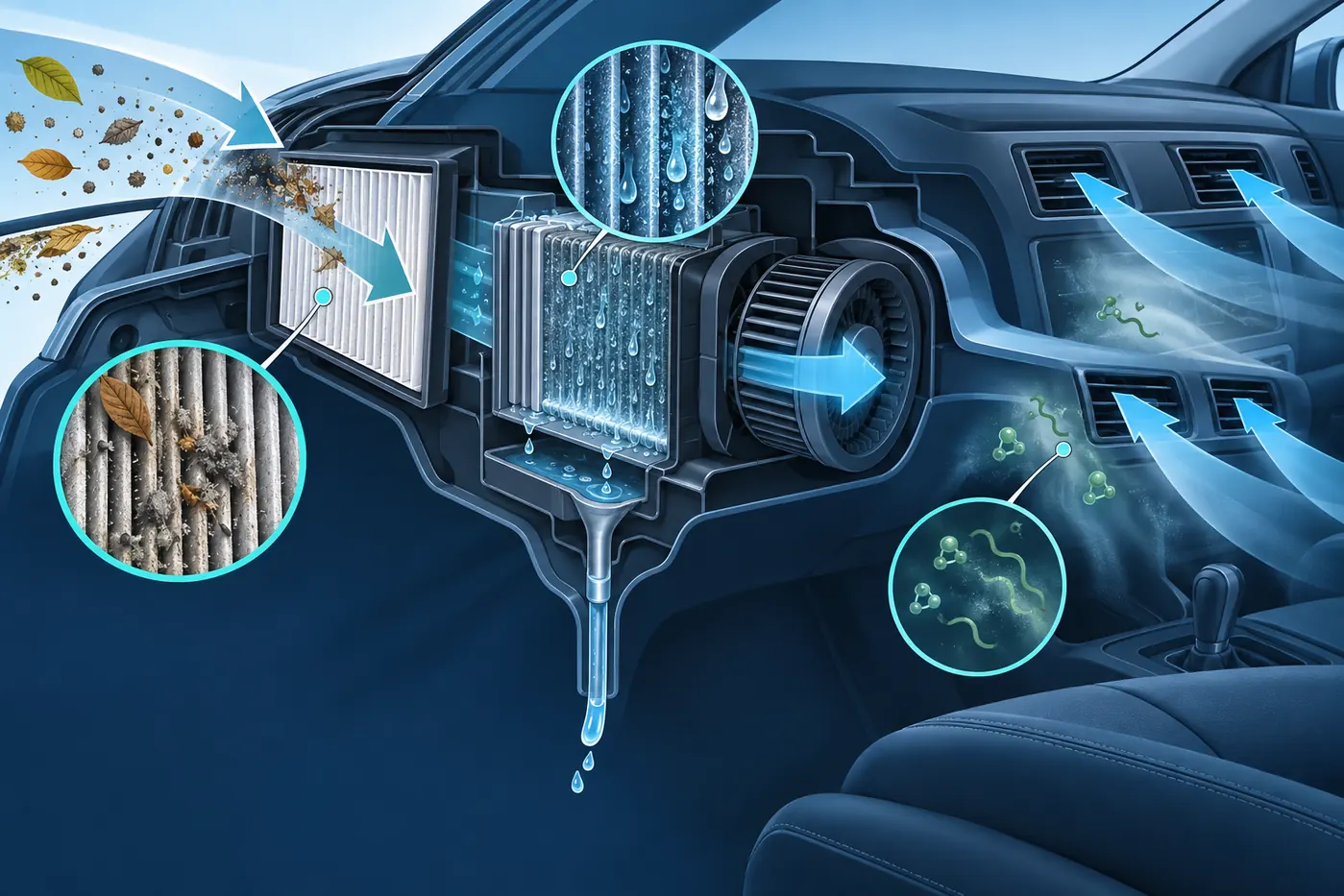
The evaporator cools air, and moisture can condense on or near it. Most condensate should leave the vehicle through a drain. If moisture remains in the air path, an unpleasant smell can develop. Consumer Reports explains the connection between retained evaporator moisture and musty AC odors. That mechanism is plausible, but it does not prove it is the cause in your car.
A cabin filter loaded with leaves and dirt may smell, while a leak around a window, door, sunroof, or trunk can keep carpets damp. A floor mat may hide moisture for weeks. Those sources can make the ventilation seem responsible even when the problem is elsewhere. The first goal is to find where moisture or contamination persists.
Do not confuse a musty smell with loss of cooling. The AC can cool normally while the cabin-air path smells unpleasant, or it can be warm for an unrelated reason. If it is not cooling, use the car AC not blowing cold air guide as a separate diagnostic path.
| When the odor appears | First areas to check | Avoid assuming |
|---|---|---|
| Immediately when fan starts | Filter and cabin-air path | Refrigerant leak |
| After rain or a car wash | Carpets, seals, drains | Evaporator only |
| After AC runs, then vehicle sits | Evaporator moisture and drainage | A fragrance will fix the cause |
| With fan and AC both off | Interior, trunk, upholstery | HVAC is the only source |
| With heat and a sweet note | Cooling-system or heater concern | Ordinary mildew |
| With burning or exhaust-like note | Mechanical or exhaust safety concern | Routine deodorizing is enough |
The table directs inspection; it is not a diagnosis. Record the pattern and tell a shop if the odor persists or comes with other symptoms.
Check 1: Identify the Odor and Its Timing
Use plain words: damp basement, wet cloth, sweet, burning, fuel-like, or exhaust-like. A vague statement that the car “smells bad” makes diagnosis harder. Note whether it happens only after startup, only after the AC has run, on rainy days, or throughout the entire drive. Ask a passenger to confirm the pattern if possible, but do not keep running the system to reproduce a concerning odor.
Consider when the car last sat unused. A vehicle closed up in hot, humid weather can reveal an odor immediately. A smell that disappears quickly after ventilation is different from one that grows stronger. Neither pattern alone identifies a component, but both help narrow the inspection.
If you recently cleaned the interior, replaced the cabin filter, or applied an AC treatment, mention the date and product to the shop. New chemical scents can temporarily mask an underlying smell. A symptom diary is more helpful than buying repeated treatments without knowing where the odor originates.
Check 2: Inspect the Cabin Filter Safely
The cabin filter is an accessible maintenance item on many vehicles, but the location and replacement method vary. Use the owner’s manual. If the filter is full of leaves, dirt, or obvious moisture, ask why that material accumulated and replace it with the correct part if appropriate. Do not force trim or electrical connectors to reach a filter you cannot access safely.
A clean filter can improve airflow and remove one odor source, but it will not dry a wet carpet or fix a blocked condensate drain. If a new filter smells musty again quickly, keep looking for moisture. If the filter is wet, a shop may need to inspect the air intake and surrounding drainage rather than repeatedly selling a replacement.
Filter quality and fit matter more than a scent added to the media. Choose a vehicle-appropriate filter rather than assuming the most expensive odor-control label will solve the root cause. Keep the old filter briefly if you need to show a shop the condition it was in.
Check 3: Look for Damp Carpet, Mats, and Trunk Areas
Lift floor mats and feel the carpet, especially in the footwells. Check the trunk and any spare-tire well where accessible. A musty smell can come from water that entered around a door, window, sunroof, or trunk seal. Consumer Reports notes that water leaks and blocked drains can create persistent car odors. A wet interior needs both drying and a fix for the water source.
Note whether dampness appears after rain, a car wash, or AC use. Those clues can point toward different paths without proving them. If the carpet is deeply soaked, a surface spray is unlikely to reach all the affected material. A detailer or repair shop may need to remove and dry trim or padding after the water intrusion is repaired.
Do not dismiss repeated fogging of the windows, visible moisture, or an ongoing leak simply because the AC still cools. Moisture can damage interior materials and make the odor recur. A used-car buyer should treat unexplained dampness as an inspection issue, not a cosmetic defect.
Check 4: Ask Whether the Evaporator Drain Works
Water dripping under a vehicle after AC use can be normal condensation. The location and quantity vary, so the absence of an obvious puddle is not by itself proof of a blocked drain. If the passenger floor becomes damp after AC operation or the odor repeatedly follows cooling cycles, tell the shop. It can inspect the drain and relevant HVAC housing on the specific model.
Do not poke into an unfamiliar drain opening or use high pressure without vehicle-specific instructions. You could disconnect or damage the drain or push material into the housing. A professional can establish whether water is draining as designed and whether a blocked path needs clearing.
If the shop proposes an evaporator cleaning service, ask whether it inspected drainage and the filter first. Cleaning without correcting retained moisture may lead to a short-lived improvement. The right service should address the source of the odor as well as any residue already present.
Check 5: Distinguish Cleaning From Masking
An air freshener changes what you smell; it does not repair a water leak. A filter replacement may remove contaminated material but cannot clean a damp evaporator or carpet. An evaporator treatment may help when that area is truly the source, but it does not solve a blocked drain or outside water intrusion. Ask the shop which source it found and what the proposed product or service is meant to do.
Before applying a chemical treatment yourself, read the product instructions and the vehicle manufacturer’s guidance. Avoid spraying into electrical parts or breathing concentrated aerosols. If a child or passenger has sensitivity to fragrances, consider that when choosing a treatment. Do not make an unverified claim that a particular product “kills all mold” inside a hidden HVAC box.
The shop should explain whether the service includes inspection, filter replacement, drain work, cleaning, and follow-up. Compare estimates on that scope, not on the label “AC refresh.” A low-price deodorizing service and a repair for water intrusion are not the same job.
Check 6: Consider Non-AC Sources of Mustiness
Spilled drinks, damp upholstery, a forgotten item under a seat, or a trunk leak can create a smell that the fan simply moves around. Inspect accessible interior areas before paying for HVAC disassembly. If the smell is present before the fan starts, an interior source deserves particular attention.
Check for water entry after heavy rain or a car wash. Door and window seals, sunroof drains, and body openings can leak, but the exact path needs inspection. A repair should stop the entry and dry affected material. Spraying the vents may mask the smell while moisture remains in hidden padding.
For a used car, examine the interior as part of the broader used-car inspection checklist. Ask the seller about prior leaks or flood damage, and arrange professional inspection when the interior is persistently damp. Do not infer a flood history from odor alone, but do not ignore evidence of ongoing water intrusion.
Check 7: Treat Other Odors as Separate Problems
A sweet or chemical smell with windshield fogging or coolant loss may indicate a cooling-system or heater concern and needs prompt evaluation. A burning smell can point to electrical or mechanical trouble. A fuel smell also calls for immediate caution. Do not keep cycling the ventilation or rely on deodorizer while these symptoms continue.
An exhaust-like odor in the cabin warrants prompt inspection. The CDC explains that carbon monoxide is colorless and odorless and that an exhaust leak can allow it to build up inside a vehicle. You cannot use smell to confirm the presence or absence of carbon monoxide. If occupants feel headache, dizziness, nausea, or unusual drowsiness, get to fresh air and seek urgent medical help.
Do not run a vehicle in an attached garage even with its door open. If you suspect exhaust intrusion, stop driving it until a qualified professional checks the cause. This is a different decision from scheduling a routine cabin-filter replacement.
What to Ask a Shop About a Musty AC Smell
Explain when the smell appears, whether the filter was checked, whether the carpet or trunk is damp, and whether cooling still works. Ask the shop to inspect the likely source before quoting a treatment. If it identifies evaporator moisture, what drainage or cleaning work is proposed? If it finds interior water, what repair stops the leak and what drying is needed?
Request an itemized estimate and ask whether the shop will contact you before additional work. The FTC’s Auto Repair Basics explains estimates and authorization. An odor may have multiple sources, so the shop should distinguish what it confirmed from what it only suspects.
For the broader cooling-system diagnosis, use our car AC repair guide. A refrigerant leak is not the default explanation for a musty odor; the refrigerant leak guide is relevant only if testing shows a separate cooling-circuit problem.
Preventing the Smell From Returning
Replace the cabin filter at intervals appropriate to the vehicle and driving conditions, not only when a smell appears. Keep leaves and debris away from accessible air intakes. Dry a wet interior promptly and repair the water source. If a shop has identified a drain issue, confirm it was resolved before paying for repeated cleaning.
After a repair, record whether the odor improves and under which conditions. If it returns after rain, water intrusion may remain. If it returns only after AC use, ask whether drainage and the evaporator area were evaluated. A clear pattern helps avoid repeating the same unsuccessful treatment.
There is no reason to chase a perfect fragrance as a maintenance target. The goal is clean airflow, dry interior materials, and no unsafe accompanying symptoms. If the smell is minor and transient, simple inspection may be enough; persistent or worsening odor deserves a documented diagnosis.
Frequently Asked Questions
Why does my car AC smell musty only when it starts?
Airflow may carry odor from a damp filter or HVAC air path when the fan begins. The timing is a clue, not proof of the location. Inspect the filter and accessible interior, then ask a shop to check drainage or the evaporator area if the problem persists.
Does a musty smell mean mold is growing in my AC?
Not necessarily. Moisture and microbial growth may be involved, but wet carpet, leaves in the intake, or another source can smell similar. Do not diagnose a hidden organism by smell alone. Find and correct the moisture source.
Will replacing the cabin filter fix the smell?
It can help if the filter itself is dirty or wet. It will not repair a blocked drain, a wet floor, or water intrusion. If the odor returns quickly, investigate those causes rather than buying filters repeatedly.
Is water under my car after using AC a leak?
Clear water from normal condensate drainage can be expected. A damp interior floor, persistent odor, or other fluid deserves a separate inspection. Do not identify a refrigerant leak from a puddle of water.
Can a musty smell be dangerous?
An unpleasant smell is not a diagnosis of a specific health risk. However, ongoing dampness should be addressed, and sweet, burning, fuel, or exhaust-like odors may indicate different and more urgent problems. Carbon monoxide has no smell, so seek prompt help if exhaust intrusion or associated symptoms are suspected.
Bottom Line
When your car AC smells musty, look for moisture and note when the odor occurs before buying a treatment. Inspect the accessible cabin filter and interior; ask a shop to examine drainage and the air path when needed. Fix the source of wetness, not only the smell. Treat burning, sweet, fuel, or exhaust-like odors as separate problems requiring prompt professional attention.
Sources and Scope
- Consumer Reports: Musty smell from a car air conditioner
- Consumer Reports: Getting rid of car odors
- CDC: Carbon monoxide poisoning basics
- Federal Trade Commission: Auto Repair Basics
This is general U.S. consumer guidance, not a diagnosis of contamination, health effects, or a vehicle-specific HVAC repair procedure.