
used car insurance coverage research should begin with the written policy and the household’s actual financial exposure. Used car insurance coverage should protect against losses a household cannot comfortably absorb without paying for options that no longer fit the vehicle. The right mix depends on state law, lender requirements, vehicle value, savings, driving exposure and the exact policy language.
Quick answer: Compare matching limits, deductibles and optional coverages on VIN-specific quotes. Verify state and lender requirements, then choose protection for losses the household could not comfortably pay itself.

This independent Carvul guide is educational information for careful personal auto policy shoppers, not legal, insurance or financial advice. Coverage, terminology and requirements vary by state, insurer and contract.
used car insurance coverage decision table
| Insurance decision | Policyholder action |
|---|---|
| Start with state requirements and personal risk | Set a household risk threshold |
| Read the declarations page correctly | Compare identical quote inputs |
| Liability limits and what they protect | Verify state and lender rules |
| Collision coverage for a used vehicle | Read the controlling policy language |
| Comprehensive coverage beyond crashes | Calculate premium and deductible exposure |
| Uninsured and underinsured motorist coverage | Use the exact VIN and drivers |
| Medical payments and personal injury protection | Record the decision before coverage starts |
used car insurance coverage: Start with state requirements and personal risk
used car insurance coverage decisions should treat start with state requirements and personal risk as a household risk question, not a universal formula. Start with the actual declarations page or written quote, identify the limit and deductible, and note who or what the coverage protects. State rules and policy forms vary, so a familiar label may not mean exactly the same thing across insurers.
For start with state requirements and personal risk, compare quotes only when the drivers, VIN, garaging address, limits, deductibles and optional coverages match. A lower premium can reflect less protection rather than a better deal. Ask the licensed insurer or agent to explain unclear language and retain the answer with the policy documents instead of relying on a verbal sales summary.
Put start with state requirements and personal risk into dollars the household can actually absorb. Compare the annual premium difference with the deductible, realistic vehicle value and available emergency savings. The strongest used car insurance coverage choice protects against losses that would seriously disrupt the household while avoiding assumptions that every claim will be covered or paid at the amount expected.
Before changing coverage, verify start with state requirements and personal risk against state requirements and any finance or lease agreement. Request the effective date in writing, review exclusions and endorsements, and confirm how a claim would be reported. This article is educational; a licensed professional and the controlling policy should resolve case-specific questions.
Practical review: Write down how start with state requirements and personal risk changes the household’s worst affordable loss, annual premium and claim responsibility. Then compare that result carefully with a second VIN-specific quote. Keep unresolved questions beside the relevant policy clause so they can be answered before the effective date. Note which answer came from state law, the lender, the quote or the policy itself; those sources do not carry the same authority.
- Use the exact VIN and driver details.
- Compare matching limits and deductibles.
- Verify state and lender requirements.
- Keep the written quote and declarations page.
used car insurance coverage: Read the declarations page correctly
A useful way to evaluate read the declarations page correctly is to write down the loss being transferred and the loss still retained. Include deductibles, excluded events, policy limits and expenses that sit outside the contract. That short exercise keeps used car insurance coverage focused on protection rather than on a label used in an advertisement.
Do not judge read the declarations page correctly from the monthly installment alone. Convert each quote to a full policy-period cost, include billing fees, and check whether discounts depend on telematics, bundling or automatic payment. If one quote is cheaper, locate the exact coverage difference before calling it savings.
The vehicle’s VIN matters when reviewing read the declarations page correctly. Trim, safety equipment, repair complexity, theft history and garaging location can affect underwriting and price. A generic estimate is useful for early budgeting, but the purchase decision deserves a written VIN-specific quote with the intended drivers listed correctly.
Think through a claim before accepting read the declarations page correctly. Ask what documentation would be needed, who chooses the repair facility, how a total loss is valued and whether rental transportation has a separate limit. The answers may reveal a practical difference that is invisible in the premium headline.
Practical review: Write down how read the declarations page correctly changes the household’s worst affordable loss, annual premium and claim responsibility. Then compare that result carefully with a second VIN-specific quote. Keep unresolved questions beside the relevant policy clause so they can be answered before the effective date. Note which answer came from state law, the lender, the quote or the policy itself; those sources do not carry the same authority.
- Use the exact VIN and driver details.
- Compare matching limits and deductibles.
- Verify state and lender requirements.
- Keep the written quote and declarations page.
used car insurance coverage: Liability limits and what they protect
Household cash flow changes the meaning of liability limits and what they protect. A deductible that looks efficient on a spreadsheet can be painful if it must be paid immediately after a crash or storm. Keep the deductible in accessible savings rather than assuming the claim payment will arrive before repair or replacement expenses begin.
Review liability limits and what they protect again after loan payoff, relocation, a new driver, a major mileage change or a meaningful shift in vehicle value. Those events can change both required coverage and the amount of risk the household can carry. Renewal is a checkpoint, not a reason to renew every selection automatically.
When an insurer explains liability limits and what they protect, ask for the policy provision or endorsement that supports the explanation. Save that document with the quote and declarations page. Written records make it easier to compare offers and reduce the chance that two people are using the same term to mean different protection.
A sound used car insurance coverage review separates legal requirements, contract requirements and personal risk tolerance. State law sets one boundary, a lender may set another, and the household still decides whether optional protection is worth its cost. Keeping those questions separate makes liability limits and what they protect easier to evaluate.
Practical review: Write down how liability limits and what they protect changes the household’s worst affordable loss, annual premium and claim responsibility. Then compare that result carefully with a second VIN-specific quote. Keep unresolved questions beside the relevant policy clause so they can be answered before the effective date. Note which answer came from state law, the lender, the quote or the policy itself; those sources do not carry the same authority.
- Use the exact VIN and driver details.
- Compare matching limits and deductibles.
- Verify state and lender requirements.
- Keep the written quote and declarations page.
used car insurance coverage: Collision coverage for a used vehicle
used car insurance coverage decisions should treat collision coverage for a used vehicle as a household risk question, not a universal formula. Start with the actual declarations page or written quote, identify the limit and deductible, and note who or what the coverage protects. State rules and policy forms vary, so a familiar label may not mean exactly the same thing across insurers.
For collision coverage for a used vehicle, compare quotes only when the drivers, VIN, garaging address, limits, deductibles and optional coverages match. A lower premium can reflect less protection rather than a better deal. Ask the licensed insurer or agent to explain unclear language and retain the answer with the policy documents instead of relying on a verbal sales summary.
Put collision coverage for a used vehicle into dollars the household can actually absorb. Compare the annual premium difference with the deductible, realistic vehicle value and available emergency savings. The strongest used car insurance coverage choice protects against losses that would seriously disrupt the household while avoiding assumptions that every claim will be covered or paid at the amount expected.
Before changing coverage, verify collision coverage for a used vehicle against state requirements and any finance or lease agreement. Request the effective date in writing, review exclusions and endorsements, and confirm how a claim would be reported. This article is educational; a licensed professional and the controlling policy should resolve case-specific questions.
Practical review: Write down how collision coverage for a used vehicle changes the household’s worst affordable loss, annual premium and claim responsibility. Then compare that result carefully with a second VIN-specific quote. Keep unresolved questions beside the relevant policy clause so they can be answered before the effective date. Note which answer came from state law, the lender, the quote or the policy itself; those sources do not carry the same authority.
- Use the exact VIN and driver details.
- Compare matching limits and deductibles.
- Verify state and lender requirements.
- Keep the written quote and declarations page.
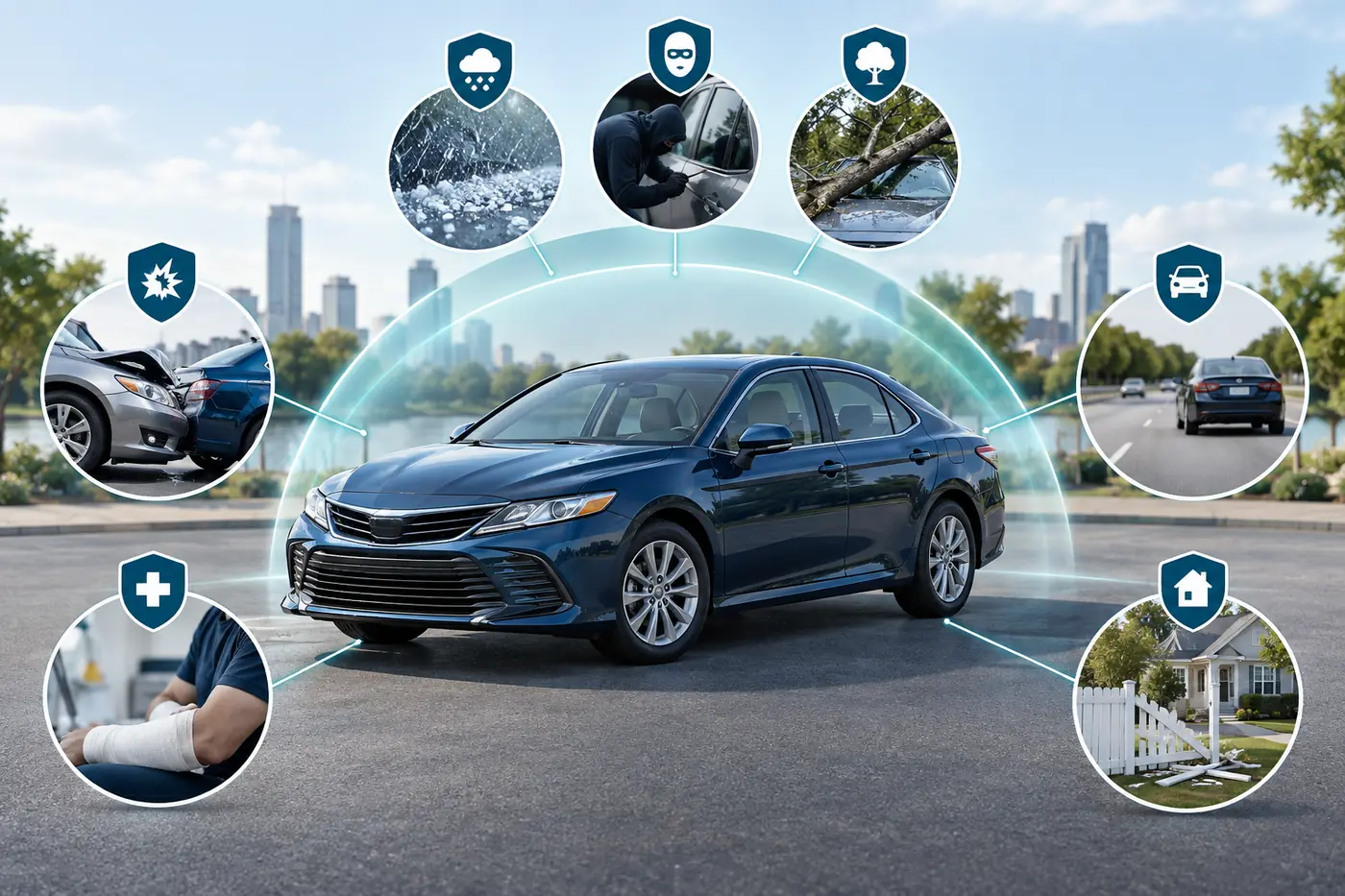
used car insurance coverage: Comprehensive coverage beyond crashes
A useful way to evaluate comprehensive coverage beyond crashes is to write down the loss being transferred and the loss still retained. Include deductibles, excluded events, policy limits and expenses that sit outside the contract. That short exercise keeps used car insurance coverage focused on protection rather than on a label used in an advertisement.
Do not judge comprehensive coverage beyond crashes from the monthly installment alone. Convert each quote to a full policy-period cost, include billing fees, and check whether discounts depend on telematics, bundling or automatic payment. If one quote is cheaper, locate the exact coverage difference before calling it savings.
The vehicle’s VIN matters when reviewing comprehensive coverage beyond crashes. Trim, safety equipment, repair complexity, theft history and garaging location can affect underwriting and price. A generic estimate is useful for early budgeting, but the purchase decision deserves a written VIN-specific quote with the intended drivers listed correctly.
Think through a claim before accepting comprehensive coverage beyond crashes. Ask what documentation would be needed, who chooses the repair facility, how a total loss is valued and whether rental transportation has a separate limit. The answers may reveal a practical difference that is invisible in the premium headline.
Practical review: Write down how comprehensive coverage beyond crashes changes the household’s worst affordable loss, annual premium and claim responsibility. Then compare that result carefully with a second VIN-specific quote. Keep unresolved questions beside the relevant policy clause so they can be answered before the effective date. Note which answer came from state law, the lender, the quote or the policy itself; those sources do not carry the same authority.
- Use the exact VIN and driver details.
- Compare matching limits and deductibles.
- Verify state and lender requirements.
- Keep the written quote and declarations page.
used car insurance coverage: Uninsured and underinsured motorist coverage
Household cash flow changes the meaning of uninsured and underinsured motorist coverage. A deductible that looks efficient on a spreadsheet can be painful if it must be paid immediately after a crash or storm. Keep the deductible in accessible savings rather than assuming the claim payment will arrive before repair or replacement expenses begin.
Review uninsured and underinsured motorist coverage again after loan payoff, relocation, a new driver, a major mileage change or a meaningful shift in vehicle value. Those events can change both required coverage and the amount of risk the household can carry. Renewal is a checkpoint, not a reason to renew every selection automatically.
When an insurer explains uninsured and underinsured motorist coverage, ask for the policy provision or endorsement that supports the explanation. Save that document with the quote and declarations page. Written records make it easier to compare offers and reduce the chance that two people are using the same term to mean different protection.
A sound used car insurance coverage review separates legal requirements, contract requirements and personal risk tolerance. State law sets one boundary, a lender may set another, and the household still decides whether optional protection is worth its cost. Keeping those questions separate makes uninsured and underinsured motorist coverage easier to evaluate.
Practical review: Write down how uninsured and underinsured motorist coverage changes the household’s worst affordable loss, annual premium and claim responsibility. Then compare that result carefully with a second VIN-specific quote. Keep unresolved questions beside the relevant policy clause so they can be answered before the effective date. Note which answer came from state law, the lender, the quote or the policy itself; those sources do not carry the same authority.
- Use the exact VIN and driver details.
- Compare matching limits and deductibles.
- Verify state and lender requirements.
- Keep the written quote and declarations page.
used car insurance coverage: Medical payments and personal injury protection
used car insurance coverage decisions should treat medical payments and personal injury protection as a household risk question, not a universal formula. Start with the actual declarations page or written quote, identify the limit and deductible, and note who or what the coverage protects. State rules and policy forms vary, so a familiar label may not mean exactly the same thing across insurers.
For medical payments and personal injury protection, compare quotes only when the drivers, VIN, garaging address, limits, deductibles and optional coverages match. A lower premium can reflect less protection rather than a better deal. Ask the licensed insurer or agent to explain unclear language and retain the answer with the policy documents instead of relying on a verbal sales summary.
Put medical payments and personal injury protection into dollars the household can actually absorb. Compare the annual premium difference with the deductible, realistic vehicle value and available emergency savings. The strongest used car insurance coverage choice protects against losses that would seriously disrupt the household while avoiding assumptions that every claim will be covered or paid at the amount expected.
Before changing coverage, verify medical payments and personal injury protection against state requirements and any finance or lease agreement. Request the effective date in writing, review exclusions and endorsements, and confirm how a claim would be reported. This article is educational; a licensed professional and the controlling policy should resolve case-specific questions.
Practical review: Write down how medical payments and personal injury protection changes the household’s worst affordable loss, annual premium and claim responsibility. Then compare that result carefully with a second VIN-specific quote. Keep unresolved questions beside the relevant policy clause so they can be answered before the effective date. Note which answer came from state law, the lender, the quote or the policy itself; those sources do not carry the same authority.
- Use the exact VIN and driver details.
- Compare matching limits and deductibles.
- Verify state and lender requirements.
- Keep the written quote and declarations page.
used car insurance coverage: Choose deductibles you can fund
A useful way to evaluate choose deductibles you can fund is to write down the loss being transferred and the loss still retained. Include deductibles, excluded events, policy limits and expenses that sit outside the contract. That short exercise keeps used car insurance coverage focused on protection rather than on a label used in an advertisement.
Do not judge choose deductibles you can fund from the monthly installment alone. Convert each quote to a full policy-period cost, include billing fees, and check whether discounts depend on telematics, bundling or automatic payment. If one quote is cheaper, locate the exact coverage difference before calling it savings.
The vehicle’s VIN matters when reviewing choose deductibles you can fund. Trim, safety equipment, repair complexity, theft history and garaging location can affect underwriting and price. A generic estimate is useful for early budgeting, but the purchase decision deserves a written VIN-specific quote with the intended drivers listed correctly.
Think through a claim before accepting choose deductibles you can fund. Ask what documentation would be needed, who chooses the repair facility, how a total loss is valued and whether rental transportation has a separate limit. The answers may reveal a practical difference that is invisible in the premium headline.
Practical review: Write down how choose deductibles you can fund changes the household’s worst affordable loss, annual premium and claim responsibility. Then compare that result carefully with a second VIN-specific quote. Keep unresolved questions beside the relevant policy clause so they can be answered before the effective date. Note which answer came from state law, the lender, the quote or the policy itself; those sources do not carry the same authority.
- Use the exact VIN and driver details.
- Compare matching limits and deductibles.
- Verify state and lender requirements.
- Keep the written quote and declarations page.
used car insurance coverage: Financed and leased vehicle requirements
Household cash flow changes the meaning of financed and leased vehicle requirements. A deductible that looks efficient on a spreadsheet can be painful if it must be paid immediately after a crash or storm. Keep the deductible in accessible savings rather than assuming the claim payment will arrive before repair or replacement expenses begin.
Review financed and leased vehicle requirements again after loan payoff, relocation, a new driver, a major mileage change or a meaningful shift in vehicle value. Those events can change both required coverage and the amount of risk the household can carry. Renewal is a checkpoint, not a reason to renew every selection automatically.
When an insurer explains financed and leased vehicle requirements, ask for the policy provision or endorsement that supports the explanation. Save that document with the quote and declarations page. Written records make it easier to compare offers and reduce the chance that two people are using the same term to mean different protection.
A sound used car insurance coverage review separates legal requirements, contract requirements and personal risk tolerance. State law sets one boundary, a lender may set another, and the household still decides whether optional protection is worth its cost. Keeping those questions separate makes financed and leased vehicle requirements easier to evaluate.
Practical review: Write down how financed and leased vehicle requirements changes the household’s worst affordable loss, annual premium and claim responsibility. Then compare that result carefully with a second VIN-specific quote. Keep unresolved questions beside the relevant policy clause so they can be answered before the effective date. Note which answer came from state law, the lender, the quote or the policy itself; those sources do not carry the same authority.
- Use the exact VIN and driver details.
- Compare matching limits and deductibles.
- Verify state and lender requirements.
- Keep the written quote and declarations page.
used car insurance coverage: Compare equal quotes and discounts
used car insurance coverage decisions should treat compare equal quotes and discounts as a household risk question, not a universal formula. Start with the actual declarations page or written quote, identify the limit and deductible, and note who or what the coverage protects. State rules and policy forms vary, so a familiar label may not mean exactly the same thing across insurers.
For compare equal quotes and discounts, compare quotes only when the drivers, VIN, garaging address, limits, deductibles and optional coverages match. A lower premium can reflect less protection rather than a better deal. Ask the licensed insurer or agent to explain unclear language and retain the answer with the policy documents instead of relying on a verbal sales summary.
Put compare equal quotes and discounts into dollars the household can actually absorb. Compare the annual premium difference with the deductible, realistic vehicle value and available emergency savings. The strongest used car insurance coverage choice protects against losses that would seriously disrupt the household while avoiding assumptions that every claim will be covered or paid at the amount expected.
Before changing coverage, verify compare equal quotes and discounts against state requirements and any finance or lease agreement. Request the effective date in writing, review exclusions and endorsements, and confirm how a claim would be reported. This article is educational; a licensed professional and the controlling policy should resolve case-specific questions.
Practical review: Write down how compare equal quotes and discounts changes the household’s worst affordable loss, annual premium and claim responsibility. Then compare that result carefully with a second VIN-specific quote. Keep unresolved questions beside the relevant policy clause so they can be answered before the effective date. Note which answer came from state law, the lender, the quote or the policy itself; those sources do not carry the same authority.
- Use the exact VIN and driver details.
- Compare matching limits and deductibles.
- Verify state and lender requirements.
- Keep the written quote and declarations page.
used car insurance coverage: Annual coverage review and decision worksheet
A useful way to evaluate annual coverage review and decision worksheet is to write down the loss being transferred and the loss still retained. Include deductibles, excluded events, policy limits and expenses that sit outside the contract. That short exercise keeps used car insurance coverage focused on protection rather than on a label used in an advertisement.
Do not judge annual coverage review and decision worksheet from the monthly installment alone. Convert each quote to a full policy-period cost, include billing fees, and check whether discounts depend on telematics, bundling or automatic payment. If one quote is cheaper, locate the exact coverage difference before calling it savings.
The vehicle’s VIN matters when reviewing annual coverage review and decision worksheet. Trim, safety equipment, repair complexity, theft history and garaging location can affect underwriting and price. A generic estimate is useful for early budgeting, but the purchase decision deserves a written VIN-specific quote with the intended drivers listed correctly.
Think through a claim before accepting annual coverage review and decision worksheet. Ask what documentation would be needed, who chooses the repair facility, how a total loss is valued and whether rental transportation has a separate limit. The answers may reveal a practical difference that is invisible in the premium headline.
Practical review: Write down how annual coverage review and decision worksheet changes the household’s worst affordable loss, annual premium and claim responsibility. Then compare that result carefully with a second VIN-specific quote. Keep unresolved questions beside the relevant policy clause so they can be answered before the effective date. Note which answer came from state law, the lender, the quote or the policy itself; those sources do not carry the same authority.
- Use the exact VIN and driver details.
- Compare matching limits and deductibles.
- Verify state and lender requirements.
- Keep the written quote and declarations page.
Continue the Carvul insurance coverage cluster
- Liability vs Full Coverage: 9 Critical Differences
- Collision vs Comprehensive Insurance: 9 Clear Tests
- 500 vs 1000 Deductible Car Insurance: 7 Smart Tests
- Do You Need Full Coverage on a Used Car? 9 Tests
- When to Drop Full Coverage: 9 Careful Checks
- Car Insurance Before Buying a Car: 9 Smart Steps
Official tools and related Carvul guides
- NAIC: What Auto Insurance Covers
- NAIC Auto Insurance Consumer Resources
- CFPB Auto Finance Insurance Options
- USA.gov State Government Directory
- Used car insurance cost guide
- GAP insurance on a used car
- Used car inspection checklist
- Used car financing guide
Frequently Asked Questions
Does “full coverage” have one standard definition?
No. It is an informal label, not a single standardized policy. Confirm every included coverage, limit, deductible, exclusion and endorsement on the written quote.
Do state minimums provide enough protection?
Minimum requirements establish a legal floor, not a personal recommendation. A licensed professional can help evaluate assets, driving exposure and household risk.
Can a lender require collision and comprehensive?
Finance and lease agreements commonly require physical-damage protection for the vehicle. Read the contract and confirm the exact requirements with the lender.
Should I choose the cheapest insurance quote?
Not without matching the inputs. Compare the same drivers, VIN, limits, deductibles and optional coverages, along with complaint and service information available from the state regulator.
Bottom line
A careful used car insurance coverage decision starts with comparable written quotes and ends with a policy the household understands and can afford. Verify changing requirements and review coverage at renewal or after a major vehicle, loan, address or driver change.