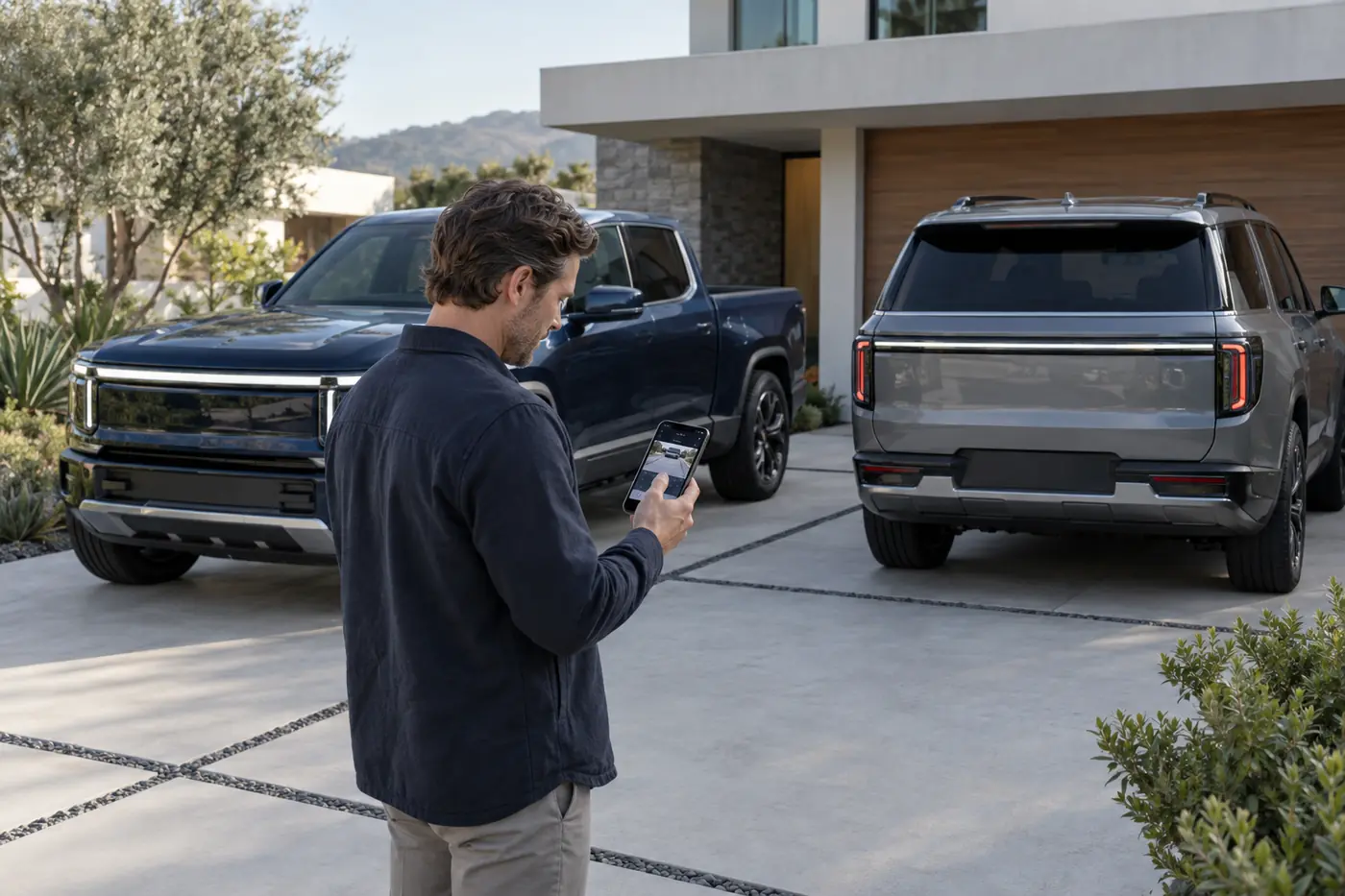
Rivian recall campaign 26V597000 covers 98,828 vehicles because a notification may obstruct the rearview-camera image while the vehicle is in reverse. The filing lists certain 2022-2027 R1S SUVs, 2022-2026 R1T pickups and 2027 R2 vehicles.
Rivian reported the campaign to the National Highway Traffic Safety Administration on September 16, 2026. The company has released a free over-the-air software update. Model year alone does not prove that a specific vehicle is included, so owners and used-EV shoppers should confirm the VIN when campaign records become searchable.
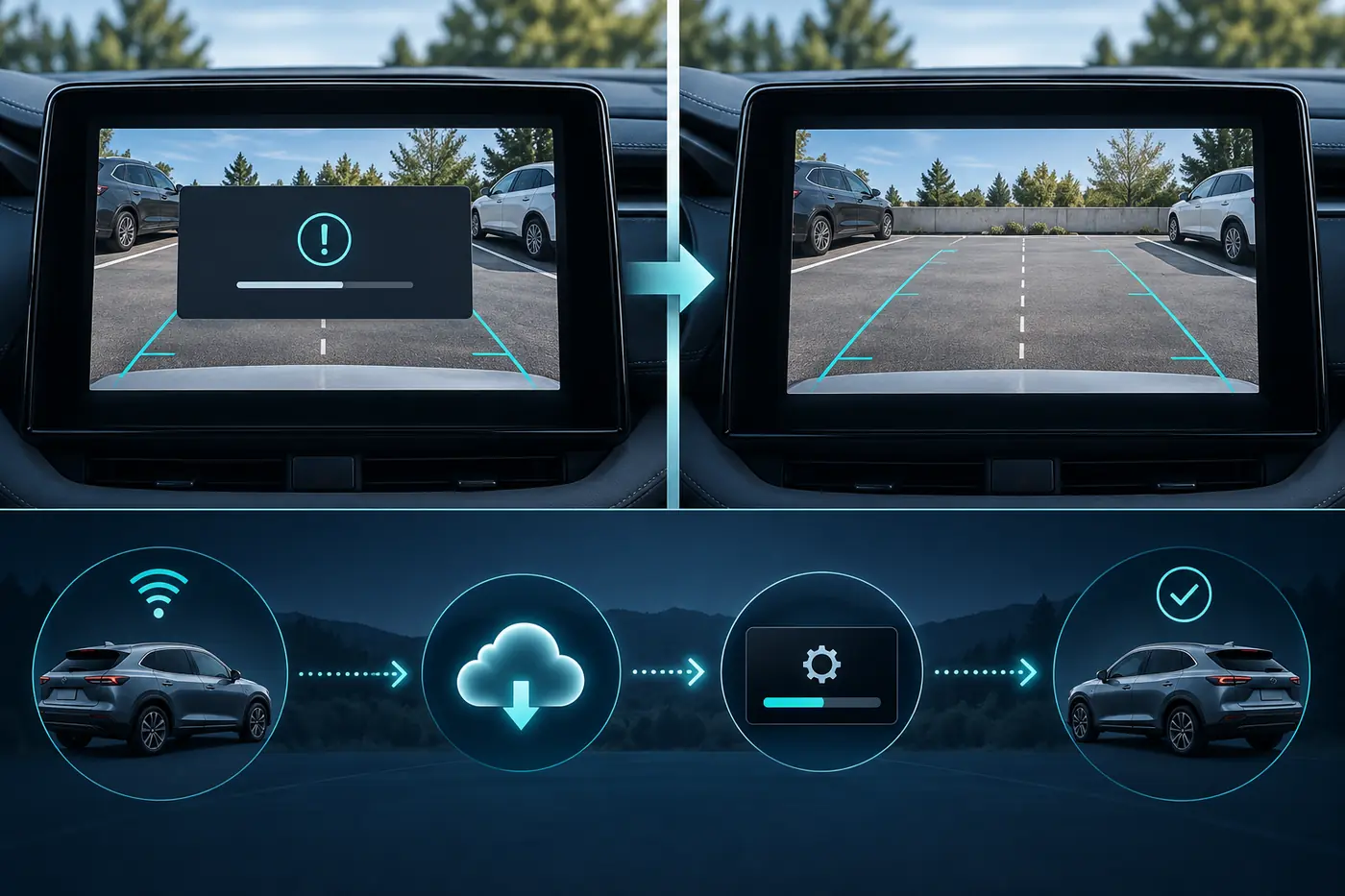
Quick answer: The official record says the camera view may be blocked by an on-screen notification, reducing the driver’s view behind the vehicle and increasing crash risk. The remedy is an OTA update at no charge. Owner letters are expected November 9, 2026, and NHTSA says affected VINs are expected to become searchable that day.
Rivian Recall 26V597 at a Glance
| NHTSA campaign | 26V597000 |
|---|---|
| Rivian campaign | FSAM-1866 |
| Potential population | 98,828 vehicles |
| Issue | Notification may obstruct the rearview-camera image in reverse |
| Remedy | Free over-the-air software update |
Which Rivian Models Are Listed?
The filing names certain 2022-2027 R1S vehicles, certain 2022-2026 R1T vehicles and certain model-year 2027 R2 vehicles. “Certain” matters: a recall population is defined by production and software records, not only by the badge and model year.
An owner should not assume every R1S, R1T or R2 in those years is affected. Likewise, a seller’s claim that the update is complete should be verified through the vehicle and the official recall record rather than accepted from a screenshot alone.
Rivian Rearview Camera Recall: 7 Owner Checks
1. Confirm the campaign number
Use 26V597000 with NHTSA or FSAM-1866 with Rivian. Similar model-year vehicles can have other open campaigns, so check the complete VIN record.
2. Check the vehicle software status
Connect the vehicle securely and review pending software updates. Do not interrupt an installation or attempt to drive while the vehicle says an update is in progress.
3. Test the camera before relying on it
With the vehicle stationary in a safe area, select reverse and confirm that the image is visible. Even after the remedy, cameras do not replace mirrors, shoulder checks or a direct look behind the vehicle.
4. Do not dismiss an obstructing notification
If a message covers part of the camera image, stop and follow Rivian’s instructions. The recall concerns reduced rear visibility, not a mechanical braking or steering failure.
5. Save proof of completion
Keep the update confirmation with the vehicle records. Documentation can help at resale and makes it easier to distinguish this remedy from later software releases.
6. Recheck the VIN on November 9
The filing says VINs are expected to become searchable on NHTSA.gov on November 9, 2026. Databases can update, so recheck if the first search produces no campaign result.
7. Contact Rivian if the update will not install
The recall record lists Rivian customer service at 1-888-748-4261. Ask for instructions tied to FSAM-1866 rather than guessing at a workaround.
How to Check the Rivian Recall by VIN
Copy the 17-character VIN directly from the lower windshield, driver’s-door label or vehicle registration. Enter it into the official NHTSA lookup and compare the result with the vehicle’s Rivian account. Avoid relying on a shortened VIN in an online listing because one incorrect character can return the wrong result.
If the Rivian recall does not appear before November 9, that does not necessarily mean the vehicle is excluded. The filing identifies November 9 as the expected VIN-search date. Save the VIN and check again after the database update, especially if the model and year fall within the screening range.
After the update, keep a screenshot or service record showing completion, but verify the campaign status again before a sale. A general software-version number is useful supporting evidence; the strongest confirmation is a campaign record tied to the exact VIN.
Recall status: Recall instructions and remedy availability can change. Confirm the latest status for the exact VIN through NHTSA and Rivian before relying on this summary.
What Used Rivian Buyers Should Verify
Before buying, run the VIN through the official NHTSA recall lookup and ask the seller for the vehicle’s software and service history. Check all camera views during a careful test, but remember that a clean test on one day does not replace recall verification.
Use Carvul’s used-car inspection checklist for the rest of the vehicle and review used-car insurance coverage before delivery. A recall remedy is free, but travel, downtime and a failed update can still affect the purchase experience.
Questions to put in the purchase agreement
Ask the seller to state whether FSAM-1866 is open or completed and to disclose any update problem. If the VIN result is not yet available, make recall verification a written delivery condition instead of accepting a verbal assurance. Buyers should also confirm that the display, cameras and driver-assistance warnings work normally during the independent inspection.
A completed rear-camera remedy should not be treated as proof that the entire vehicle is problem-free. Review accident history, tire condition, charging performance, keys, accessories and remaining warranty coverage separately.
Frequently Asked Questions
Is this a stop-driving recall?
The campaign summary does not state a do-not-drive or park-outside instruction. Owners should still install the update and follow new instructions from Rivian or NHTSA.
Does the remedy require a dealer visit?
The filed remedy is an over-the-air update. Contact Rivian if the vehicle cannot receive or complete it.
Are all R1S and R1T vehicles recalled?
No. The filing applies to certain vehicles. Only a VIN-specific lookup can confirm inclusion.
How do I know whether my Rivian recall update is complete?
Check the campaign status for the exact VIN and retain the software or service completion record. A general software version or seller screenshot should support, not replace, VIN-specific confirmation.
Can a used Rivian be sold with this recall still open?
Recall completion rules and transaction requirements can vary. A buyer should verify the VIN, ask for written campaign status and make completion of any available remedy a documented delivery condition when appropriate.
Bottom Line
The Rivian recall is large, but the stated remedy is software-based and free. Owners should verify the campaign, install the OTA update, test the rear view safely and retain completion records. Used-EV shoppers should make VIN verification part of the purchase, not an afterthought.
Sources reviewed September 25, 2026: NHTSA campaign lookup and NHTSA-filed campaign details for 26V597000. Carvul images are editorial illustrations.