
Geely Smart Charging is the automaker’s new AI-managed charging system, announced in Ningbo, China, on September 23, 2026. Geely says batteries used in the Lynk & Co 10 and Zeekr 001 charged from 10% to 70% in 4 minutes 30 seconds during company testing, then reached 97% in 8 minutes 40 seconds.
The headline is remarkable, but it is not a promise that every Geely-group EV will add the same energy at every public charger. The result combines compatible vehicle hardware, battery chemistry, thermal control and a fifth-generation charging station rated at up to 2,250 kW.
Quick answer: Geely’s 4:30 result is a manufacturer-reported test for compatible batteries and infrastructure. It shows how quickly the system can move through part of the charge window, not a universal full-charge time. Availability, battery size, energy added, temperature and charging-station rollout still determine what owners experience.
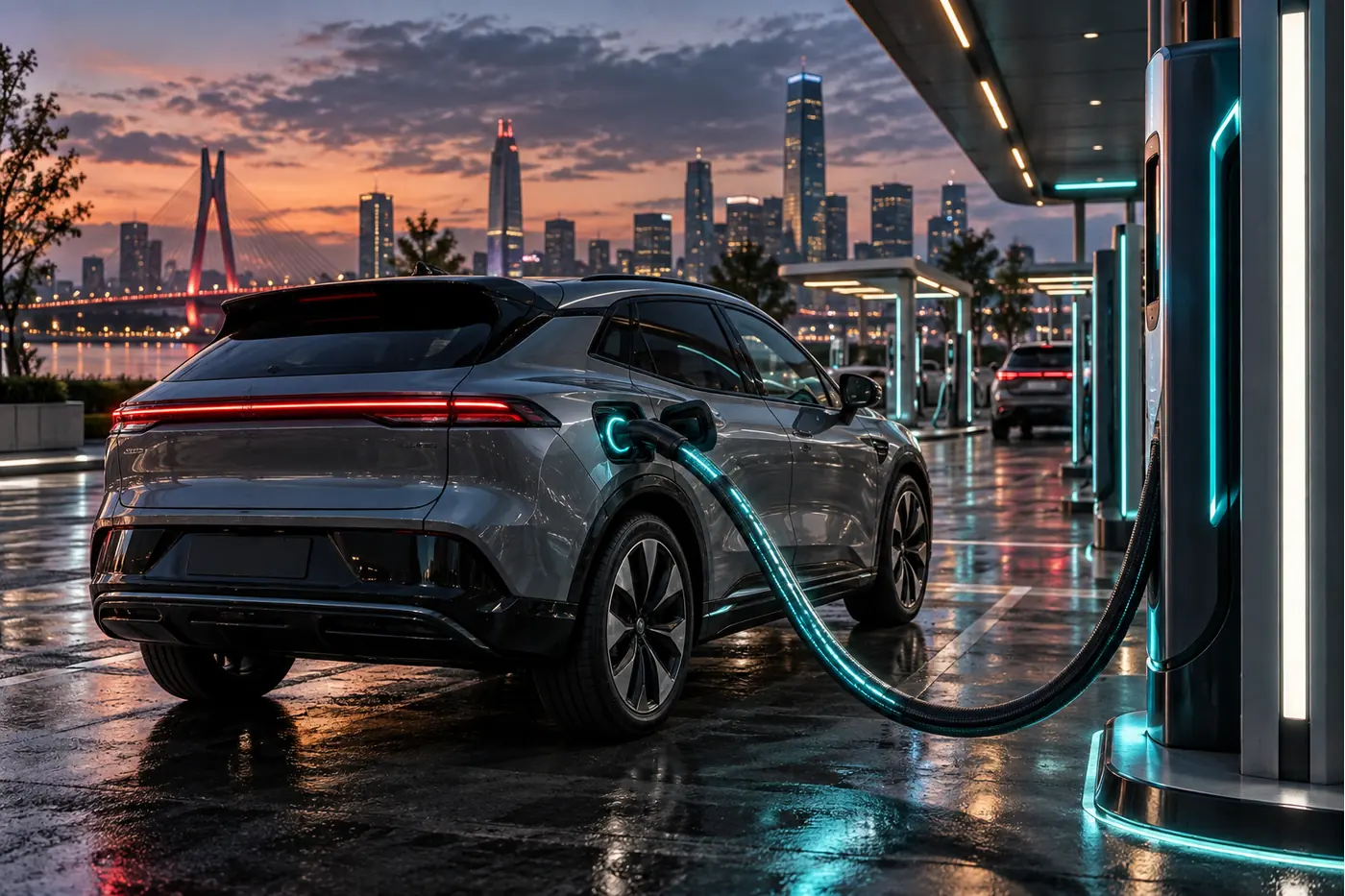
Geely Smart Charging: 7 Confirmed Facts
| 1. Test window | 10% to 70% in 4 minutes 30 seconds |
|---|---|
| 2. Extended window | 10% to 97% in 8 minutes 40 seconds |
| 3. Test applications | Batteries used in Lynk & Co 10 and Zeekr 001 |
| 4. Station rating | Up to 2,250 kW peak charging power |
| 5. Battery | Shendun Golden Battery supports a claimed peak 12C rate |
| 6. Cooling | Five-point liquid cooling across the charging chain |
| 7. Management | AI coordinates vehicle, battery, station, cloud, grid and storage |
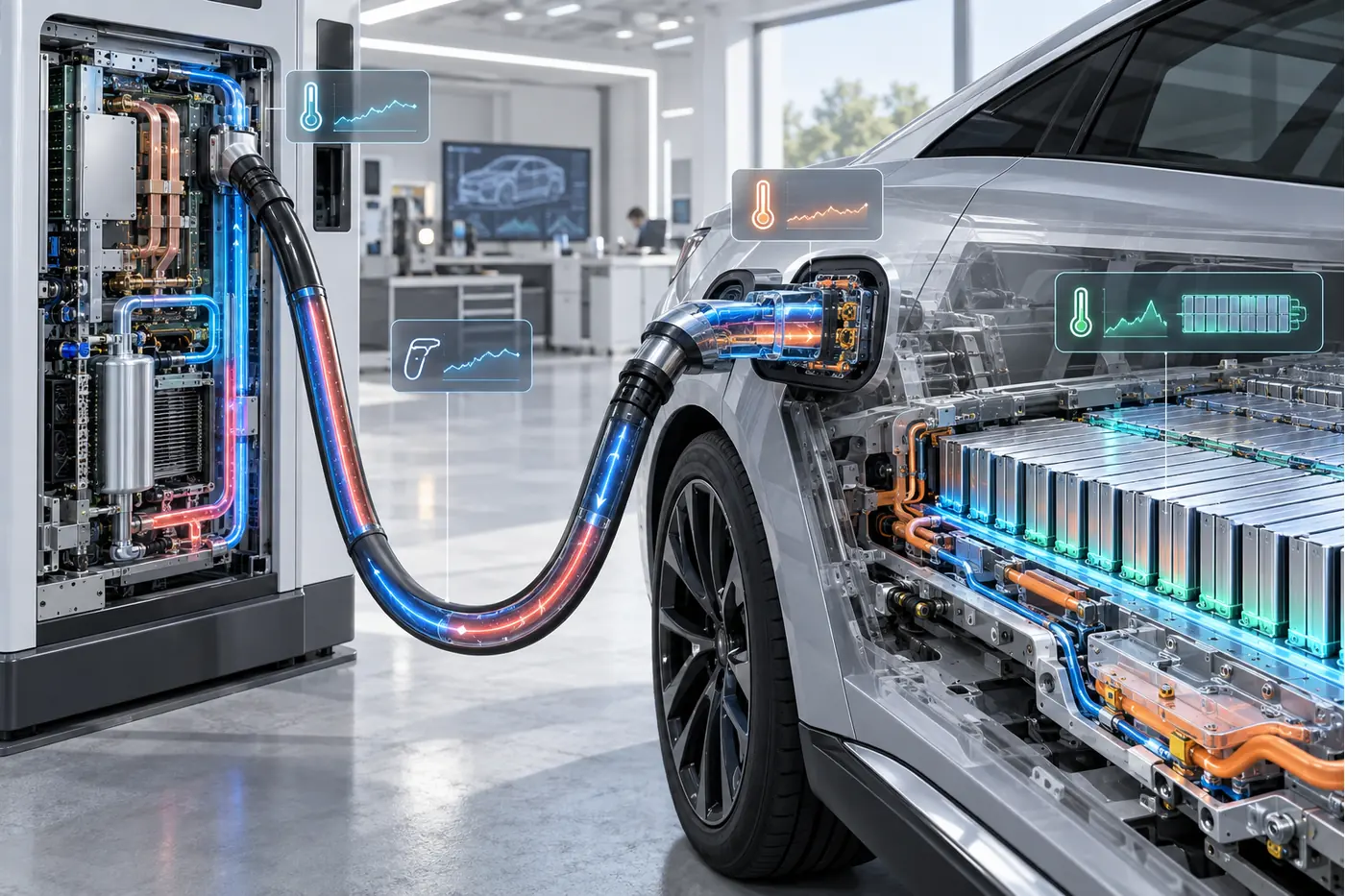
How Geely’s AI Charging System Works
Geely identifies Xingrui PowerMind, developed with StepFun, as the energy-management model behind the system. The company says it predicts battery temperature up to 30 seconds ahead and changes charging power before heat rises, rather than responding only after a threshold is reached.
The cooling path covers the station’s energy-storage battery, charging pile, cable, vehicle port and battery pack. Geely reports an average battery temperature below 55 degrees Celsius and a peak below 65 degrees during fast charging. Those are company targets and results, not an independent comparison across every climate or vehicle.
The automaker also announced a next-generation Ultra Short Blade Battery with a claimed 6C peak rate. Its production-ready charging story therefore covers more than a high-output plug: the battery must accept the power, and the entire chain must remove heat safely.
What the 4-Minute Charging Claim Does Not Prove
A percentage window can hide how many kilowatt-hours actually entered the battery. Two vehicles can both move from 10% to 70% while receiving different amounts of energy because their usable capacities differ. Geely’s release does not turn 4 minutes 30 seconds into a directly comparable miles-added figure for every market.
Peak station power is also different from sustained vehicle power. The car, connector, battery temperature, starting state of charge, software and local grid conditions can all limit the session. A station capable of 2,250 kW does not mean a passenger vehicle continuously receives that output.
Geely says its pulse-restoration strategy can improve battery cycle life by up to 20%. Buyers should treat that as a manufacturer claim until the test protocol, comparison baseline and long-term independent results are available.
The missing metric: energy added over time
A useful charging comparison reports the battery’s usable capacity, kilowatt-hours delivered, average power, peak power and the complete charging curve. It should also document ambient temperature, initial battery temperature and whether the pack was preconditioned. Without those inputs, a percentage-based result is difficult to compare with another EV.
Drivers should pay particular attention to the rate after 70%. Most batteries reduce charging power as state of charge rises to protect the cells and control heat. Geely’s 10%-97% result supplies useful context beyond the headline, but repeat sessions and independent testing will show how consistently compatible cars can reproduce it.
What Global EV Shoppers Should Check
- Which exact model, trim and battery support the advertised charging curve?
- How many kilowatt-hours and estimated driving miles are added in the test window?
- Which countries will receive compatible fifth-generation stations?
- Does the charging rate require battery preconditioning or a specific starting temperature?
- What warranty applies when ultra-fast charging is used frequently?
U.S. shoppers should also confirm that the relevant vehicle and charging hardware are actually offered and certified locally. Geely’s global announcement does not establish a U.S. launch date for every named model or station.
For broader ownership planning, compare the charging claim with Carvul’s used-EV battery health checks and used-car inspection checklist. Charging speed is useful, but battery condition, range, warranty and dependable infrastructure still shape the ownership experience.
Geely Ultra Fast Charging: Model-Specific Context
Geely ultra fast charging combines the vehicle, battery, station and thermal-management system. The company result should therefore be read as a compatible-system test, not as a charging time available to every EV at an ordinary public plug.
Geely 4 Minute Charging Claim
The phrase Geely 4 minute charging refers to the reported 10%-70% window, which actually took 4 minutes 30 seconds. It does not describe a zero-to-full charge, and it does not state the number of kilowatt-hours delivered.
Zeekr 001 Fast Charging Test
The official release says the battery used in the Zeekr 001 participated in the test. Zeekr 001 fast charging performance still depends on the exact battery version, software, temperature and compatible station available in a buyer’s market.
Lynk and Co 10 Charging Test
The Lynk & Co 10 is the other named application. Buyers researching Lynk and Co 10 charging should confirm the local model specification because battery and charging hardware can differ across trims and countries.
Frequently Asked Questions
Did Geely charge an EV from 0% to 100% in four minutes?
No. The reported fast result covers 10% to 70% in 4 minutes 30 seconds. Geely reported 10% to 97% in 8 minutes 40 seconds.
Can any EV use a 2,250-kW charger at full power?
No. The station rating is not the same as the power accepted by a vehicle. Compatible battery and vehicle hardware determine the limit.
Is Geely Smart Charging available worldwide now?
The announcement describes the technology and production-ready performance, but availability varies by model and market. Buyers need local product and infrastructure confirmation.
Bottom Line
Geely Smart Charging is a significant demonstration of integrated battery, cooling and station technology. The useful question is not simply whether a test lasted 4:30, but how much energy drivers can add repeatedly, safely and affordably on equipment available where they live.
Source reviewed September 28, 2026: Geely Auto Group’s official announcement. Performance and longevity figures are manufacturer claims. Carvul images are editorial illustrations.