Quick answer: A CPO inspection checklist is useful only when it belongs to the exact vehicle and shows what was found, measured and repaired. A blank program form or marketing point count cannot replace the completed report or an independent pre-purchase inspection.
Certification is evidence to review, not a substitute for checking condition, documents and complete cost. Program terms vary by manufacturer, tier, vehicle and sale date.
Verify the Report
Match the VIN, inspection date, mileage, dealership, technician approval and certification tier. Request the completed report before discussing financing. Resolve blank sections, vague checkmarks or mileage that no longer matches the car.
Review Reconditioning
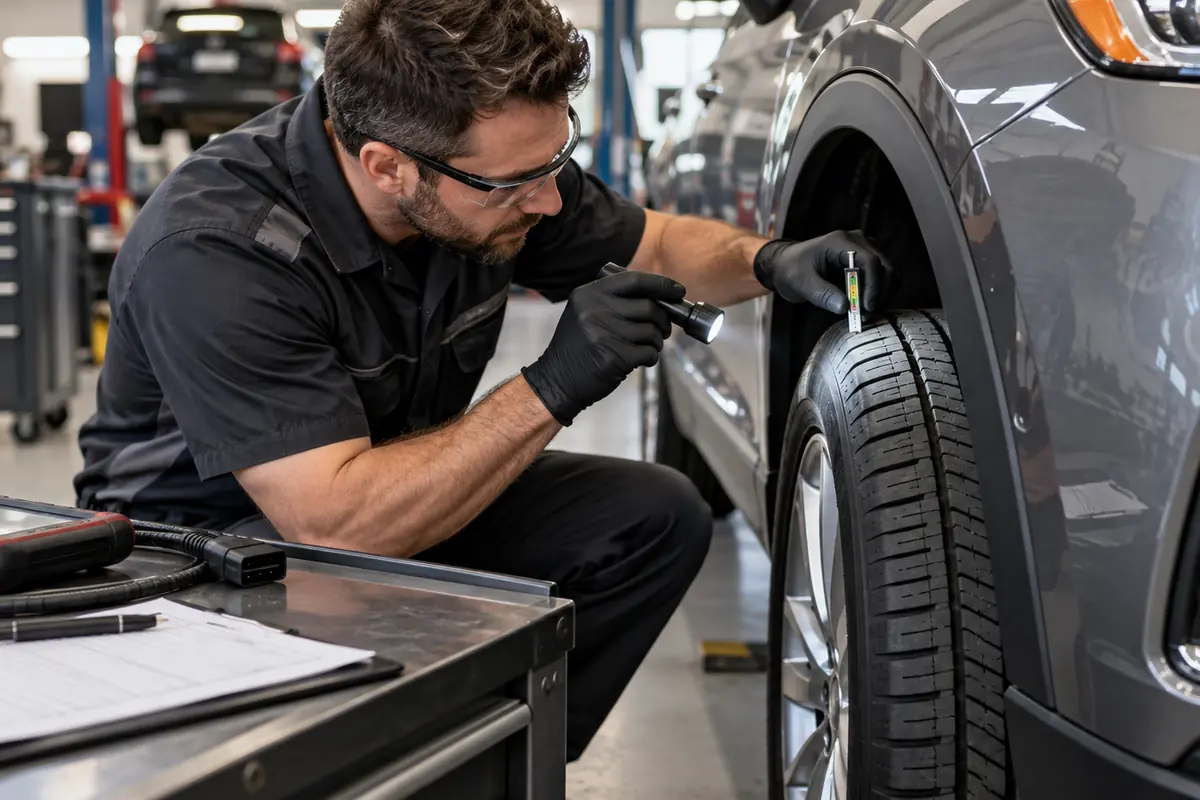
Ask for repair orders or a summary of work completed. Check tires, brakes, battery, fluids, filters, keys, glass, lighting, warning lights and scheduled maintenance. Measurements provide more value than simple pass marks.
Inspect Body, Cabin, and Underbody
Look for mismatched paint, uneven panel gaps, corrosion, water odors, worn controls, damaged safety equipment and underbody impact. Certification does not guarantee that every cosmetic or prior-damage concern is covered by warranty.
Test Mechanical and Electronic Systems
Use a cold start when possible. Check engine operation, shifting, steering, braking, suspension, climate control, infotainment, cameras and driver-assistance systems. Confirm dashboard warning lamps illuminate at startup and behave normally afterward.
Check History, Title, and Recalls
Compare the vehicle-history report with physical condition and records. Match the title and odometer information. Check the exact VIN through NHTSA and ask how open recalls will be handled.
Independent PPI
The FTC recommends an independent mechanical inspection even for a certified vehicle. Give the mechanic the CPO report so differences can be explained. If the dealer refuses every reasonable independent option, consider another car.
Practical Buyer Checklist
- Match the VIN across the car and documents.
- Get the completed inspection report.
- Read the warranty and calculate its clock.
- Check title, history and NHTSA recall status.
- Arrange an independent pre-purchase inspection.
- Request an itemized out-the-door price.
- Compare APR, insurance and first-year costs.
- Put every promise in writing.
Questions to Ask the Dealer
Ask who backs the certification, whether the VIN is enrolled, what was repaired, when each coverage layer expires, which components are excluded, where claims can be handled, whether coverage transfers, and whether an independent inspection is permitted. Carvul’s used-car dealer questions can help organize the conversation.
Certified Pre-Owned Inspection Checklist for the Actual VIN
Quick answer: a certified pre-owned inspection checklist should document what the dealer inspected and reconditioned on the exact vehicle. Ask for the completed report, match its VIN to the car, and still arrange an independent pre-purchase inspection.
1. Confirm Program Eligibility
Verify model year, mileage, title status, and manufacturer requirements. Dealer-created certification is not automatically manufacturer-backed CPO coverage.
2. Match Every VIN
Compare the dashboard, door label, title application, history report, warranty contract, and inspection form. Stop if they do not match.
3. Review the Completed Form
A blank sample proves only that a checklist exists. Obtain the completed report showing findings, dates, and reconditioning for this car.
4. Check Tires, Brakes, and Wear Items
Record tread, tire age, matching specifications, brake measurements, and leaks. These create immediate costs even when warranty excludes them.
5. Inspect Body and Undercarriage
Look for uneven paint, panel gaps, corrosion, damaged glass, and underbody repairs. A history report may not show every event.
6. Test Electronics
Operate cameras, sensors, climate control, seats, windows, infotainment, and warning lights. Ask about calibration after glass or bumper work.
7. Review Reconditioning Records
Ask which parts were replaced and which maintenance remains due. Keep itemized records rather than accepting “fully serviced.”
8. Check Recalls
Use the NHTSA VIN recall lookup. Recall status and warranty coverage are separate.
9. Take a Meaningful Test Drive
Evaluate cold start, braking, steering, shifting, noise, vibration, and messages using Carvul’s test-drive checklist.
10. Get an Independent PPI
An independent technician represents your interests. Follow Carvul’s full inspection checklist.
Inspection Red Flags
- The completed checklist is unavailable or has the wrong VIN.
- The seller refuses an independent inspection.
- Warning lights were cleared without repair documents.
- Tires are mismatched or wear items need immediate replacement.
- Warranty terms conflict with the sales description.
Cross-check paperwork with the vehicle history report guide.
Frequently Asked Questions
Is the dealer checklist enough?
The answer depends on the written program, the exact vehicle and the transaction. Verify the VIN-specific inspection and warranty, compare the complete cost and use an independent inspection instead of relying on the certification label alone.
How recent should the inspection be?
The answer depends on the written program, the exact vehicle and the transaction. Verify the VIN-specific inspection and warranty, compare the complete cost and use an independent inspection instead of relying on the certification label alone.
Should I scan a CPO car?
The answer depends on the written program, the exact vehicle and the transaction. Verify the VIN-specific inspection and warranty, compare the complete cost and use an independent inspection instead of relying on the certification label alone.
What if the reports disagree?
The answer depends on the written program, the exact vehicle and the transaction. Verify the VIN-specific inspection and warranty, compare the complete cost and use an independent inspection instead of relying on the certification label alone.
Final Takeaway
A strong CPO purchase is supported by matching documents, useful remaining coverage, acceptable condition and a competitive total price. If certification cannot be verified or the dealer blocks reasonable review, keep shopping.
Sources: FTC used-car dealer guidance; NHTSA recall lookup. Manufacturer terms must be verified in the current official program documents for the exact VIN.