
Carvul U.S. Buyer Guide
used car insurance cost is one of the biggest money decisions in a used car purchase. A good vehicle can become a bad deal if the financing, insurance, or protection products are structured poorly.

Finance & Insurance: Key Takeaways
- used car insurance cost should be judged by total cost, not only monthly payment.
- Preapproval and lender comparison can protect buyers from weak dealer-only offers.
- Insurance, GAP, taxes, and fees should be part of the budget before signing.
- A clean inspection and realistic vehicle choice make financing safer.
used car insurance cost is one of the biggest money decisions in a used car purchase. A good vehicle can become a bad deal if the financing, insurance, or protection products are structured poorly. This Carvul guide is written for U.S. buyers who want a practical answer before they visit a dealership, apply online, or compare lenders.
Last updated: July 9, 2026. This article uses current market context, Semrush keyword data, and buyer-focused finance checks. It is educational content, not personal financial advice; always compare offers and read lender documents before signing.
What affects used car insurance cost
Used car insurance cost depends on more than the age of the car. Insurers consider driver history, location, annual mileage, vehicle repair cost, safety record, theft risk, coverage limits, deductibles, credit-based insurance scoring in states where allowed, and whether the lender requires full coverage.
Coverage choices for financed used cars
| Coverage | What it does | When it matters |
|---|---|---|
| Liability | Pays others when you cause covered damage | Required in most states. |
| Collision | Helps repair your car after a covered crash | Often required by lenders. |
| Comprehensive | Covers theft, weather, glass, and similar losses | Often required by lenders. |
| GAP | May cover loan balance shortfall after total loss | Review our GAP insurance used car guide. |
Insurance should be checked before financing. A car that looks affordable by payment can become too expensive once full coverage is added.
used car insurance cost: quick answer for 2026 buyers
used car insurance cost matters because the monthly payment is only one part of the real cost. U.S. buyers should compare the APR, loan term, fees, down payment, taxes, registration, insurance, and the expected reliability of the vehicle before signing. A lower payment can still be expensive if it comes from a longer term or a higher rate.
In July 2026, auto financing is still expensive for many shoppers. Public market reports show average new-car rates near the high single digits, used-car rates often higher, and weaker-credit borrowers facing much steeper APRs. That is why Carvul treats financing as part of the buying decision, alongside inspection history, ownership cost, and realistic resale value.
What to compare before you sign
| Item | Why it matters | Buyer move |
|---|---|---|
| APR | The interest rate controls how much the loan costs over time. | Compare at least three offers before accepting dealer financing. |
| Loan term | Long terms lower payment but can increase total interest. | Check the total paid, not just the monthly number. |
| Down payment | A larger down payment can reduce risk of negative equity. | Aim for enough equity to protect your budget if the car loses value. |
| Fees | Origination, documentation, and add-ons can change the real deal. | Ask for an itemized out-the-door price. |
| Insurance | Full coverage or GAP can raise ownership cost. | Read our used car insurance cost guide before budgeting. |
How Carvul recommends shopping a finance deal
Start with the car, then the loan, then the protection products. First, shortlist reliable vehicles using a buying guide and a real inspection. Next, compare loan offers from a credit union, a bank or online lender, and the dealer. Finally, decide whether extras such as GAP insurance or an extended warranty fit the loan balance and vehicle risk.
- Use a realistic price target before visiting the dealer.
- Get a preapproval when possible so the dealer has to compete.
- Compare the APR and the total interest paid over the full term.
- Avoid rolling negative equity into a new used-car loan unless there is no safer option.
- Check insurance quotes before the purchase, especially for SUVs, hybrids, and newer used cars.
Internal resources before you finance
Before financing, read Carvul complete used car buying guide, use the used car inspection checklist, and compare models in our car comparison hub. Financing is safer when the vehicle itself is a smart buy.
Common mistakes to avoid
- Choosing the lowest monthly payment without checking the loan term.
- Accepting the first dealer offer without a bank or credit union comparison.
- Ignoring insurance cost until after signing the purchase paperwork.
- Financing add-ons without asking whether they can be bought separately.
- Skipping a pre-purchase inspection because the payment looks affordable.
Real-world budget example for used car insurance cost
A smart buyer should test the deal before committing. Imagine a shopper comparing two similar used SUVs. One has a slightly lower price but a longer loan, higher insurance quote, and dealer add-ons. The other costs a little more up front but has cleaner service records, a lower APR from a credit union, and a shorter term. The second vehicle can be the better financial decision even when the sticker price is not the lowest.
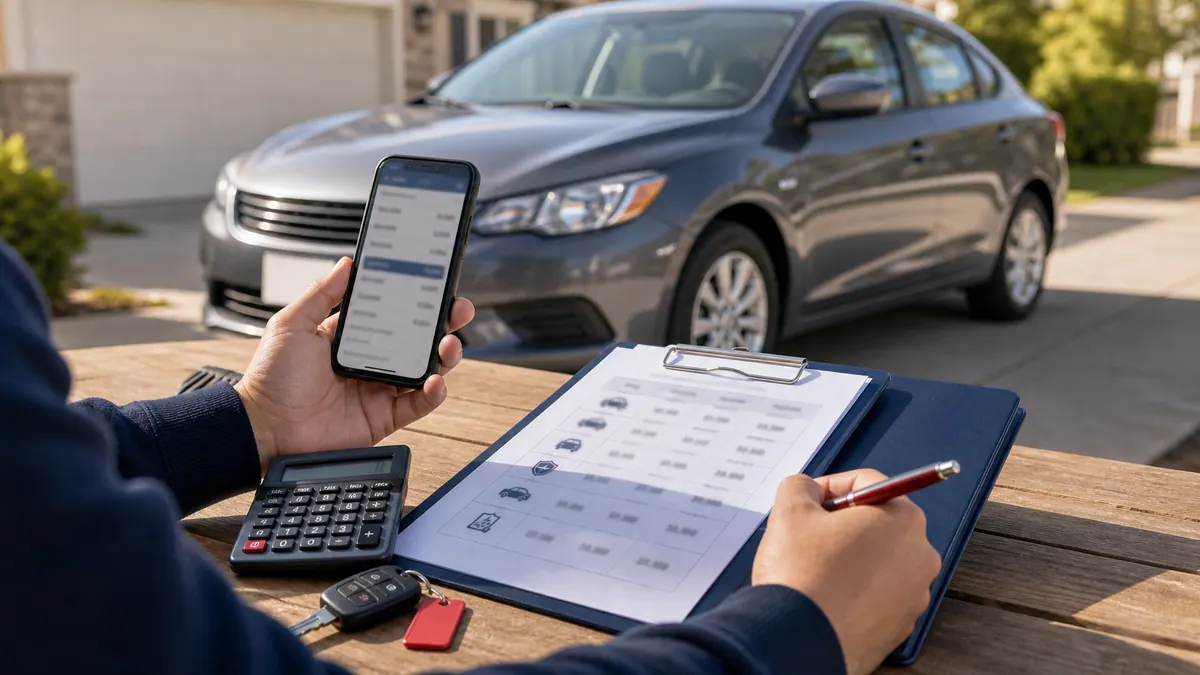
This is why Carvul recommends writing the numbers on one page before signing. Include the sale price, taxes, registration, documentation fee, down payment, financed amount, APR, loan term, estimated insurance, fuel, maintenance, and emergency repair buffer. When all costs are visible, weak deals become easier to spot.
When to slow down or walk away
- The dealer will not separate vehicle price from monthly payment.
- The loan term keeps getting longer to make the payment look affordable.
- You are asked to finance products you do not understand.
- The insurance quote is much higher than expected.
- The seller pressures you to sign before you compare another lender.
- The vehicle history, inspection, or title details are unclear.
Walking away is not a failure. In the used-car market, patience protects your budget. Another similar vehicle will usually appear, and a cleaner deal can save more than a rushed negotiation.
Buyer checklist before applying
- Know your target out-the-door price before talking payment.
- Check your credit report and fix obvious errors.
- Collect income, housing, and current loan information.
- Compare at least one offer outside the dealership.
- Ask whether the APR includes dealer markup.
- Get insurance quotes for the exact VIN when possible.
- Keep copies of every signed finance and insurance document.
For best results, use this article with the Carvul Finance & Insurance cluster. Start with the pillar guide, move to loan rates, compare lender types, then check insurance and GAP. That order keeps the buying process practical and avoids treating financing as an afterthought.
Final Carvul recommendation
Use used car insurance cost as a decision filter, not as a single yes-or-no answer. The strongest used-car deal is usually the one where the vehicle condition, purchase price, loan structure, insurance cost, and emergency budget all make sense together. If one part of the deal feels unclear, pause and compare another option before signing. That simple pause can protect months of payments and help you avoid buying a car that looks affordable only on paper.
Used car insurance cost should be checked before signing the loan because lenders often require collision and comprehensive coverage. A car that looks affordable by payment can become too expensive if the insurance quote is high for the driver, ZIP code, or vehicle type.
For SEO and buyer usefulness, Carvul recommends saving a simple written comparison before making a decision: vehicle price, down payment, APR, term, estimated insurance, likely maintenance, and total paid over the loan. This makes the true cost easier to compare across lenders and vehicles, especially for U.S. shoppers comparing dealership, bank, and credit union options.
Before publishing or updating this guide, the final check is simple: the reader should leave with one clear action, one safer comparison method, and one warning sign to avoid. That is the standard Carvul uses for U.S. car finance content.
FAQ
What is the most important thing to check with used car insurance cost?
The most important thing is total cost. Compare APR, loan term, fees, down payment, insurance, and the vehicle condition before signing.
Can used car insurance cost change by lender?
Yes. Credit unions, banks, online lenders, and dealers can quote different rates or terms for the same buyer, so comparing offers matters.
Should I focus on monthly payment or total cost?
Use the monthly payment to protect cash flow, but make the final decision from total cost, interest paid, and negative-equity risk.
Is a longer used car loan a good idea?
A longer loan can lower the payment, but it can increase interest and make it easier to owe more than the car is worth.
Sources and further reading: CFPB auto loans, WSJ Buy Side auto loan rates, Edmunds market reporting via Road & Track.