
Car AC compressor replacement cost can be one of the larger air-conditioning bills on an older vehicle, but a warm cabin does not prove the compressor has failed. A compressor may not run because the control system has not commanded it, the refrigerant circuit has a fault, or a related electrical condition prevents operation. Before comparing prices, confirm what testing supports replacement and what the written quote includes.
This guide is for U.S. owners reviewing a compressor estimate. It explains why quotes vary, which related work may matter, and when a second opinion is worth considering. It does not provide a universal price or a do-it-yourself replacement procedure. Refrigerant work requires proper equipment and qualified service; do not open or vent the system yourself.
Quick Answer
Ask the shop how it confirmed compressor failure, whether there is internal damage or debris, which parts and refrigerant services the quote includes, and how the repair will be verified. Compare written estimates on the same scope and warranty. A replacement may be justified, but a compressor that is not engaging is not automatically broken. The vehicle’s overall condition and your ownership plans matter as much as the quoted total.
What Does the AC Compressor Actually Do?
The compressor moves refrigerant through the cooling circuit. It works with the condenser, expansion device, evaporator, controls, and fans to remove heat from the cabin. Some compressors use clutch mechanisms; others use different control designs. That variation is one reason a familiar “click” is not a reliable universal test. A technician should use procedures appropriate for the particular model.
Warm air can also come from a leak, weak airflow, a temperature-door problem, condenser airflow, or electrical controls. Our car AC repair guide explains the broader diagnostic path. If the primary symptom is that the car AC is not blowing cold air, start with the symptom checklist before accepting a part-specific quote.
A compressor estimate should follow testing, not lead it. The shop may need to confirm electrical command, inspect system conditions, check related components, and determine whether the compressor itself is damaged. Ask for the conclusion in plain language. “It does not turn on” describes an observation; it is not always the same as “it has failed internally.”
Why Compressor Replacement Quotes Vary
Vehicle design affects labor. The compressor may be easy to access on one car and buried behind other components on another. Part options may include original equipment, new aftermarket, or remanufactured units. The quote may also include refrigerant recovery and charge, seals, a belt, condenser work, or other parts if supported by the failure. Local labor rates and taxes add another layer of difference.
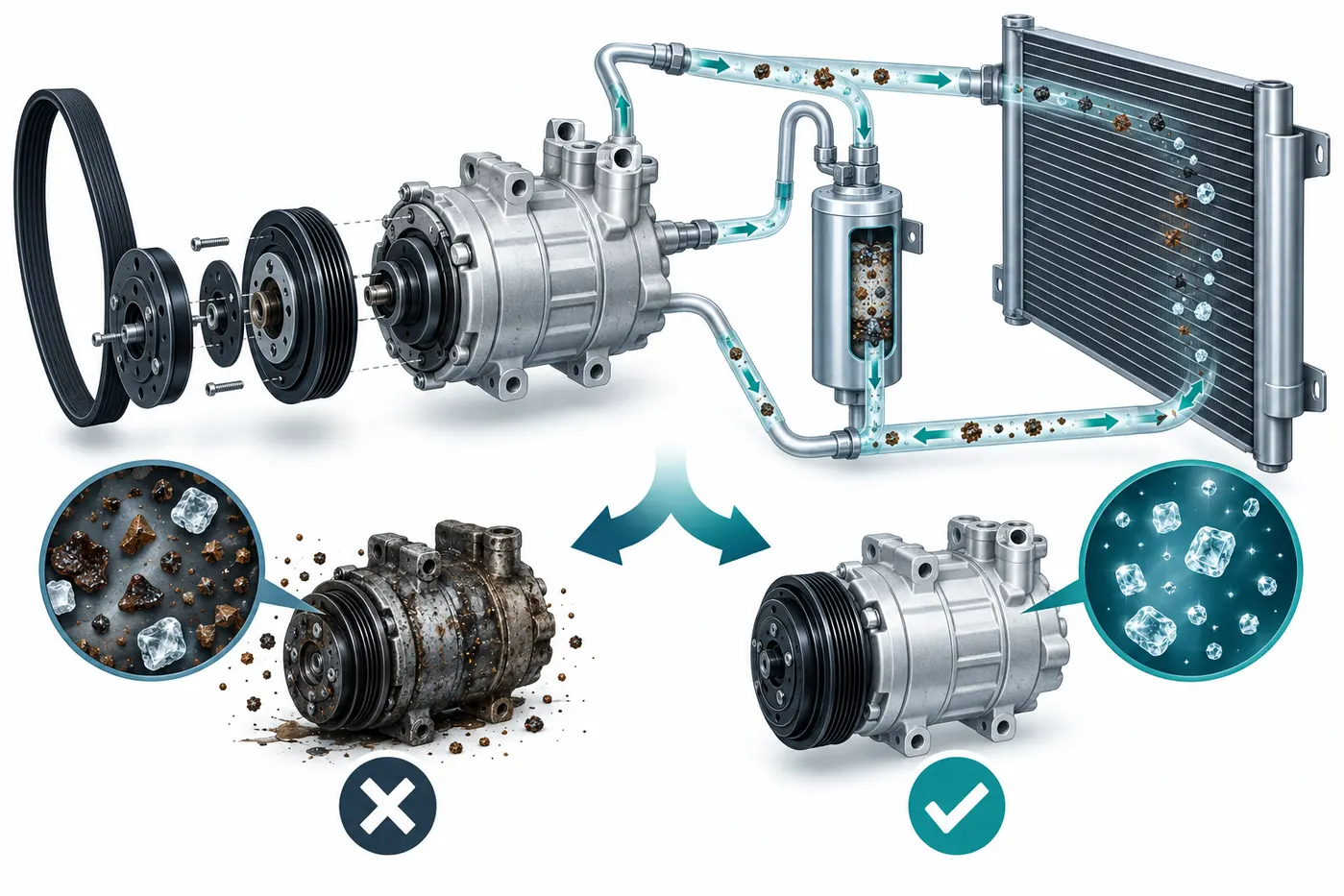
Internal damage can change the scope substantially. If debris has traveled through the system, simply fitting a new compressor may expose it to contamination. The required parts and cleaning steps depend on vehicle design and the kind of failure. Ask the technician what it inspected and why each related item is on the estimate. A generic internet checklist cannot decide that for your car.
| Estimate line | What to clarify |
|---|---|
| Compressor | New, remanufactured, or other approved part? |
| Labor | Access and installation work included? |
| Refrigerant service | Correct product, recovery, evacuation, and charge? |
| Related components | Required by diagnosis, manufacturer procedure, or warranty? |
| Contamination work | What evidence indicates debris or internal damage? |
| Verification | How will cooling and the original complaint be retested? |
| Warranty | Parts, labor, and refrigerant covered for how long? |
This is a quote-review table, not a requirement that every job include every line. A shop should explain the work that applies to the actual fault.
Check 1: What Evidence Confirms the Compressor Is Faulty?
Ask the shop to separate the symptom, test, and conclusion. The symptom might be warm air. The tests may concern compressor command, electrical supply, system response, and mechanical condition. The conclusion should explain why replacement, rather than a control repair or refrigerant-leak repair, addresses the fault. If the technician cannot connect those steps, seek clarification before authorizing a major job.
Some problems appear only at idle, after a long drive, or when the cabin is very hot. Tell the shop exactly when the failure occurs and provide a short recording if safe. An intermittent fault can be hard to reproduce in a cool service bay. A clear history may prevent a premature replacement based on a brief static test.
Do not demand one particular pressure reading or test sequence from an online article. Methods vary across vehicles and refrigerants. The goal is a vehicle-specific diagnosis with documented reasoning, not a ritual performed for the owner. Ask what alternative causes were ruled out and what remains uncertain.
Check 2: Is It a Compressor Fault or a Control Fault?
A compressor that does not operate may be uncommanded by the vehicle’s control system. Sensors, wiring, fan problems, or conditions in the refrigerant circuit can affect that command. Replacing a mechanically sound compressor will not repair a broken control path. Ask whether the shop confirmed the unit receives the proper command and whether it responds as expected.
Not all designs use the same clutch arrangement, so the absence of an audible click proves little by itself. The technician should identify the system fitted to your car. If a shop says only that it “cannot hear it kick in,” ask for the additional test that makes replacement the right next step.
Check 3: Has the Shop Checked for a Leak?
Low refrigerant can keep a system from cooling correctly, and a leak can coexist with other faults. Ask whether the charge condition and leak status were evaluated. If the compressor is being replaced because it is leaking, request the location and evidence. If another component leaks, a compressor-only job may leave the system undercharged again.
The car AC refrigerant leak guide explains why leak location matters. A statement that the system is “low” does not identify which part failed. If the leak is uncertain, ask what further test is needed before a large estimate becomes a firm repair plan.
Recharge alone is not a substitute for fixing a confirmed leak. Nor is every low-charge complaint evidence of compressor failure. The shop should describe how its proposed work will prevent the original symptom from returning, and which part of that answer remains uncertain.
Check 4: Is There Internal Damage or Contamination?
A compressor can fail in different ways. A seized or internally damaged unit may create contamination that affects other components. A leak at the compressor may require a different scope. Ask whether the technician found evidence of internal damage, how that was established, and whether debris or contaminated oil changes the procedure.
Do not assume a new compressor alone is sufficient when the system has contamination. Equally, do not accept an expensive list of related parts without an explanation. The required components, cleaning method, and manufacturer guidance vary. A transparent quote can distinguish work required for function or warranty from optional preventive replacement.
If the proposed work includes a condenser, expansion device, or other related component, ask why. “We always do this” is less informative than “this component cannot be cleaned adequately after the debris we found” or a vehicle-specific service requirement. Get the scope and reasoning in writing.
Check 5: Which Part Option and Warranty Are Offered?
A new original-equipment unit, a new aftermarket unit, and a remanufactured unit can differ in price and warranty. None is automatically the best choice for every older car. Ask who supplies the part, whether it meets the vehicle requirements, and how the shop handles a warranty claim if cooling fails again.
The warranty should say whether it covers parts, labor, and related refrigerant service. A replacement part warranty that excludes installation labor may leave you with a substantial bill even if the part itself is replaced. Some warranties may also require specific related work. Ask for those conditions before deciding which quote is cheaper overall.
Avoid comparing one shop’s new-part quote to another shop’s remanufactured-part quote as if they were identical. You can still choose the less expensive option, but understand the tradeoff. Put the part type and warranty next to the total price when you compare estimates.
Check 6: Is Refrigerant Service Included?
Compressor replacement normally involves working with the refrigerant circuit. The quote should identify the vehicle-specified refrigerant and describe recovery and service as appropriate. Ask whether the price includes the final charge and performance check or whether those are added later. A low parts-and-labor figure may not be the complete cost to return a working AC system.
The EPA’s motor-vehicle AC service requirements explain certification and equipment rules for paid service, as well as the prohibition on intentional venting. Do not accept a cheaper procedure that releases refrigerant or uses an unapproved substitute. The EPA also lists acceptable refrigerants; your vehicle label and manufacturer information identify the appropriate one for your car.
If another quote is only for a car AC recharge, it is not a competing compressor-replacement quote. Ask whether either shop has proved the fault before choosing a service package.
Check 7: How Will the Repair Be Verified?
Ask the shop how it will confirm the original complaint is gone. If the AC was cold while moving but warm at idle, the final check should address idle conditions. If cooling stopped after a long drive, the shop should understand that a brief test may not reproduce the problem. It may need a longer test or follow-up plan.
Verification matters because a compressor can be replaced successfully while another fault remains. The final invoice should say what was done, what was tested, and whether the shop found additional concerns. Keep copies of both estimate and invoice. They are useful if the symptom returns during a warranty period.
The FTC’s auto repair guidance emphasizes estimates, authorization, and records. Ask the shop to contact you before expanding the work beyond the agreed scope. A surprise related-parts bill after the compressor is removed should not replace informed consent.
Check 8: Does This Repair Fit the Vehicle’s Overall Value?
There is no universal percentage of vehicle value that makes AC repair worthwhile. A paid-off car with a sound engine, good tires, and known maintenance may be cheaper to keep than replacing it. A car with major structural rust, repeated transmission problems, or serious safety work pending deserves a broader decision. Compare the estimated repair with the total cost of continued ownership.
Our used-car maintenance cost guide can help you place the AC bill among other upcoming expenses. Include diagnostic uncertainty: if the quote does not address a leak or contamination, the true cost of restoring reliable cooling may be higher than the first number.
Comparing Two Compressor Estimates
Place each written quote in a simple side-by-side list. Start with the diagnosis and tested failure. Then compare part type, labor, refrigerant service, related components, cleanup, warranty, taxes, and verification. If any line differs, ask whether it reflects a real difference in the repair plan or just a different way of writing the bill.
Do not be surprised if shops disagree at first. One may have identified a fault the other missed, or one may be quoting a different part. Ask both to explain their findings. A second opinion is especially valuable when the proposed cost is large and the original diagnosis rests only on warm air or a missing click.
Confirm how the shop handles additional damage discovered after disassembly. Will it pause for approval? Will you receive the new findings and revised estimate? A clear process protects you from making a rushed decision after the car is already apart.
Warning Signs That Change the Urgency
If the AC makes a severe new mechanical noise, turn it off and arrange service. If the engine temperature rises or a warning appears, follow the owner’s manual and address the engine cooling concern promptly. A burning odor also deserves immediate attention. These signs are not proof of compressor failure, but they are reasons to avoid repeated testing just to keep the cabin cold.
Do not reach toward belts or electric fans under the hood to “confirm” a noise. Moving components can injure you and fans may start unexpectedly. A technician can inspect safely. Your contribution is a precise account of when the symptom occurs, not hands-on investigation of a running system.
If the car was recently repaired and the same symptom returned, bring the invoice. Warranty status and the exact previous work can materially change the next decision. Give the prior shop a fair chance to inspect a potential warranty issue, but ask for a documented explanation if it says the new symptom is unrelated.
Frequently Asked Questions
Does warm air always mean the compressor is bad?
No. A leak, condenser airflow problem, control fault, or temperature door can create warm air. The compressor needs vehicle-specific testing before replacement is justified.
Can I drive with a bad AC compressor?
That depends on the actual failure and vehicle design. Loss of cooling alone differs from a seized component, severe noise, or an engine overheating warning. Turn off the AC if a new distressing noise appears and obtain professional guidance. Do not assume it is safe to ignore a mechanical symptom.
Can the compressor be repaired instead of replaced?
Some faults involve external controls, connections, or seals; others involve internal damage that makes replacement appropriate. Ask what component actually failed and whether an approved repair exists for your vehicle. Do not assume a low-cost fix is available without a diagnosis.
Why does the quote include a condenser or other parts?
The technician may have found damage or contamination, or the manufacturer or part warranty may require related work. Ask for the evidence and reason for each item. Not every compressor replacement requires the same parts list.
Should I buy my own compressor online?
Ask the shop first. It may not install customer-supplied parts or may limit the labor warranty. A cheap part with no supported warranty can make the total risk higher. Compare the complete repair, not just the catalog price.
Bottom Line
Before deciding whether car AC compressor replacement cost is reasonable, verify that replacement addresses a proven failure. Review the part type, related damage, refrigerant service, labor, warranty, and final verification. Then compare the complete estimate with the car’s condition and your ownership plans. The right decision is the repair with documented evidence and a complete scope, not automatically the lowest headline price.
Sources and Scope
- U.S. EPA: Motor Vehicle Air Conditioning service requirements
- U.S. EPA: Acceptable refrigerants and their impacts
- Federal Trade Commission: Auto Repair Basics
This article is general U.S. consumer guidance, not a universal price, safety clearance, or vehicle-specific repair procedure.