
Car AC recharge cost depends on more than a can of refrigerant. The vehicle’s specified refrigerant, how much service is needed, local labor rates, leak testing, and the condition of the system all affect the quote. Most importantly, an AC recharge describes a service, not a diagnosis. If the refrigerant escaped through a leak, adding more without addressing the cause may offer temporary relief and a second bill.
This guide is for U.S. drivers deciding whether to approve an AC recharge. It explains what to ask, how to compare written estimates, and why a low advertised price may not cover the work your car needs. It does not tell you to open the refrigerant circuit or substitute a refrigerant. Federal service rules apply to paid motor-vehicle AC work; consult a qualified technician for your specific vehicle.
Quick Answer
Ask whether the shop confirmed the system’s charge, identified the correct refrigerant, checked for leaks, and included all necessary service and labor in its written estimate. A recharge may be appropriate after a documented repair or as part of a carefully explained diagnostic plan. It is not automatically the solution to warm air. A quote for a refill should not be compared with a quote that includes finding and repairing a leak.
What Does “Recharge” Mean?
In everyday speech, recharge means putting refrigerant back into the vehicle’s air-conditioning system. In professional service, the work may include recovering existing refrigerant, checking the system, addressing a repair, evacuating air and moisture, and charging it to the manufacturer’s specification. The exact procedure depends on the fault and the equipment used. Ask the shop to describe the scope rather than relying on the word “recharge” alone.
Refrigerant circulates in a sealed system; it is not consumed like gasoline. If the system has lost enough refrigerant to affect performance, a leak or previous service issue may need investigation. A shop should not promise that a simple refill permanently fixes a leak it has not located. Nor should every warm-air complaint be labeled low refrigerant: fans, controls, compressor commands, and airflow can create similar symptoms.
If you do not know whether the vents have weak airflow or strong warm airflow, start with our car AC not blowing cold air guide. The distinction helps you decide whether a refrigerant-service quote is even addressing the complaint.
| Quote says | Clarify before approving |
|---|---|
| “AC recharge” | What diagnosis shows the system needs refrigerant? |
| “Refrigerant included” | Which refrigerant, and how much is included? |
| “Leak check” | What method and scope are included? |
| “Evacuate and charge” | Is a confirmed leak being fixed first? |
| “AC service special” | What extra charges can follow the inspection? |
The table is a conversation guide, not a claim that all services have the same steps. A completed leak repair and a straightforward service following another component replacement can require different work.
Question 1: Why Does This Car Need a Recharge?
Ask what test led to the recommendation. Did the technician verify the system was undercharged or simply observe warm air? Did the complaint appear suddenly, gradually, only at idle, or only on one side? Those patterns can direct testing but cannot by themselves prove the charge is low. A clear diagnosis is a better foundation for a quote than an advertisement that promises to make any car cold.
If a previous recharge helped for a few days or weeks, bring the invoice and tell the shop exactly how long cooling lasted. That history raises the importance of leak investigation. It does not locate the leak. The shop should explain how it will check the present system and whether further testing is required before a durable repair can be quoted.
You can ask for the measured findings in plain language without insisting on a particular reading. Pressure alone under one set of conditions is not a complete explanation. The technician should connect the diagnosis to the car’s symptoms and the planned service. If the explanation remains unclear, pause before authorizing work.
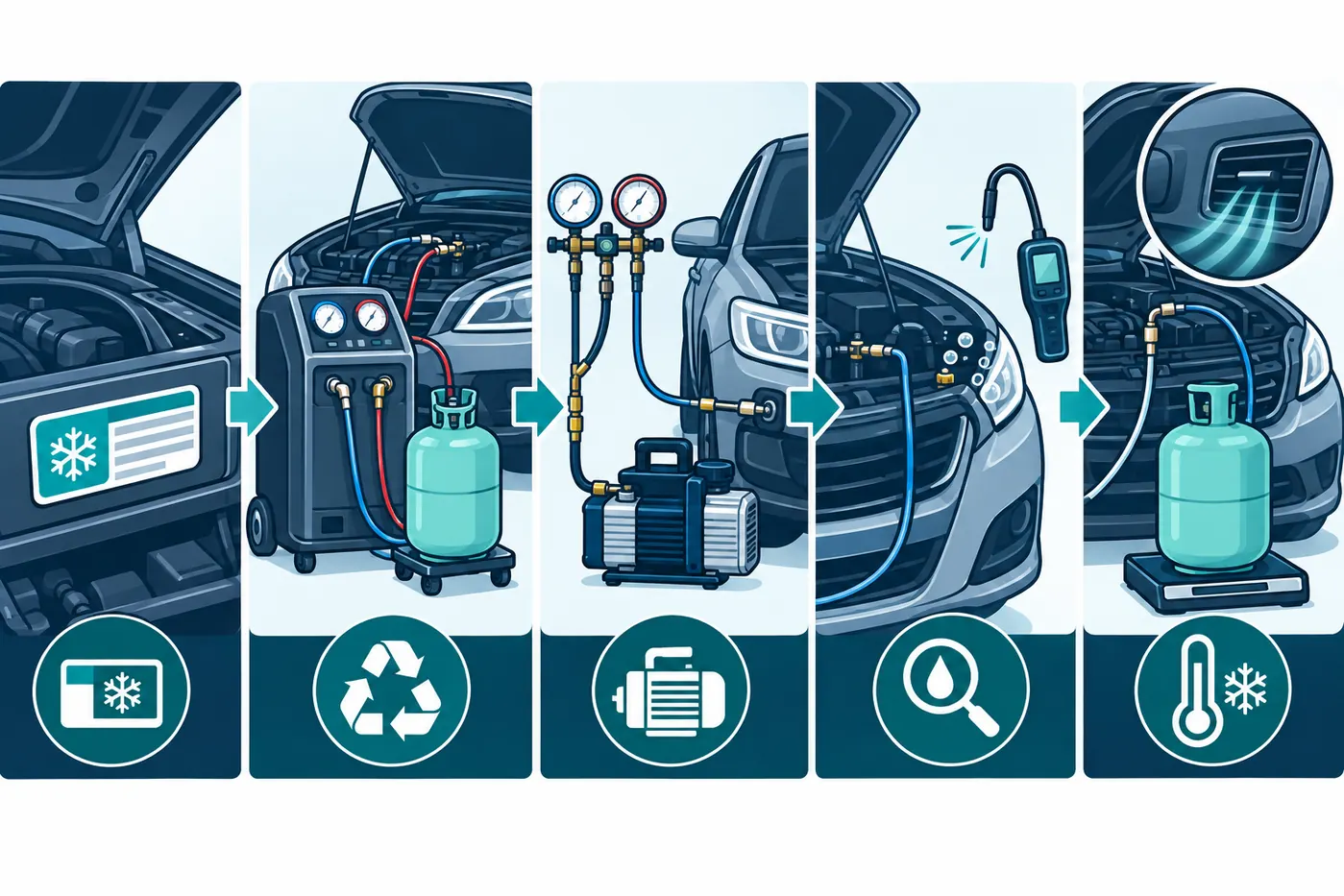
Question 2: Which Refrigerant Does the Vehicle Require?
The correct refrigerant is specific to the vehicle and should be identified from its label and manufacturer information. Do not assume all cars of a certain decade use the same product. Shops need the appropriate equipment and procedures for the refrigerant they handle. The EPA’s overview of acceptable motor-vehicle refrigerants provides regulatory context, not a substitute for the vehicle label.
A vague quote that says only “freon” does not identify the material. Ask the shop to name the vehicle-specified refrigerant and include it on the estimate. Do not authorize an unapproved substitute or a mixture because it appears cheaper. The EPA warns about safety risks and restrictions involving hydrocarbon refrigerants in motor-vehicle AC.
The refrigerant type can affect service cost and equipment requirements. It is one reason an online average may be misleading. Your written quote should make clear what the shop plans to use and whether the price covers the quantity and service needed for your vehicle.
Question 3: Is Leak Diagnosis Included?
If the system is undercharged, ask whether the shop found a leak, tested for one, or still needs to perform that work. The three answers are not the same. A leak can occur at a hose, connection, condenser, evaporator, or another component. The location determines the repair scope. A quote for refrigerant alone should not be confused with a quote for locating and repairing the failed part.
Some leaks are intermittent or hard to find. A shop may need a staged diagnostic plan, especially when access is limited. Ask what the first fee covers and what findings would lead to more work. A transparent answer may involve uncertainty; it should not involve pretending that a refill guarantees a lasting fix.
Our car AC refrigerant leak guide walks through the signs, testing questions, and repair decisions. If the shop has found a leak, request the location and supporting evidence on the estimate. If it has not, ask what the next diagnostic step is before paying for repeated recharges.
Question 4: What Exactly Is Included in the Service Price?
Request an itemized written estimate. It should show the diagnostic charge, labor, refrigerant, any parts or seals, taxes, and shop fees, with optional work separated from required work. An advertised entry price may cover only an inspection or a limited amount of material. Ask what would cause the final total to rise and whether your approval is required first.
The Federal Trade Commission’s Auto Repair Basics explains how to use estimates and authorizations. Keep a copy of the written estimate and the final invoice. If the job includes a repair as well as a recharge, have the shop identify which line items address the underlying cause and which restore the specified charge after that repair.
Compare two quotes only when they describe the same scope. A low-price top-off and a leak repair plus proper service are different products. The more expensive quote might be justified, or it might contain unnecessary work; the itemization gives you a way to ask. Without it, the sticker price tells you little.
Question 5: Does the Shop Follow Appropriate Service Rules?
Motor-vehicle air-conditioning service is specialized work. The U.S. EPA’s service requirements address certification and approved equipment for technicians performing paid service. Intentional venting is prohibited. You do not need to know how to operate a recovery machine, but you can ask whether the shop has the equipment for your vehicle’s refrigerant.
Avoid a do-it-yourself shortcut that requires opening lines, releasing refrigerant, or adding a substitute product. A small can and gauge do not diagnose the complete system, and adding material to a system with an unconfirmed fault can make professional diagnosis harder. Safety and compliance are more important than chasing a low sticker price.
If a provider proposes venting the system as a cheap option or cannot identify the refrigerant, do not authorize that work. Seek a qualified shop. The appropriate service procedure should be part of the quote, not a hidden extra or a step the owner is expected to perform unsafely.
Question 6: What Happens If Cooling Fails Again?
Ask whether the shop expects the recharge to be a durable solution and why. If the service follows a confirmed leak repair, what warranty covers the repair and the refrigerant service? If the leak has not been found, what happens if cooling fades again? Get the answer before paying, not after the system warms up in traffic.
Some shops may offer a diagnostic step rather than a promise of permanent repair. That can be reasonable if the uncertainty is explicit and you understand what you are authorizing. What is not useful is an unqualified guarantee that a refill will repair an unidentified failure. Write down the test results and save the invoice for any follow-up visit.
The shop should also verify operation under conditions comparable to the original complaint. If the AC was cold on the highway but warm at idle, a brief test in an empty bay may not prove the complaint is resolved. Ask how the technician will confirm cooling after service.
Question 7: Would a Different Repair Solve the Problem?
Warm air can result from a fan, a temperature-control door, a compressor command issue, or other faults. A recharge would not repair a weak blower or a failed electrical control. Ask the shop whether those possibilities were excluded, particularly if the system has normal refrigerant charge. A useful quote follows the diagnosis rather than forcing every symptom into one service package.
For an overview of repair paths, read our car AC repair guide. If the compressor has been diagnosed as failed, the car AC compressor replacement cost guide explains why that quote may include related work. If the primary concern is price comparison across possible repairs, see car AC repair cost.
You should not feel pressured to name the part yourself. Describe what the car does; let the technician test it. The purpose of these questions is to verify that the recommended work addresses the actual complaint, not to replace professional judgment with an internet checklist.
Why National Recharge Prices Are Often Misleading
National price pages typically combine vehicles, regions, refrigerant types, and service scopes. Some include diagnosis; others exclude it. Some reflect a simple charge; others fold in leak testing or minor repairs. Even a current figure cannot tell you what your specific car needs. Treat such numbers as rough context at best, not a quote or a benchmark for rejecting a documented estimate.
Ask two local shops for written scopes if the first quote is substantial. Provide the same vehicle details and symptom history. If both shops disagree about the cause, ask each to show the evidence before deciding by price. A cheaper recharge is not automatically the financially sensible choice when another quote repairs the source of refrigerant loss.
Budget for repeat visits when evaluating a temporary approach. Several low-cost recharges can exceed the cost of a proper diagnosis and repair, especially if they delay action until peak summer demand. Conversely, a major repair may not make sense for an older vehicle with other serious problems. Consider the whole car, your ownership horizon, and the documented fault.
Used-Car Buyers: Do Not Accept “Just Needs a Recharge”
Sellers sometimes use that phrase for a vehicle with warm air. It may be true that the system is undercharged, but the phrase says nothing about why. A small leak, a damaged component, an electrical fault, or a major repair can all sit behind it. Request a professional inspection before accepting the claim or building a purchase budget around a refill price.
Test the system on a drive long enough to compare idle and road-speed performance, if safe and permitted. Note whether all vents have similar airflow and whether both sides cool. Ask the seller for prior AC invoices, particularly if the system was recharged recently. A recent refill followed by warm air again is useful history for the inspector.
The AC issue belongs in the broader used-car inspection checklist. It should not distract you from safety, tires, brakes, fluid leaks, or other major costs. Negotiate based on a real diagnosis and the total condition of the car, not a guess that an inexpensive can will solve everything.
Frequently Asked Questions
Is car AC recharge the same as repair?
No. A recharge restores the specified refrigerant charge as part of service. It does not, by itself, fix a leak, failed control, damaged fan, or compressor fault. It can be part of a complete repair after the cause is identified.
How long should an AC recharge last?
There is no universal time guarantee. A sound, properly repaired system should not need routine topping off like fuel. If cooling disappears quickly, report that history and ask the shop to investigate the cause rather than assuming another refill will last longer.
Can a shop quote a recharge over the phone?
It can describe its inspection or service pricing and what is included, but it cannot know whether recharge is the correct repair without examining your car. Give the year, make, model, symptom, and prior service history. Ask what would change the quoted total.
Does a low-pressure reading prove a leak?
One reading alone is not a full diagnosis. The technician should interpret measurements under appropriate conditions and, if refrigerant loss is suspected, investigate the source. Ask for the finding in plain language and what test supports it.
Is a DIY can the cheapest option?
The upfront purchase may be lower than professional service, but it can miss the true fault, introduce the wrong product, or delay a lasting repair. Do not open the pressurized system or release refrigerant. A professional diagnosis may be less costly over the full ownership period.
Bottom Line
The meaningful car AC recharge cost is the total cost of the right service for your vehicle. Confirm the diagnosis, correct refrigerant, leak status, written scope, and follow-up warranty before authorizing work. A recharge may restore cooling when it is part of an appropriate repair, but it should not be a default answer to every warm-air complaint.
Sources and Scope
- U.S. EPA: Motor Vehicle Air Conditioning service requirements
- U.S. EPA: Acceptable refrigerants and their impacts
- U.S. EPA: Hydrocarbon refrigerant safety questions
- Federal Trade Commission: Auto Repair Basics
This is general U.S. consumer guidance, not a service instruction or a vehicle-specific price quote.