
2027 vehicle pedestrian safety tests are now part of the information U.S. shoppers can review through NHTSA’s New Car Assessment Program. The agency announced its first results on September 18, 2026, saying 102 model-year 2027 vehicles from 10 manufacturers met the new pedestrian-protection performance criteria.
The new result adds useful context, but it should not be confused with a complete crash rating or a guarantee that a vehicle will prevent every pedestrian injury. Buyers still need to compare occupant crashworthiness, crash-avoidance technology, visibility and the exact vehicle’s equipment.
Quick answer: The new tests evaluate injury risk to a pedestrian’s head, hips, legs and knees in simulated impacts with the hood, windshield area, hood leading edge and bumper. NHTSA says a yellow box on a model’s ratings page will show whether the criteria were passed, failed, are pending or were not submitted.
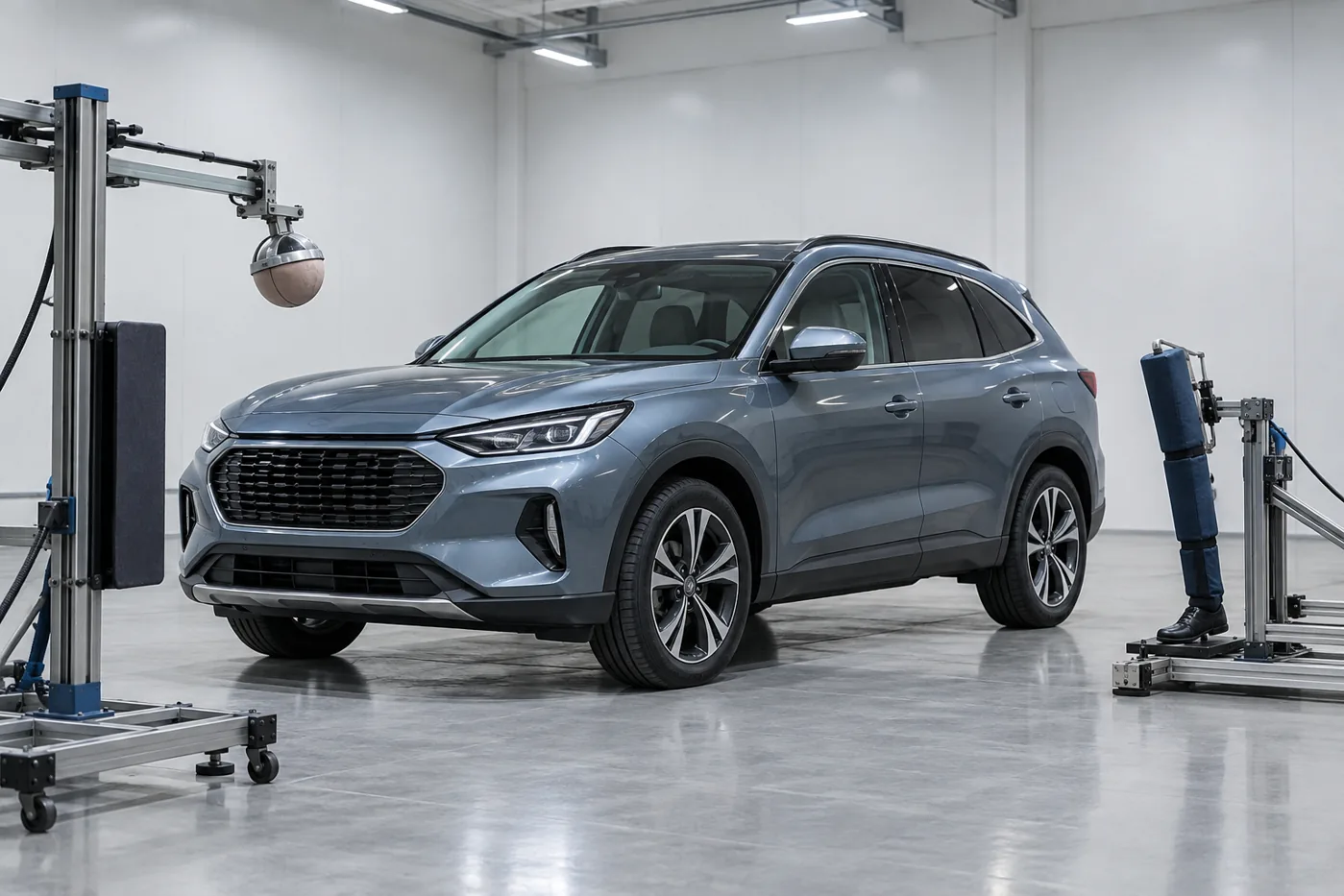
What 2027 Vehicle Pedestrian Safety Tests Mean
NHTSA describes this as the first pedestrian-protection assessment added to its 5-Star Safety Ratings program. The test result concerns how the vehicle’s exterior design manages specific pedestrian impact scenarios. It is distinct from ratings for frontal, side and rollover occupant protection. It is also distinct from technology intended to avoid a collision in the first place.
A model meeting the criteria has performed to the agency’s standard in the tested scenarios. That does not tell a buyer how every trim, optional package or real-world crash will behave. Use the model-specific NHTSA page and verify the model year rather than relying on a dealer summary.
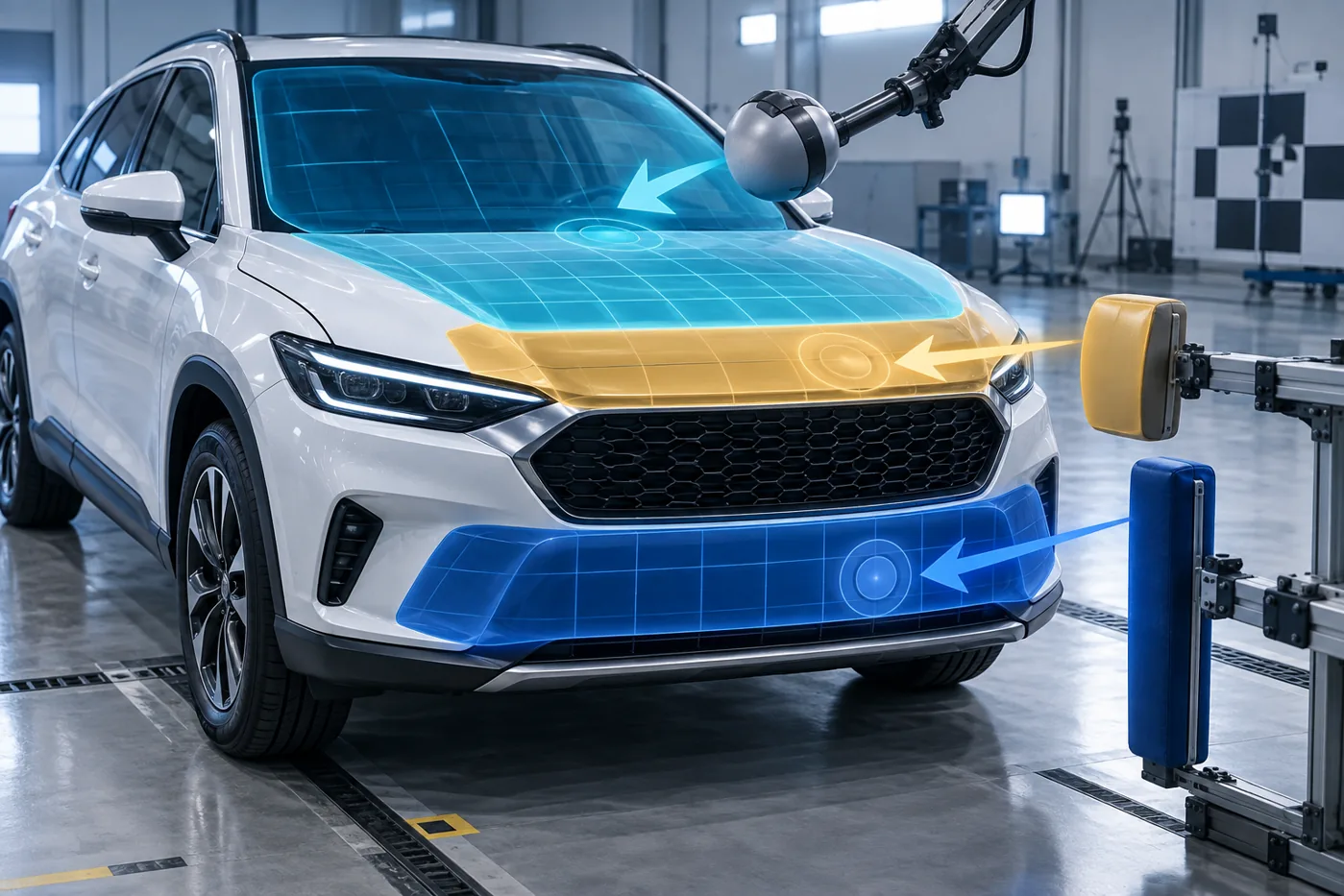
What the New NHTSA Tests Measure
The agency lists three impact categories: child and adult headform impacts to the hood and windshield area; upper-leg impacts to the hood’s leading edge; and full lower-limb impacts to the bumper. Together, these checks estimate injury risks to the head, hips, legs and knees.
The assessment complements crash-avoidance evaluations that include automatic emergency braking, pedestrian automatic emergency braking, lane keeping assist, blind-spot warning and blind-spot intervention. A vehicle can have strong avoidance technology and a separate exterior-impact result. Shoppers should examine both rather than treating one label as the complete safety picture.
7 Critical Facts for 2027 Vehicle Buyers
1. The result is model-year specific
A 2027 result should not be assigned automatically to a similar-looking 2026 vehicle. Structure, sensors and equipment can change between model years. Confirm the year and model on NHTSA’s official ratings page.
2. Passing is not the same as receiving five stars
The pedestrian indicator is a new performance element. Read it alongside the familiar crashworthiness information instead of converting it into an unofficial star score.
3. Pending does not automatically mean failed
NHTSA says the ratings page can show passed, failed, pending or not submitted. Pending and not submitted indicate that a final pass/fail result is not displayed; they should not be rewritten as a failure.
4. Automatic braking remains a separate check
Pedestrian automatic emergency braking may help avoid or reduce some collisions, while the impact tests assess exterior protection when contact occurs. Ask whether the exact trim includes the relevant driver-assistance equipment.
5. Visibility still matters
Test the driver’s view around the hood, windshield pillars and mirrors. Cameras and alerts can assist, but they do not eliminate blind zones or the driver’s responsibility.
6. Compare the exact safety page
Search the make, model and model year through NHTSA’s official ratings tool. Save the page or screenshot used in your decision so a vague dealership claim does not replace the source.
7. Use the result as one part of a purchase
Price, reliability, recall status, insurance and condition still matter. For a used vehicle, follow Carvul’s used-car inspection checklist and check the VIN for open recalls.
What the Tests Mean for Used-Car Shoppers
The first published results apply to model-year 2027 vehicles, so most current used-car inventory will not carry this new indicator. The test can still improve future comparisons as those models enter the used market. Until then, do not infer a pedestrian result for an older vehicle simply because the nameplate continues.
For any used car, inspect previous front-end damage carefully. Repairs to the bumper, hood, windshield area or sensors can affect condition and system operation. Review history with Carvul’s vehicle-history guide, then have a qualified independent professional inspect the actual vehicle.
Frequently Asked Questions
How many 2027 models met the new criteria?
NHTSA said 102 vehicle models from 10 manufacturers met the criteria in its inaugural published round.
Does a passing result guarantee pedestrian safety?
No. It reports performance in defined test scenarios. Real collisions vary in speed, angle, road conditions and human behavior.
Where can buyers see the result?
NHTSA says the model’s ratings page uses a yellow box to show passed, failed, pending or not submitted status for pedestrian protection.
Bottom Line
The 2027 vehicle pedestrian safety tests add a useful, official comparison point for U.S. shoppers. Read the pedestrian result with crashworthiness and avoidance ratings, confirm the exact model year and trim, and avoid turning one indicator into a blanket claim about total vehicle safety.
Primary source reviewed September 23, 2026: NHTSA’s first pedestrian safety test results announcement. Carvul images are editorial illustrations, not NHTSA test photographs.