
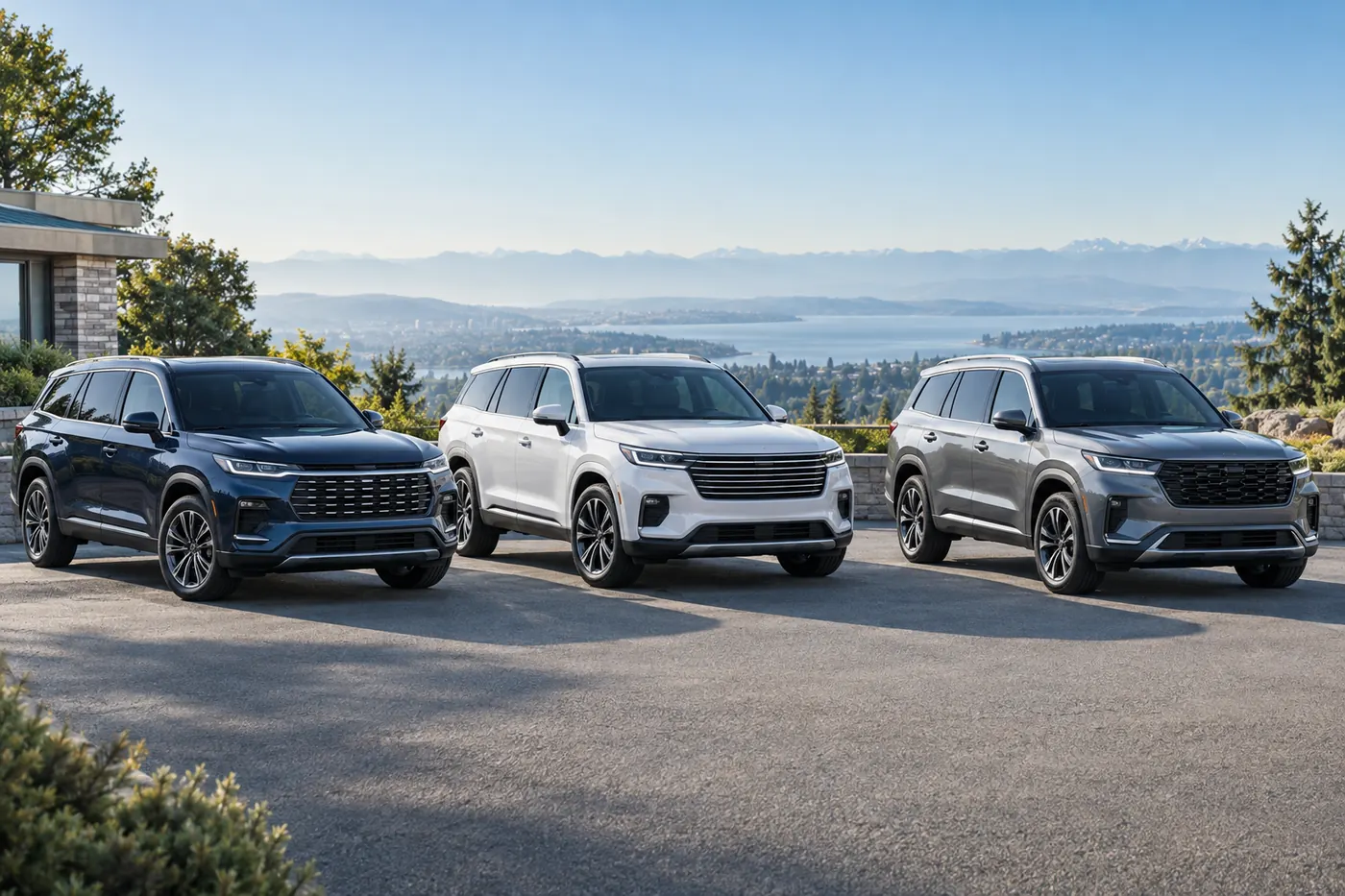
3-row SUV comparison research should begin with the family’s real needs and the exact vehicles available. A useful 3-row SUV comparison must go beyond a ranking. U.S. families need to compare third-row access, cargo space with every seat in use, child-seat fit, fuel cost, insurance, safety information and the price of the exact trim available locally.
Quick answer: Compare equivalent trims, test third-row access and cargo with the family aboard, then verify current EPA, NHTSA, IIHS, warranty and pricing information. There is no universal winner for every household.
This independent Carvul guide is educational. Prices, incentives, specifications, safety results and availability can change. Verify the exact vehicle before purchase.
3-row SUV comparison quick decision table
| Comparison factor | Buyer action |
|---|---|
| Define your family use case | Set a must-have threshold |
| Compare the right SUV size class | Match equivalent trims |
| Third-row access and adult comfort | Verify current official data |
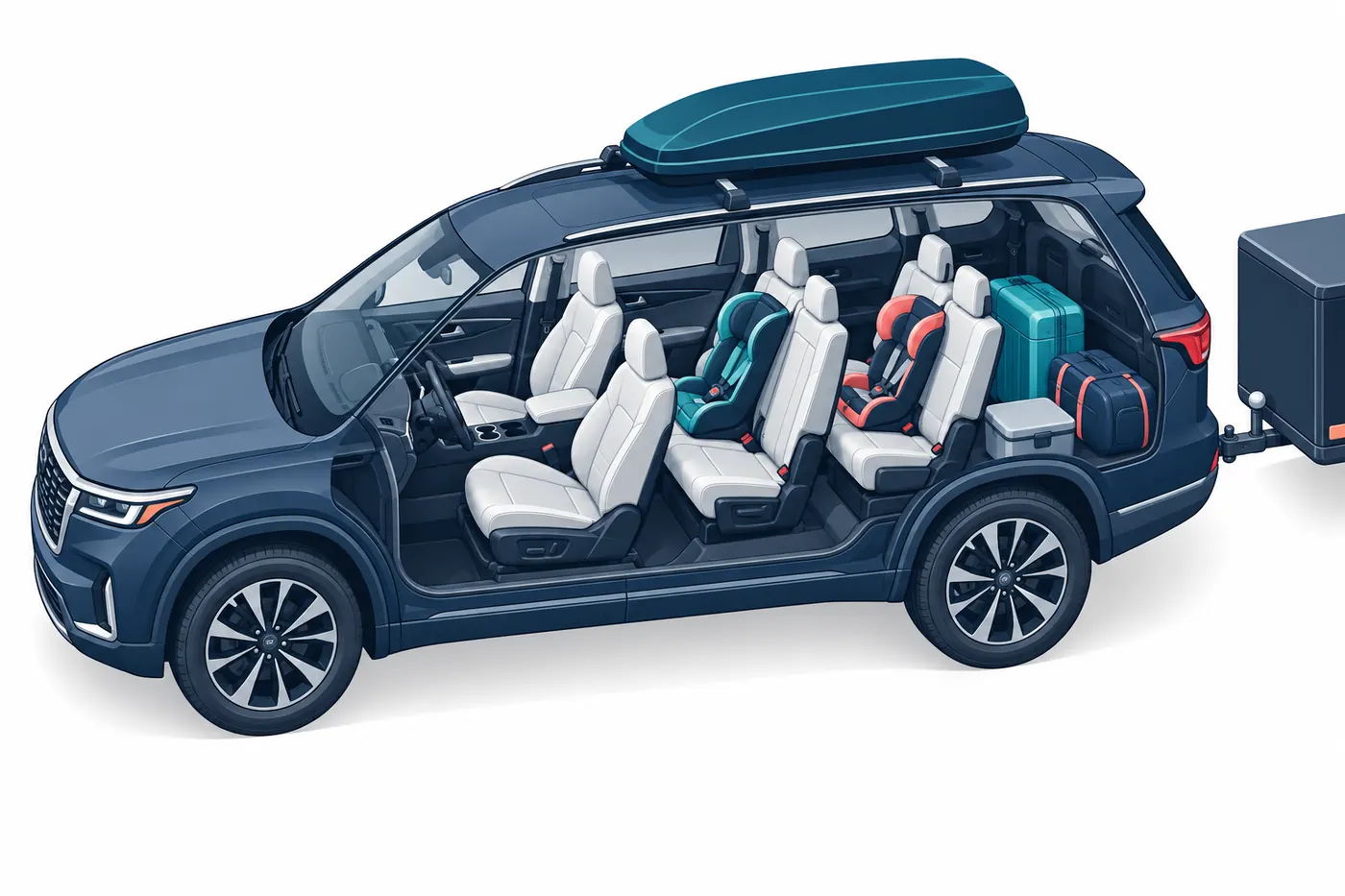
| Cargo space with all seats in use | Use the same real-world test |
| Gas hybrid and ownership costs | Calculate complete ownership cost |
| AWD tires towing and road trips | Check the exact VIN |
| Current safety and driver-assistance checks | Record the result before negotiating |
3-row SUV comparison: Define your family use case
3-row SUV comparison shoppers should evaluate define your family use case with equivalent model years, trims and drivetrains. A comparison can look decisive while quietly matching a base vehicle against a better-equipped competitor. Start with the VIN, window sticker or official build sheet, then record the transaction price and equipment that affect daily use. This keeps the decision tied to vehicles a U.S. buyer can actually purchase rather than an idealized specification list.
For define your family use case, separate a vehicle-design advantage from a trim-level feature. Test both candidates on the same route and with the same passengers, child seats or luggage whenever possible. Note what is standard, optional or unavailable, and confirm current details on the manufacturer’s U.S. website. Model-year updates can change screens, safety equipment, engines, seating and pricing, so older comparisons should not be applied automatically.
For define your family use case, use a weighted scorecard. Give required items more weight than cosmetic preferences. Include fuel, insurance, financing, tires and maintenance in the ownership calculation. The strongest result for 3-row SUV comparison is the vehicle that clears every non-negotiable need without relying on optimistic resale, fuel-economy or repair assumptions.
Before signing, verify define your family use case on the exact vehicle. Request an out-the-door quote, review warranty language, check the VIN for open recalls and arrange an independent inspection for a used example. Published ratings and estimates are useful comparison tools, not guarantees for an individual vehicle. Keep screenshots or copies of the official information used because incentives, inventory and specifications can change.
- Compare the same model year, trim and drivetrain.
- Verify current specifications and availability.
- Test the feature with your passengers and cargo.
- Record cost, condition and deal-specific differences.
3-row SUV comparison: Compare the right SUV size class
3-row SUV comparison shoppers should evaluate compare the right suv size class with equivalent model years, trims and drivetrains. A comparison can look decisive while quietly matching a base vehicle against a better-equipped competitor. Start with the VIN, window sticker or official build sheet, then record the transaction price and equipment that affect daily use. This keeps the decision tied to vehicles a U.S. buyer can actually purchase rather than an idealized specification list.
For compare the right suv size class, separate a vehicle-design advantage from a trim-level feature. Test both candidates on the same route and with the same passengers, child seats or luggage whenever possible. Note what is standard, optional or unavailable, and confirm current details on the manufacturer’s U.S. website. Model-year updates can change screens, safety equipment, engines, seating and pricing, so older comparisons should not be applied automatically.
For compare the right suv size class, use a weighted scorecard. Give required items more weight than cosmetic preferences. Include fuel, insurance, financing, tires and maintenance in the ownership calculation. The strongest result for 3-row SUV comparison is the vehicle that clears every non-negotiable need without relying on optimistic resale, fuel-economy or repair assumptions.
Before signing, verify compare the right suv size class on the exact vehicle. Request an out-the-door quote, review warranty language, check the VIN for open recalls and arrange an independent inspection for a used example. Published ratings and estimates are useful comparison tools, not guarantees for an individual vehicle. Keep screenshots or copies of the official information used because incentives, inventory and specifications can change.
- Compare the same model year, trim and drivetrain.
- Verify current specifications and availability.
- Test the feature with your passengers and cargo.
- Record cost, condition and deal-specific differences.
3-row SUV comparison: Third-row access and adult comfort
3-row SUV comparison shoppers should evaluate third-row access and adult comfort with equivalent model years, trims and drivetrains. A comparison can look decisive while quietly matching a base vehicle against a better-equipped competitor. Start with the VIN, window sticker or official build sheet, then record the transaction price and equipment that affect daily use. This keeps the decision tied to vehicles a U.S. buyer can actually purchase rather than an idealized specification list.
For third-row access and adult comfort, separate a vehicle-design advantage from a trim-level feature. Test both candidates on the same route and with the same passengers, child seats or luggage whenever possible. Note what is standard, optional or unavailable, and confirm current details on the manufacturer’s U.S. website. Model-year updates can change screens, safety equipment, engines, seating and pricing, so older comparisons should not be applied automatically.
For third-row access and adult comfort, use a weighted scorecard. Give required items more weight than cosmetic preferences. Include fuel, insurance, financing, tires and maintenance in the ownership calculation. The strongest result for 3-row SUV comparison is the vehicle that clears every non-negotiable need without relying on optimistic resale, fuel-economy or repair assumptions.
Before signing, verify third-row access and adult comfort on the exact vehicle. Request an out-the-door quote, review warranty language, check the VIN for open recalls and arrange an independent inspection for a used example. Published ratings and estimates are useful comparison tools, not guarantees for an individual vehicle. Keep screenshots or copies of the official information used because incentives, inventory and specifications can change.
- Compare the same model year, trim and drivetrain.
- Verify current specifications and availability.
- Test the feature with your passengers and cargo.
- Record cost, condition and deal-specific differences.
3-row SUV comparison: Cargo space with all seats in use
3-row SUV comparison shoppers should evaluate cargo space with all seats in use with equivalent model years, trims and drivetrains. A comparison can look decisive while quietly matching a base vehicle against a better-equipped competitor. Start with the VIN, window sticker or official build sheet, then record the transaction price and equipment that affect daily use. This keeps the decision tied to vehicles a U.S. buyer can actually purchase rather than an idealized specification list.
For cargo space with all seats in use, separate a vehicle-design advantage from a trim-level feature. Test both candidates on the same route and with the same passengers, child seats or luggage whenever possible. Note what is standard, optional or unavailable, and confirm current details on the manufacturer’s U.S. website. Model-year updates can change screens, safety equipment, engines, seating and pricing, so older comparisons should not be applied automatically.
For cargo space with all seats in use, use a weighted scorecard. Give required items more weight than cosmetic preferences. Include fuel, insurance, financing, tires and maintenance in the ownership calculation. The strongest result for 3-row SUV comparison is the vehicle that clears every non-negotiable need without relying on optimistic resale, fuel-economy or repair assumptions.
Before signing, verify cargo space with all seats in use on the exact vehicle. Request an out-the-door quote, review warranty language, check the VIN for open recalls and arrange an independent inspection for a used example. Published ratings and estimates are useful comparison tools, not guarantees for an individual vehicle. Keep screenshots or copies of the official information used because incentives, inventory and specifications can change.
- Compare the same model year, trim and drivetrain.
- Verify current specifications and availability.
- Test the feature with your passengers and cargo.
- Record cost, condition and deal-specific differences.
3-row SUV comparison: Gas hybrid and ownership costs
3-row SUV comparison shoppers should evaluate gas hybrid and ownership costs with equivalent model years, trims and drivetrains. A comparison can look decisive while quietly matching a base vehicle against a better-equipped competitor. Start with the VIN, window sticker or official build sheet, then record the transaction price and equipment that affect daily use. This keeps the decision tied to vehicles a U.S. buyer can actually purchase rather than an idealized specification list.
For gas hybrid and ownership costs, separate a vehicle-design advantage from a trim-level feature. Test both candidates on the same route and with the same passengers, child seats or luggage whenever possible. Note what is standard, optional or unavailable, and confirm current details on the manufacturer’s U.S. website. Model-year updates can change screens, safety equipment, engines, seating and pricing, so older comparisons should not be applied automatically.
For gas hybrid and ownership costs, use a weighted scorecard. Give required items more weight than cosmetic preferences. Include fuel, insurance, financing, tires and maintenance in the ownership calculation. The strongest result for 3-row SUV comparison is the vehicle that clears every non-negotiable need without relying on optimistic resale, fuel-economy or repair assumptions.
Before signing, verify gas hybrid and ownership costs on the exact vehicle. Request an out-the-door quote, review warranty language, check the VIN for open recalls and arrange an independent inspection for a used example. Published ratings and estimates are useful comparison tools, not guarantees for an individual vehicle. Keep screenshots or copies of the official information used because incentives, inventory and specifications can change.
- Compare the same model year, trim and drivetrain.
- Verify current specifications and availability.
- Test the feature with your passengers and cargo.
- Record cost, condition and deal-specific differences.
3-row SUV comparison: AWD tires towing and road trips
3-row SUV comparison shoppers should evaluate awd tires towing and road trips with equivalent model years, trims and drivetrains. A comparison can look decisive while quietly matching a base vehicle against a better-equipped competitor. Start with the VIN, window sticker or official build sheet, then record the transaction price and equipment that affect daily use. This keeps the decision tied to vehicles a U.S. buyer can actually purchase rather than an idealized specification list.
For awd tires towing and road trips, separate a vehicle-design advantage from a trim-level feature. Test both candidates on the same route and with the same passengers, child seats or luggage whenever possible. Note what is standard, optional or unavailable, and confirm current details on the manufacturer’s U.S. website. Model-year updates can change screens, safety equipment, engines, seating and pricing, so older comparisons should not be applied automatically.
For awd tires towing and road trips, use a weighted scorecard. Give required items more weight than cosmetic preferences. Include fuel, insurance, financing, tires and maintenance in the ownership calculation. The strongest result for 3-row SUV comparison is the vehicle that clears every non-negotiable need without relying on optimistic resale, fuel-economy or repair assumptions.
Before signing, verify awd tires towing and road trips on the exact vehicle. Request an out-the-door quote, review warranty language, check the VIN for open recalls and arrange an independent inspection for a used example. Published ratings and estimates are useful comparison tools, not guarantees for an individual vehicle. Keep screenshots or copies of the official information used because incentives, inventory and specifications can change.
- Compare the same model year, trim and drivetrain.
- Verify current specifications and availability.
- Test the feature with your passengers and cargo.
- Record cost, condition and deal-specific differences.
3-row SUV comparison: Current safety and driver-assistance checks
3-row SUV comparison shoppers should evaluate current safety and driver-assistance checks with equivalent model years, trims and drivetrains. A comparison can look decisive while quietly matching a base vehicle against a better-equipped competitor. Start with the VIN, window sticker or official build sheet, then record the transaction price and equipment that affect daily use. This keeps the decision tied to vehicles a U.S. buyer can actually purchase rather than an idealized specification list.
For current safety and driver-assistance checks, separate a vehicle-design advantage from a trim-level feature. Test both candidates on the same route and with the same passengers, child seats or luggage whenever possible. Note what is standard, optional or unavailable, and confirm current details on the manufacturer’s U.S. website. Model-year updates can change screens, safety equipment, engines, seating and pricing, so older comparisons should not be applied automatically.
For current safety and driver-assistance checks, use a weighted scorecard. Give required items more weight than cosmetic preferences. Include fuel, insurance, financing, tires and maintenance in the ownership calculation. The strongest result for 3-row SUV comparison is the vehicle that clears every non-negotiable need without relying on optimistic resale, fuel-economy or repair assumptions.
Before signing, verify current safety and driver-assistance checks on the exact vehicle. Request an out-the-door quote, review warranty language, check the VIN for open recalls and arrange an independent inspection for a used example. Published ratings and estimates are useful comparison tools, not guarantees for an individual vehicle. Keep screenshots or copies of the official information used because incentives, inventory and specifications can change.
- Compare the same model year, trim and drivetrain.
- Verify current specifications and availability.
- Test the feature with your passengers and cargo.
- Record cost, condition and deal-specific differences.
3-row SUV comparison: Price financing insurance and depreciation
3-row SUV comparison shoppers should evaluate price financing insurance and depreciation with equivalent model years, trims and drivetrains. A comparison can look decisive while quietly matching a base vehicle against a better-equipped competitor. Start with the VIN, window sticker or official build sheet, then record the transaction price and equipment that affect daily use. This keeps the decision tied to vehicles a U.S. buyer can actually purchase rather than an idealized specification list.
For price financing insurance and depreciation, separate a vehicle-design advantage from a trim-level feature. Test both candidates on the same route and with the same passengers, child seats or luggage whenever possible. Note what is standard, optional or unavailable, and confirm current details on the manufacturer’s U.S. website. Model-year updates can change screens, safety equipment, engines, seating and pricing, so older comparisons should not be applied automatically.
For price financing insurance and depreciation, use a weighted scorecard. Give required items more weight than cosmetic preferences. Include fuel, insurance, financing, tires and maintenance in the ownership calculation. The strongest result for 3-row SUV comparison is the vehicle that clears every non-negotiable need without relying on optimistic resale, fuel-economy or repair assumptions.
Before signing, verify price financing insurance and depreciation on the exact vehicle. Request an out-the-door quote, review warranty language, check the VIN for open recalls and arrange an independent inspection for a used example. Published ratings and estimates are useful comparison tools, not guarantees for an individual vehicle. Keep screenshots or copies of the official information used because incentives, inventory and specifications can change.
- Compare the same model year, trim and drivetrain.
- Verify current specifications and availability.
- Test the feature with your passengers and cargo.
- Record cost, condition and deal-specific differences.
3-row SUV comparison: Warranty maintenance and repair planning
3-row SUV comparison shoppers should evaluate warranty maintenance and repair planning with equivalent model years, trims and drivetrains. A comparison can look decisive while quietly matching a base vehicle against a better-equipped competitor. Start with the VIN, window sticker or official build sheet, then record the transaction price and equipment that affect daily use. This keeps the decision tied to vehicles a U.S. buyer can actually purchase rather than an idealized specification list.
For warranty maintenance and repair planning, separate a vehicle-design advantage from a trim-level feature. Test both candidates on the same route and with the same passengers, child seats or luggage whenever possible. Note what is standard, optional or unavailable, and confirm current details on the manufacturer’s U.S. website. Model-year updates can change screens, safety equipment, engines, seating and pricing, so older comparisons should not be applied automatically.
For warranty maintenance and repair planning, use a weighted scorecard. Give required items more weight than cosmetic preferences. Include fuel, insurance, financing, tires and maintenance in the ownership calculation. The strongest result for 3-row SUV comparison is the vehicle that clears every non-negotiable need without relying on optimistic resale, fuel-economy or repair assumptions.
Before signing, verify warranty maintenance and repair planning on the exact vehicle. Request an out-the-door quote, review warranty language, check the VIN for open recalls and arrange an independent inspection for a used example. Published ratings and estimates are useful comparison tools, not guarantees for an individual vehicle. Keep screenshots or copies of the official information used because incentives, inventory and specifications can change.
- Compare the same model year, trim and drivetrain.
- Verify current specifications and availability.
- Test the feature with your passengers and cargo.
- Record cost, condition and deal-specific differences.
3-row SUV comparison: Used 3-row SUV inspection checklist
3-row SUV comparison shoppers should evaluate used 3-row suv inspection checklist with equivalent model years, trims and drivetrains. A comparison can look decisive while quietly matching a base vehicle against a better-equipped competitor. Start with the VIN, window sticker or official build sheet, then record the transaction price and equipment that affect daily use. This keeps the decision tied to vehicles a U.S. buyer can actually purchase rather than an idealized specification list.
For used 3-row suv inspection checklist, separate a vehicle-design advantage from a trim-level feature. Test both candidates on the same route and with the same passengers, child seats or luggage whenever possible. Note what is standard, optional or unavailable, and confirm current details on the manufacturer’s U.S. website. Model-year updates can change screens, safety equipment, engines, seating and pricing, so older comparisons should not be applied automatically.
For used 3-row suv inspection checklist, use a weighted scorecard. Give required items more weight than cosmetic preferences. Include fuel, insurance, financing, tires and maintenance in the ownership calculation. The strongest result for 3-row SUV comparison is the vehicle that clears every non-negotiable need without relying on optimistic resale, fuel-economy or repair assumptions.
Before signing, verify used 3-row suv inspection checklist on the exact vehicle. Request an out-the-door quote, review warranty language, check the VIN for open recalls and arrange an independent inspection for a used example. Published ratings and estimates are useful comparison tools, not guarantees for an individual vehicle. Keep screenshots or copies of the official information used because incentives, inventory and specifications can change.
- Compare the same model year, trim and drivetrain.
- Verify current specifications and availability.
- Test the feature with your passengers and cargo.
- Record cost, condition and deal-specific differences.
3-row SUV comparison: Repeatable family test-drive scorecard
3-row SUV comparison shoppers should evaluate repeatable family test-drive scorecard with equivalent model years, trims and drivetrains. A comparison can look decisive while quietly matching a base vehicle against a better-equipped competitor. Start with the VIN, window sticker or official build sheet, then record the transaction price and equipment that affect daily use. This keeps the decision tied to vehicles a U.S. buyer can actually purchase rather than an idealized specification list.
For repeatable family test-drive scorecard, separate a vehicle-design advantage from a trim-level feature. Test both candidates on the same route and with the same passengers, child seats or luggage whenever possible. Note what is standard, optional or unavailable, and confirm current details on the manufacturer’s U.S. website. Model-year updates can change screens, safety equipment, engines, seating and pricing, so older comparisons should not be applied automatically.
For repeatable family test-drive scorecard, use a weighted scorecard. Give required items more weight than cosmetic preferences. Include fuel, insurance, financing, tires and maintenance in the ownership calculation. The strongest result for 3-row SUV comparison is the vehicle that clears every non-negotiable need without relying on optimistic resale, fuel-economy or repair assumptions.
Before signing, verify repeatable family test-drive scorecard on the exact vehicle. Request an out-the-door quote, review warranty language, check the VIN for open recalls and arrange an independent inspection for a used example. Published ratings and estimates are useful comparison tools, not guarantees for an individual vehicle. Keep screenshots or copies of the official information used because incentives, inventory and specifications can change.
- Compare the same model year, trim and drivetrain.
- Verify current specifications and availability.
- Test the feature with your passengers and cargo.
- Record cost, condition and deal-specific differences.
3-row SUV comparison: Final decision matrix for 3-row SUVs
3-row SUV comparison shoppers should evaluate final decision matrix for 3-row suvs with equivalent model years, trims and drivetrains. A comparison can look decisive while quietly matching a base vehicle against a better-equipped competitor. Start with the VIN, window sticker or official build sheet, then record the transaction price and equipment that affect daily use. This keeps the decision tied to vehicles a U.S. buyer can actually purchase rather than an idealized specification list.
For final decision matrix for 3-row suvs, separate a vehicle-design advantage from a trim-level feature. Test both candidates on the same route and with the same passengers, child seats or luggage whenever possible. Note what is standard, optional or unavailable, and confirm current details on the manufacturer’s U.S. website. Model-year updates can change screens, safety equipment, engines, seating and pricing, so older comparisons should not be applied automatically.
For final decision matrix for 3-row suvs, use a weighted scorecard. Give required items more weight than cosmetic preferences. Include fuel, insurance, financing, tires and maintenance in the ownership calculation. The strongest result for 3-row SUV comparison is the vehicle that clears every non-negotiable need without relying on optimistic resale, fuel-economy or repair assumptions.
Before signing, verify final decision matrix for 3-row suvs on the exact vehicle. Request an out-the-door quote, review warranty language, check the VIN for open recalls and arrange an independent inspection for a used example. Published ratings and estimates are useful comparison tools, not guarantees for an individual vehicle. Keep screenshots or copies of the official information used because incentives, inventory and specifications can change.
- Compare the same model year, trim and drivetrain.
- Verify current specifications and availability.
- Test the feature with your passengers and cargo.
- Record cost, condition and deal-specific differences.
Continue the Carvul 3-row SUV comparison cluster
- Kia Telluride vs Hyundai Palisade: 9 Smart Tests
- Honda Pilot vs Toyota Grand Highlander: 9 Key Tests
- Chevy Traverse vs Ford Explorer: 9 Critical Tests
- Mazda CX-90 vs Subaru Ascent: 9 Smart Buyer Tests
- Minivan vs 3-Row SUV: 11 Honest Family Tests
- 3-Row SUV Cargo Space Comparison: 9 Real Tests
Official tools and related Carvul guides
- EPA FuelEconomy.gov
- NHTSA vehicle safety and recalls
- IIHS vehicle ratings
- NICB VINCheck
- Carvul car comparison hub
- Used car inspection checklist
- Vehicle history report guide
- Used car financing guide
Frequently Asked Questions
Which vehicle wins this 3-row SUV comparison?
The winner depends on the exact trim, transaction price, passenger fit, cargo needs, route and ownership priorities. Eliminate any candidate that fails a non-negotiable requirement before comparing preferences.
Can published cargo and fuel figures predict my experience?
No. Standardized figures help comparison, but cargo shape, loading needs, weather, speed, terrain, tires and driving behavior affect real use. Bring representative items and test the exact vehicle.
What should a used buyer verify?
Check title and service history, open recalls, warning lights, tires, brakes, seating systems and electronic features. Arrange an independent pre-purchase inspection and confirm remaining warranty coverage in writing.
Should I choose the lowest monthly payment?
Not by itself. Compare selling price, term, interest, fees, insurance, fuel, maintenance and likely repairs. A longer loan can lower the payment while increasing total cost and negative-equity risk.
Bottom line
A trustworthy 3-row SUV comparison conclusion is transparent about tradeoffs. Verify changing facts, compare equivalent configurations and choose the vehicle that meets the household’s actual space, safety and financial limits.