
Carvul U.S. Buyer Guide
A clear visual comparison guide for U.S. shoppers who want to compare cars by cost, reliability, comfort, safety, and everyday ownership before choosing a model.
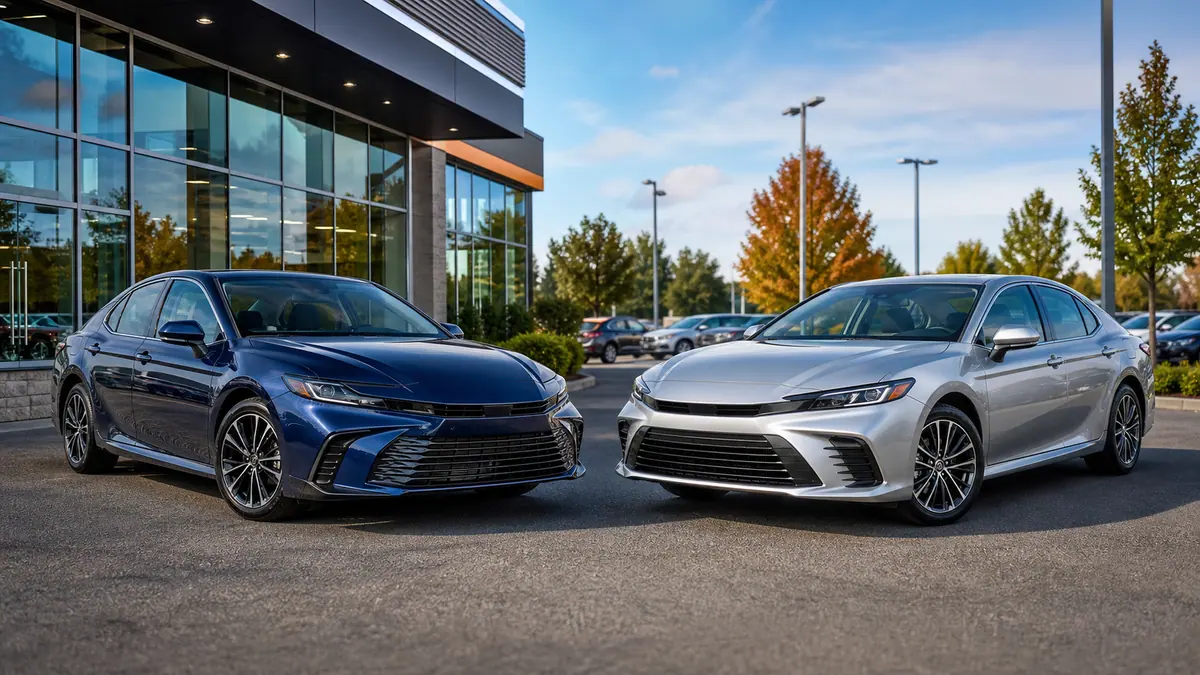
best car comparisons 2026: Key Takeaways
- Prioritize reliability, maintenance history, insurance cost, and safety features.
- Compare local prices against mileage and condition before trusting a listing.
- A clean inspection and documented service history can matter more than a trendy model name.
The best car comparisons for U.S. buyers in 2026 are not just spec-sheet fights. A useful comparison helps a reader answer a real buying question: which car fits my budget, commute, family, insurance quote, fuel cost, and long-term ownership plan?
This Carvul pillar page organizes the most useful comparisons for American shoppers, then points you to deeper satellite guides for sedans, compact cars, compact SUVs, small SUVs, and hybrid-versus-gas decisions.
Quick Answer: How Should You Compare Cars in 2026?
The best way to compare cars in 2026 is to rank them by real ownership fit, not only MSRP or horsepower. U.S. buyers should compare total out-the-door price, insurance quote, fuel economy, safety ratings, cargo space, maintenance history, warranty coverage, resale value, and local availability. A car that wins one spec category can still be the wrong buy if it costs more to insure, has limited inventory, lacks needed space, or fails a pre-purchase inspection.
The Carvul Comparison Framework
| Comparison factor | Why American buyers care | How to check it |
|---|---|---|
| Out-the-door price | Dealer fees and taxes can change the deal | Ask for the full written price |
| Insurance | Rates vary by ZIP code and driver profile | Quote both vehicles before buying |
| Fuel economy | Daily commute cost adds up | Use FuelEconomy.gov |
| Safety | Family and teen-driver risk matters | Check IIHS and NHTSA |
| Reliability | Repairs can erase savings | Inspect service history |
| Resale | Affects long-term cost | Compare local used listings |
Best Sedan Comparison: Camry vs Accord
Toyota Camry vs Honda Accord is the classic midsize sedan matchup. It is best for readers who want comfort, commuter value, strong resale, and family-friendly space without stepping into an SUV.
Best Compact Car Comparison: Corolla vs Civic
Toyota Corolla vs Honda Civic is the practical compact-car decision. It is ideal for students, commuters, first-time buyers, and used-car shoppers who want low ownership costs without giving up daily comfort.
Best Compact SUV Comparison: RAV4 vs CR-V
Toyota RAV4 vs Honda CR-V is one of the most useful SUV comparisons for U.S. families. It helps buyers think through cargo space, hybrid availability, road-trip comfort, AWD, and resale value.
Best AWD SUV Comparison: CX-5 vs Forester
Mazda CX-5 vs Subaru Forester is a strong comparison for buyers who want an SUV but care about driving feel, bad-weather confidence, cabin comfort, visibility, and everyday practicality.
Best Small SUV Comparison: Corolla Cross vs HR-V
Toyota Corolla Cross vs Honda HR-V is for buyers who want SUV height without midsize SUV cost. It is especially useful for city drivers, young families, and shoppers upgrading from a compact sedan.
Best Powertrain Comparison: Hybrid vs Gas
Hybrid vs Gas Car answers a broader question: should you pay more for hybrid efficiency, or keep the purchase simpler with a gas model? This matters for commuters, rideshare drivers, and long-term owners.
Questions Every Reader Should Ask Before Choosing
- Do I know the full out-the-door price?
- Did I compare insurance quotes?
- Will this car fit my family, parking, commute, and cargo needs?
- Does the exact VIN have open recalls?
- Am I buying because it is the best fit or because it is the best deal today?
- Have I tested the same trim I plan to buy?
How to Use These Comparisons
Start with the body style you actually need. If you need a family vehicle, compare compact SUVs first. If you commute alone, compare compact or midsize sedans. If fuel cost is your pain point, compare hybrid and gas options before picking a model.
Best Keywords This Cluster Targets
This cluster targets commercial and informational keywords with strong buyer intent: best car comparisons 2026, Toyota Camry vs Honda Accord, Toyota Corolla vs Honda Civic, Toyota RAV4 vs Honda CR-V, Mazda CX-5 vs Subaru Forester, Toyota Corolla Cross vs Honda HR-V, and hybrid vs gas car. Each satellite article answers a different decision, so the pages should support each other instead of competing for the same search intent.
Comparison Map: Which Article Should You Read First?
| If your question is… | Start here | Reason |
|---|---|---|
| Best midsize sedan? | Camry vs Accord | Most relevant sedan family/commuter decision |
| Best compact car? | Corolla vs Civic | Budget and first-car friendly |
| Best family compact SUV? | RAV4 vs CR-V | High-demand SUV comparison |
| Best AWD compact SUV? | CX-5 vs Forester | Bad weather and driving feel |
| Best small SUV? | Corolla Cross vs HR-V | City-friendly SUV choice |
| Hybrid worth it? | Hybrid vs Gas | Powertrain decision before model decision |
How Carvul Picks the Winner
Carvul does not pick a winner only because one vehicle has more horsepower or a lower starting price. The better car is the one that fits the reader. That means a winner for a highway commuter may not be the winner for a parent, a student, a rideshare driver, or a retired buyer who drives 5,000 miles per year.
Real-World U.S. Buyer Scenarios
| Scenario | Better way to decide | Why |
|---|---|---|
| Daily commuter | Compare MPG, seat comfort, insurance, and driver-assist features | Small differences matter every week |
| Family buyer | Check rear-seat space, cargo opening, child-seat fit, and safety ratings | Spec sheets rarely show family usability |
| Used-car buyer | Prioritize service history, title status, recalls, and inspection | Condition beats reputation |
| Budget buyer | Compare out-the-door price and first-year maintenance | The cheapest listing can be the most expensive car |
| Long-term owner | Think about resale, parts availability, and repair access | A good 7-year car is different from a good 2-year car |
How to Weight the Decision
Use a simple 100-point score before you test drive. Give 25 points to total cost, 20 to safety, 20 to daily usability, 15 to fuel economy, 10 to resale value, and 10 to driving feel. Change the weights if your life demands it. A parent buying for a teen may give safety 35 points. A rideshare driver may give fuel economy 35 points.
Questions to Ask a Dealer or Private Seller
- What is the total out-the-door price?
- Are there dealer add-ons or required packages?
- Can I see the window sticker or build sheet?
- Does the vehicle have open recalls?
- Can I take the vehicle for an independent inspection?
- What warranty remains, if any?
- Are there service records, tire receipts, or accident repairs?
Used-Car Version of This Comparison
For used examples, the winner can change completely. A lower-rated model with perfect records can be a smarter buy than a higher-rated model with accident damage, skipped maintenance, or a rough test drive. Compare the exact VIN, not only the nameplate.
Common Comparison Mistakes
- Comparing base trim of one car against a loaded trim of another.
- Ignoring insurance quotes until after the deposit.
- Assuming a hybrid always pays back for low-mileage drivers.
- Choosing the larger vehicle without checking parking and fuel costs.
- Trusting a clean listing photo more than an inspection.
- Forgetting that tires, brakes, and batteries can change first-year cost.
Publishing Strategy for This Cluster
The pillar should link to every satellite. Every satellite should link back to the pillar and sideways to at least two related comparisons. This gives Google and AI search systems a clear hub-and-spoke structure around Car Comparisons, instead of seven isolated drafts.
FAQ
What is the most important thing to compare?
Total ownership cost is usually more important than one spec. Include price, insurance, fuel, maintenance, resale, and repair risk.
Should I trust rankings or test drive first?
Use rankings to build a shortlist, then test drive. Comfort, visibility, control layout, and cabin noise are personal.
Are used car comparisons different from new car comparisons?
Yes. For used cars, condition, title history, mileage, service records, and inspection results matter more than the original feature list.
Helpful sources: NHTSA, IIHS, FUELECONOMY.
Image credit: File:Used Car Lot, Holyhead Road, Valley – geograph.org.uk – 877427.jpg, Eric Jones, CC BY-SA 2.0, via Wikimedia Commons.
Last updated: 2026-07-06. Editorial note: Carvul comparisons are written for U.S. buyers and should be reviewed against current local prices, incentives, and inventory before purchase.