
EV tax credit news can change the real cost of a used electric vehicle, but buyers should verify every incentive before relying on it. Federal, state, utility, and dealer programs can have different rules, and eligibility may depend on buyer income, vehicle price, dealer participation, and purchase date.
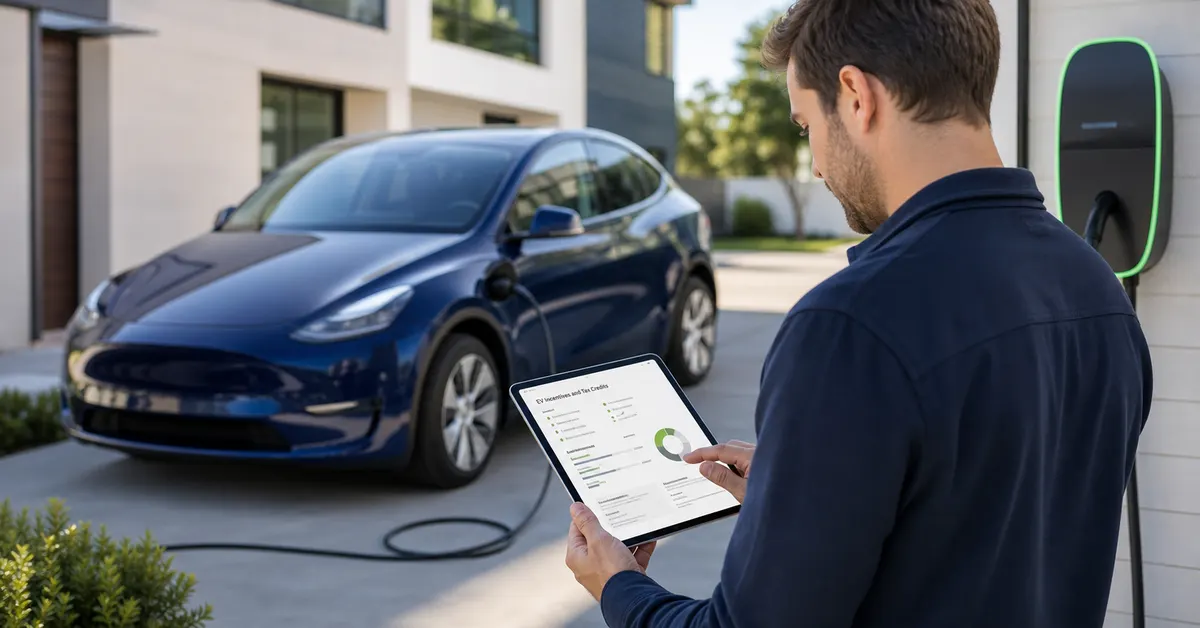
EV tax credit news: why U.S. buyers should verify first
EV incentives can change faster than normal car-buying advice. A headline may mention a federal credit, a state rebate, a point-of-sale program, a utility discount, or a dealer promotion. Those are not the same thing. A used EV buyer should ask which program applies, who qualifies, and whether the discount is confirmed before signing.
The safest approach is to treat incentive news as a question, not a guarantee. If the price only makes sense with a credit or rebate, verify the details before choosing the vehicle, lender, or dealer.
How to verify EV tax credit and rebate eligibility
Start with official federal guidance such as the IRS Clean Vehicle Credit page. Then check your state energy office, local utility, and dealer paperwork. If the vehicle is used, confirm whether the program applies to used vehicles, whether the dealer must be licensed, and whether the price cap or buyer income rules apply.
| Incentive source | What to confirm |
| Federal program | Vehicle, buyer, purchase date, and dealer rules |
| State rebate | Residency, income, price cap, and funding availability |
| Utility offer | Service area, charger, and account requirements |
| Dealer discount | Whether it is a real incentive or a price adjustment |
| Used EV purchase | Battery condition, warranty, and final out-the-door cost |
Used EV buyer checklist before relying on a credit
- Confirm the VIN and model details before assuming eligibility.
- Ask for the final out-the-door price with and without incentives.
- Check battery warranty and remaining coverage.
- Compare insurance quotes before purchase.
- Review charging access at home, work, and common travel routes.
- Use Carvul’s used car financing guide to compare payment and total cost.
How EV incentives affect total cost
A credit or rebate can lower the purchase price, but it should not hide other ownership costs. Used EV buyers still need to compare insurance, charging setup, battery warranty, tire wear, registration fees, and financing. A lower price is helpful only if the vehicle also fits the driver’s charging routine and budget.
For shoppers comparing electric, hybrid, and gas options, the best decision is usually based on total ownership cost. Carvul’s hybrid vs gas car guide and used car loan pre-approval guide can help buyers compare incentives with everyday costs.
Why state EV incentive news matters
EV tax credit news is not only federal. Some buyers may see state rebates, clean-vehicle programs, utility discounts, charger incentives, or local air-quality programs. These programs can change by budget cycle, location, income level, and funding availability. A buyer in one state may qualify for a benefit that a buyer in another state cannot use.
Because of that, U.S. used EV buyers should confirm incentives by ZIP code and purchase location. A dealer may advertise a discount, but the buyer should still ask whether the program is funded, whether the vehicle qualifies, and whether the benefit applies at the point of sale or later during tax filing.
What to ask the dealer before signing
Before relying on any EV incentive, ask the dealer to show the final numbers in writing. The buyer should see the vehicle price, taxes, fees, trade-in value, financing terms, and incentive treatment separately. If a rebate is described as “included,” ask whether it is a real government or utility program, a dealer discount, or a manufacturer promotion.
This matters because two offers can look similar but work differently. A true point-of-sale rebate can reduce the amount financed. A tax credit may require eligibility and filing steps. A dealer discount may simply be a negotiated price reduction. The buyer should know which one is being used.
Used EV risk checks beyond incentives
A used EV can be a strong value, but the incentive should not be the only reason to buy. Battery health, remaining warranty, charging access, tire condition, insurance cost, and software support can affect the real ownership experience. A cheap EV without good charging access may become frustrating, while a slightly more expensive EV with strong warranty coverage may be easier to own.
For buyers comparing EVs with hybrids or gas cars, the right answer depends on driving habits. Short commutes, home charging, and stable electricity costs can make an EV attractive. Long road trips, apartment parking, limited charging, or high insurance quotes may make a hybrid or efficient gas vehicle more practical.
One final check is timing. If an EV tax credit news update is new, wait until the program page, dealer paperwork, or official guidance confirms the rule. A buyer should not sign based only on a headline or social post. The safest decision is the one that still makes financial sense without a surprise incentive.
FAQ
Should I trust EV tax credit news from a dealer listing?
Use it as a starting point, but verify the program through official sources and final paperwork before relying on the discount.
Can used EV incentives change by state?
Yes. State rebates and utility programs can vary by location, funding, income rules, vehicle price, and dealer participation.
What matters besides the EV tax credit?
Battery health, warranty coverage, insurance, charging access, financing, and total out-the-door price matter just as much as the incentive.