
# Move Over Laws: New AAA Study Shows a Dangerous Driver Gap
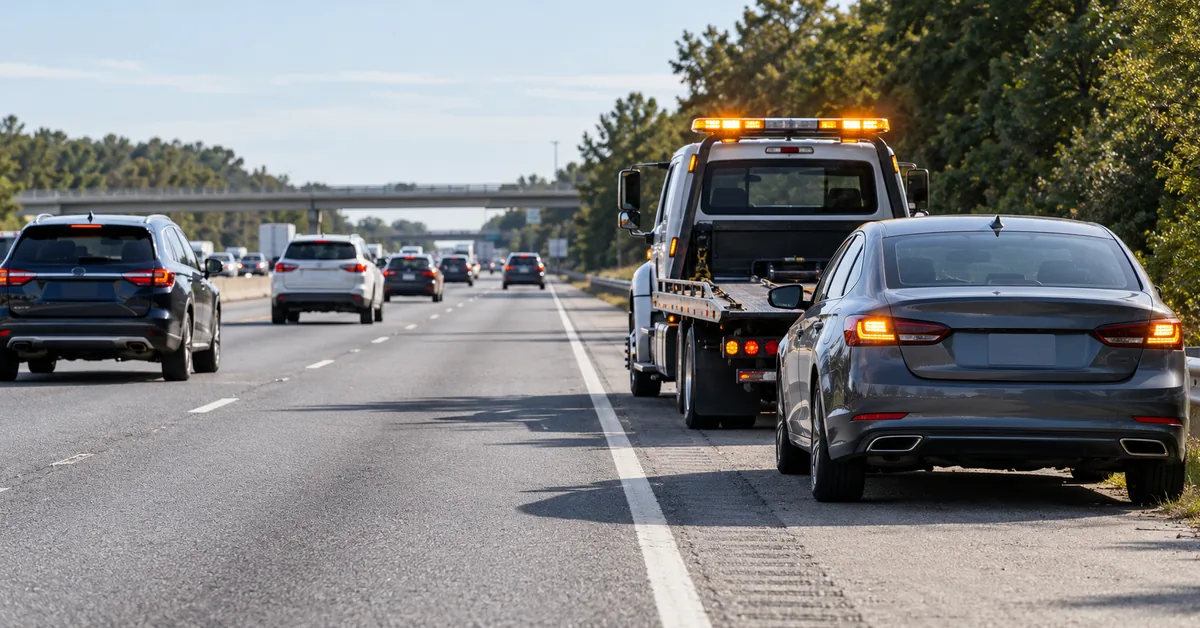
Move over laws exist in every state, but a new AAA Foundation for Traffic Safety survey suggests that knowing the rule and following it are not always the same thing. The findings arrive ahead of National Slow Down, Move Over Day and give U.S. drivers a timely reason to rethink how they approach police cars, tow trucks, highway workers, and disabled vehicles on the shoulder.
AAA reported on October 15, 2026, that more than 90% of surveyed drivers said they moved over, slowed down, or did both the last time they passed a roadside scene. However, earlier observed-driving research cited by AAA found that only 64% of vehicles covered by these laws actually changed lanes, reduced speed, or did both. The remaining 36% did neither.
That gap matters because roadside incidents can turn deadly in seconds. AAA said more than 2,100 people were struck and killed while stranded or working along U.S. roads from 2019 through 2023.
What the new AAA roadside safety findings show
The latest survey found broad support for Slow Down, Move Over requirements once the laws were explained. AAA said 90% of drivers supported them and only 2% opposed them. Awareness was less consistent: only 66% believed their state required special action near a stopped police vehicle.
The findings do not prove that every self-reported driver failed to act safely. Survey answers and observed road behavior come from different research methods. They do, however, point to a practical problem: drivers may support roadside safety in principle but react too late, misunderstand who the law protects, or fail to create enough space in real traffic.
AAA also reported that it handled more than 30 million roadside events near active traffic in 2025. Fifteen service providers were killed in incidents related to Slow Down, Move Over behavior, according to the organization.
| New finding | What it means for drivers |
|---|---|
| More than 90% reported slowing or moving over | Awareness appears high in self-reported behavior |
| Observed compliance was 64% in earlier research | Real-world action may lag behind stated behavior |
| 36% neither changed lanes nor slowed | Roadside workers and stranded motorists remain exposed |
| All 50 states have Move Over laws | Drivers must know the rule where they are traveling |
Move over laws apply nationwide, but details vary
The National Highway Traffic Safety Administration says all 50 states have Move Over laws. Drivers approaching an emergency vehicle with flashing lights generally must move into a non-adjacent lane when it is safe or slow to a reasonable speed when a lane change cannot be made safely.
Coverage is not identical in every state. Some laws protect police, fire, ambulances, tow trucks, highway maintenance crews, utility vehicles, and construction vehicles. Others also extend protection to any disabled vehicle displaying hazard lights. Speed requirements and penalties vary as well.
Drivers should check the transportation agency or motor vehicle department for the state where they are driving. A rule remembered from a home state may not describe the exact requirement on a road trip.

Seven steps when you see a stopped vehicle ahead
1. Look farther down the road
Scan beyond the vehicle immediately in front of you. Flashing lights, brake lights, cones, or a vehicle angled on the shoulder are cues to begin planning early.
2. Ease off the accelerator early
Sudden braking can create a second hazard. Reduce speed smoothly while checking mirrors and surrounding traffic.
3. Move over only when the lane is clear
Use the turn signal, check mirrors and the blind spot, and change lanes with enough space. The law does not require an unsafe maneuver into another vehicle.
4. Slow down if you cannot change lanes
If traffic prevents a safe lane change, create as much space as possible within your lane and pass at a cautious speed. Follow any directions from police or road crews.
5. Avoid staring at the roadside scene
Keep attention on the travel lane. Looking too long at a crash or disabled vehicle can cause drifting, delayed braking, and rear-end collisions.
6. Expect people or equipment near the lane
A tow operator may walk around a vehicle, a driver may open a door, or debris may extend beyond the shoulder. Leave a larger margin than the scene appears to need.
7. Give the next driver time to react
Do not tailgate or make an abrupt lane change. Smooth speed reduction and early signaling help the vehicles behind you respond safely.
What to do if your own car breaks down
Roadside safety also depends on the choices made by the stranded driver. If the vehicle can still move, pull as far from traffic as conditions safely allow, turn on hazard lights, and avoid stopping around a blind curve or just beyond a hillcrest.
Whether occupants should remain in the vehicle depends on the location and immediate danger. A car stopped well beyond the shoulder may offer protection, while a vehicle exposed in a live lane, smoking, or at risk of being struck may require a different response. Call 911 for an immediate traffic hazard and follow dispatcher instructions. Do not stand between vehicles or attempt repairs next to fast-moving traffic.
Preparation helps before a breakdown happens. Keep a charged phone, reflective warning devices, a flashlight, and basic emergency supplies in the vehicle. Carvul’s used-car maintenance checklist can also help drivers address tires, the battery, fluids, and other problems before they lead to a roadside stop.
Why this is more than a traffic-law story
Drivers often think of Move Over laws as rules protecting police or tow operators. The broader issue is the vulnerability of anyone outside a vehicle near moving traffic. A flat tire, overheated engine, crash, or dead battery can place an ordinary driver in the same dangerous environment.
The new AAA findings are a useful reminder that good intentions are not enough. Safe behavior has to begin before the driver reaches the flashing lights: look ahead, slow smoothly, change lanes when safe, and leave room for the unexpected.
Frequently asked questions
Do all states have Move Over laws?
Yes. NHTSA says all 50 states have a Move Over law, but the protected vehicles, required speed reduction, and penalties vary by state.
What if traffic makes it unsafe to move over?
Slow down to a safe and reasonable speed, create as much space as conditions allow, and pass cautiously. Do not force an unsafe lane change.
Do the laws cover ordinary disabled vehicles?
That depends on the state. Some states extend their law to disabled vehicles displaying hazard or warning lights; others list specific emergency, service, or utility vehicles. Check the current state rule.
Is there one required speed for every state?
No. Some states specify a reduction or maximum speed, while others require a reasonable or prudent speed. State law controls.
Sources
AAA Foundation survey and roadside safety findings, October 15, 2026