Transmission Fluid Change Used Car: Best 9 Checks

Transmission fluid change used car decisions can be confusing because the wrong answer can cost real money. Fresh fluid can protect shifting, cooling, and internal wear, but a neglected transmission with slipping, burnt fluid, or hidden damage may need diagnosis before anyone sells you a simple service.

For U.S. used-car buyers, the goal is not to approve every flush recommendation or ignore the transmission until it fails. The goal is to read service history, test-drive symptoms, fluid condition, manufacturer guidance, and shop evidence together. This guide explains how to judge a transmission fluid change used car recommendation before you pay.

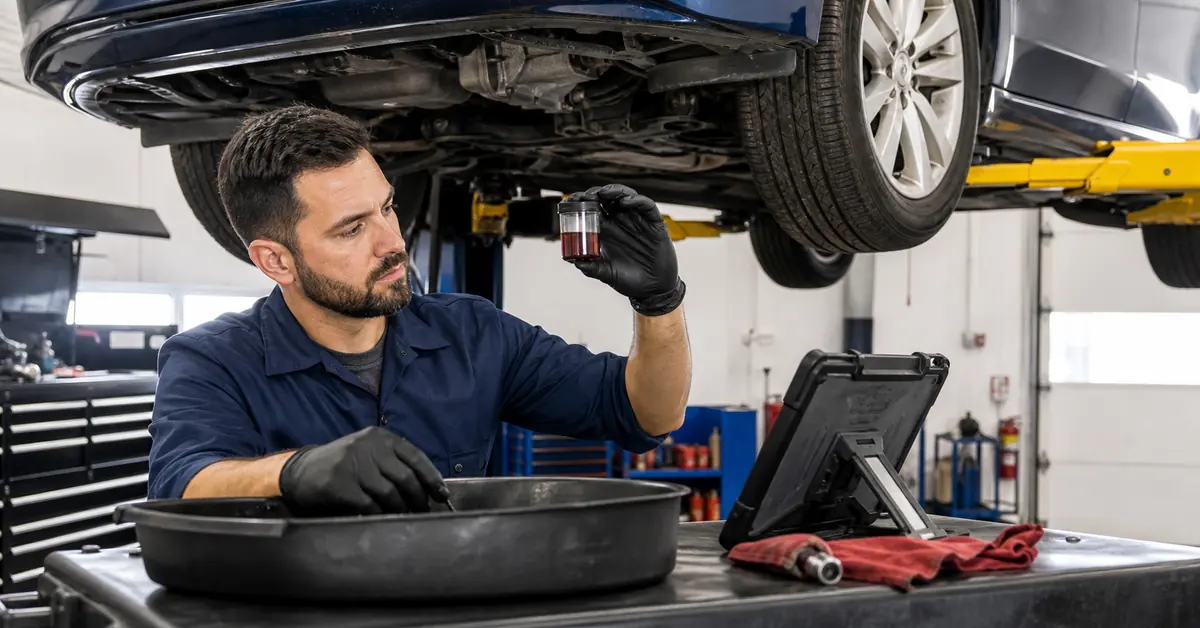
Mechanic checking transmission fluid condition on a used car in a repair bay
Transmission service should start with symptoms, service history, fluid condition, and manufacturer-specific procedure.

Quick Answer: Should You Change Transmission Fluid on a Used Car?

You should consider transmission fluid service when the owner manual interval is due, service history is missing, fluid condition is poor, the vehicle was used for towing or stop-and-go driving, or the transmission has no symptoms but needs preventive maintenance. You should get diagnosis first if the car already slips, bangs into gear, delays engagement, smells burnt, leaks fluid, or has warning lights.

The Federal Trade Commission warns that poor transmission performance may come from actual component failure or from simpler problems such as a disconnected hose or plugged filter. That is exactly why testing matters. A fluid change is maintenance; it is not a guaranteed repair for a damaged transmission.

Add this service to your broader used car maintenance cost plan. Transmission work can affect the first-year budget more than many small services, especially if the car has unknown history.

Why Transmission Fluid Matters

Automatic transmission fluid lubricates moving parts, helps transfer power, supports hydraulic pressure, cools the transmission, and helps protect seals and internal components. In some vehicles, the fluid also interacts with electronic controls and specific friction materials that require the exact manufacturer-approved fluid.

Old, low, contaminated, or incorrect fluid can contribute to harsh shifting, delayed engagement, overheating, slipping, and accelerated wear. But symptoms can also come from solenoids, valve body issues, torque converter problems, worn clutches, software concerns, or mechanical damage. That is why the service decision should never be based on color alone.

AAA describes transmission fluid as critical for smooth, efficient driving because it reduces friction, lubricates parts, and helps regulate temperature. For a used-car shopper, that makes it one of the most important fluids to verify before buying.

Transmission Fluid Change Used Car: 9 Checks Before Service

1. Confirm the Transmission Type

A conventional automatic, CVT, dual-clutch transmission, manual transmission, and hybrid transaxle may need different fluid, procedures, and intervals. Do not approve a generic transmission service until the shop confirms the exact system.

2. Read the Owner Manual Interval

Some vehicles list regular service intervals, while others use severe-duty schedules for towing, heat, hills, delivery, or stop-and-go driving. Ask the shop to compare its recommendation with the manufacturer schedule for your exact vehicle.

3. Check Service Records

Receipts matter. A car with documented transmission services is less risky than one with no records. If the seller claims the fluid was changed, ask for date, mileage, fluid type, and shop name.

4. Watch for Delayed Engagement

After shifting from park to drive or reverse, a healthy transmission should engage smoothly. A long delay, thump, or flare can indicate a problem that needs diagnosis before routine fluid service.

5. Notice Slipping or Flaring

Slipping feels like the engine revs but road speed does not match. AAA describes slipping as a serious problem that can involve low or contaminated fluid, worn internal parts, or torque converter issues. Do not treat slipping as a simple maintenance item.

6. Inspect for Leaks

Transmission fluid may appear reddish, pink, brown, or dark depending on age and type. Wet spots under the car deserve attention. Low fluid because of a leak can quickly become a bigger problem.

7. Smell for Burnt Fluid

A burnt smell can suggest overheating or fluid breakdown. If fluid smells burned and the car shifts poorly, ask for diagnosis before approving a flush.

8. Ask About Filter or Pan Service

Some transmissions have serviceable filters and pans; others do not. A drain-and-fill, pan drop, filter change, and machine exchange are different services. Make sure the quote says exactly what is included.

9. Confirm the Correct Fluid

Modern transmissions can be very fluid-specific. The wrong fluid can create poor shifting or damage. Ask the shop to identify the exact specification, not just the brand.

Warning Signs That Need Diagnosis First

A transmission fluid service is not a cure-all. If the vehicle already has symptoms, paying for fluid service without diagnosis can waste money and delay the real repair. The FTC lists abrupt or hard shifts, delayed or no response when shifting from neutral to drive or reverse, failure to shift during acceleration, and slipping as common transmission symptoms.

Symptom Possible Cause Best Next Step
Delayed drive or reverse Low fluid, internal wear, valve body issue Diagnose before service
Hard shifts Fluid issue, solenoid, software, mounts, internal wear Scan and inspect
Slipping under acceleration Low fluid, worn clutches, torque converter issue Avoid relying on flush alone
Fluid leak Pan gasket, axle seal, cooler line, case leak Find leak source
Burning smell Overheated fluid or slipping components Stop guessing and diagnose

If these symptoms appear during a test drive, combine the transmission review with a full used car inspection checklist. A clean interior and low price do not offset a failing transmission.

Fluid Change, Flush, Drain-and-Fill, or Filter Service?

Drivers often hear different words at the repair counter. A drain-and-fill removes the fluid that drains from the pan or drain plug and replaces it with fresh fluid. A pan service may include removing the pan, inspecting debris, replacing a gasket, and changing a filter where applicable. A machine exchange or flush moves more fluid through the system, but it must be done correctly and with the right fluid.

No single method is always best. A high-mileage vehicle with unknown history may need a cautious approach. A vehicle with regular service records may be a better candidate for scheduled exchange. A transmission with serious symptoms needs diagnosis first.

Service Type Best For Question to Ask
Drain-and-fill Routine maintenance on many vehicles How much fluid is replaced?
Pan and filter service Units with serviceable filter/pan Will you inspect debris or metal?
Machine exchange Some maintained vehicles when procedure allows Is this recommended for my transmission?
Diagnosis first Slipping, burning smell, warning lights What test proves the service is safe?

High-Mileage Used Cars: Why the Decision Is Tricky

High-mileage transmission service creates debate because some owners wait too long. Fresh fluid can help when the transmission is healthy but overdue. But if the transmission is already worn, slipping, or full of clutch material, service may reveal an existing problem that was hidden by degraded fluid and poor operation.

The practical rule is not “never change high-mileage fluid.” The practical rule is: evaluate symptoms, records, fluid condition, and manufacturer guidance. If the car shifts well and the service is due, maintenance may be reasonable. If it slips, delays, bangs, or smells burnt, get diagnosis before approving a service that may not fix the damage.

For a buyer, unknown high-mileage transmission history should affect negotiation. A private seller saying “it just needs fluid” should be treated carefully. If fluid alone solved it, the seller probably would have done it before listing the car.

CVT, Dual-Clutch, Manual, and Hybrid Transmissions

Not every used car has a traditional automatic. Continuously variable transmissions, dual-clutch units, manual gearboxes, and hybrid transaxles have different service needs. CVTs often require very specific fluid and may be sensitive to heat and wrong service procedures. Dual-clutch transmissions may have separate clutch and gear oil requirements depending on design.

Manual transmissions use gear oil or manual transmission fluid depending on the vehicle. A manual gearbox with grinding, hard shifting, or clutch-related problems may not be fixed by fluid alone. Hybrids can use specialized transaxle fluids and procedures. Always verify the system before comparing quotes.

Sealed Transmissions and “Lifetime Fluid” Claims

Many newer used cars do not have a traditional dipstick. Sellers and some owners call these “sealed transmissions,” but sealed does not always mean impossible to service. It often means the fluid level is checked through a specific procedure using vehicle temperature, fill plugs, scan data, and service tools. That makes the job less DIY-friendly and more dependent on a shop that knows the model.

“Lifetime fluid” also needs context. The word lifetime may refer to a warranty period, expected service life under normal conditions, or manufacturer marketing language. Severe use can still change the maintenance decision. Towing, delivery work, repeated short trips, hot climates, mountain driving, and stop-and-go commuting can all increase transmission heat and wear. Ask the shop to explain whether your driving pattern counts as severe service.

How to Test Drive for Transmission Problems

A test drive should be long enough to observe the transmission cold and warm when possible. Start with gentle acceleration, then normal city driving, then a safe highway merge. Listen for whining, feel for delayed shifts, watch for flare between gears, and check whether reverse engages smoothly. Do not abuse the car, but do not accept a five-minute loop that hides symptoms.

After the drive, park, shift from drive to reverse and back with your foot firmly on the brake. A harsh clunk, long pause, or vibration can be a warning sign. If the car has manual mode, paddle shifters, or sport mode, test them gently where safe. If the seller refuses a proper test drive or insists that the car “only needs fluid,” treat that as a negotiation risk.

When to Walk Away From a Used Car

Walk away or demand a professional diagnosis when the transmission slips badly, bangs into gear, leaves fresh fluid on the ground, has a warning light, or smells burnt after a short drive. Also be careful when the seller recently cleared codes, replaced fluid without receipts, or says a major symptom is normal for the model without proof.

A used car with a healthy transmission can still need maintenance. A used car with a failing transmission can become more expensive than a cleaner car with a higher asking price. When repair risk is unclear, spend money on inspection before spending thousands on purchase, taxes, insurance, and registration.

Cost Factors U.S. Drivers Should Understand

The cost of a transmission fluid change used car service depends on fluid type, capacity, labor time, filter availability, pan gasket, scan-tool needs, and whether diagnosis is included. A simple drain-and-fill may cost less than a pan-drop filter service or exchange on a complex vehicle.

AAA has noted that a simple transmission fluid change can cost much less than major transmission repairs, while serious repairs or replacement can run into thousands. That gap is why preventive maintenance matters, but only when done at the right time and for the right reason.

If the vehicle also needs coolant, brakes, battery, or tires, compare all expected expenses before buying. A lower sale price can disappear quickly when multiple systems are overdue.

Questions to Ask the Shop Before You Approve Service

  • What exact transmission type does this vehicle have?
  • What fluid specification will you use?
  • Is this a drain-and-fill, flush, pan service, or filter service?
  • How much fluid will be replaced?
  • Did you check for leaks before recommending service?
  • Are there stored transmission codes or warning lights?
  • Will you inspect the pan or debris if the pan is removed?
  • Is this service consistent with the owner manual?
  • What warranty applies to the service?

The FTC recommends written estimates and repair orders that identify the work, parts, labor, and odometer reading. Transmission service is exactly the kind of job where that paperwork protects the driver.

Used Car Buying: How Transmission Behavior Should Affect the Deal

During a test drive, check cold start engagement, low-speed shifts, highway acceleration, downshifts, reverse, parking-lot maneuvers, and hill behavior where safe. A transmission that behaves well only after warming up still deserves attention. Some problems appear cold, others hot.

Review the vehicle history report, but do not assume it shows all service. Many maintenance visits never appear on history reports. Ask for receipts and consider a pre-purchase inspection from a mechanic who can scan codes, inspect leaks, and test-drive properly.

If the seller refuses inspection or pressures you to buy before diagnosis, step back. Transmission risk is one of the classic issues in our guide on how to avoid buying a bad used car.

Common Mistakes That Raise Transmission Risk

  • Changing fluid without checking symptoms: Slipping or delayed shifts need diagnosis first.
  • Using universal fluid blindly: Many modern units need exact specifications.
  • Ignoring leaks: Fresh fluid will leak out if the source is not fixed.
  • Comparing flush and drain-and-fill as the same service: They are different procedures.
  • Trusting “lifetime fluid” without context: Lifetime can mean different things depending on use and manufacturer language.
  • Skipping records: Keep receipts with mileage and fluid type.
  • Buying a slipping car because it is cheap: Repair risk can exceed the discount.

How Transmission Service Fits With Maintenance Planning

Transmission fluid should be reviewed with coolant, brake fluid, battery, tires, and engine maintenance. Heat from towing or hard use can stress both transmission and cooling systems. A vehicle with poor shifting and overheating history deserves extra caution.

For related checks, compare this guide with coolant flush on a used car, brake fluid change on a used car, and used car battery replacement cost. Together they help estimate whether a used car is cheap to own or only cheap to buy.

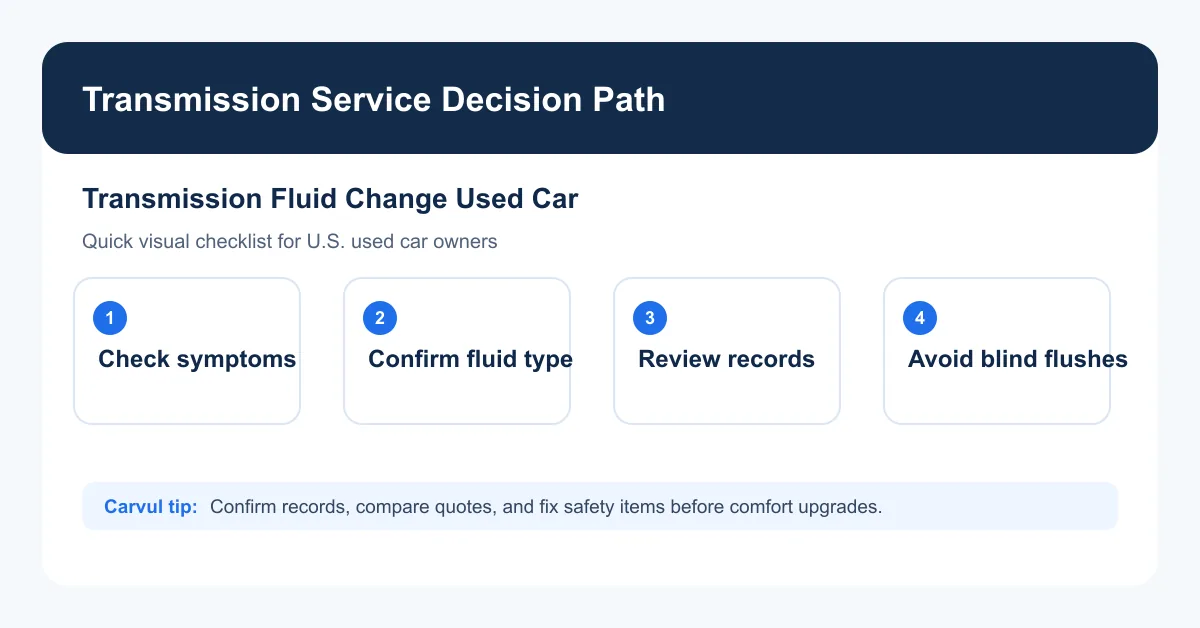
transmission fluid change used car decision chart for U.S. drivers
Use transmission symptoms, fluid history, and owner-manual guidance before approving a used-car transmission service.

FAQ

Should I change transmission fluid if I just bought a used car?

Check the owner manual, service records, fluid condition, leaks, and shifting behavior first. If the car shifts normally and service is due, it may be smart. If it slips or smells burnt, diagnose before service.

Can changing transmission fluid damage a transmission?

Correct service on a healthy transmission should not damage it. Problems happen when the transmission is already worn, the wrong fluid is used, symptoms are ignored, or the procedure is wrong for the vehicle.

Is a transmission flush better than a drain-and-fill?

Not always. The best method depends on the vehicle, history, symptoms, and manufacturer procedure. Ask the shop why it recommends one method over another.

What are signs of bad transmission fluid?

Warning signs include slipping, delayed engagement, harsh shifts, leaks, burnt smell, dark contaminated fluid, warning lights, or whining and grinding noises. These symptoms need diagnosis.

Do CVTs need different fluid?

Yes. CVTs usually require specific CVT fluid and procedures. Using the wrong fluid can create serious drivability and durability problems.

Bottom Line

A transmission fluid change used car recommendation should be based on records, symptoms, fluid condition, leak inspection, vehicle type, and manufacturer procedure. Fresh fluid can be smart maintenance, but it is not a cure for an already failing transmission.

For U.S. used-car buyers, the safest move is to ask for evidence, confirm the exact fluid, understand the service type, and get everything in writing. If the car slips, delays, bangs, leaks, or smells burnt, slow down and diagnose before you pay.

Sources: FTC Auto Repair Basics, AAA transmission fluid maintenance guidance, AAA fluid service guidance, and AAA common transmission slipping symptoms.

Leave a Comment

Your email address will not be published. Required fields are marked *

Scroll to Top