
Brake fluid change used car decisions are easy to ignore because brake fluid is hidden in a reservoir, not worn down like a tire or a brake pad. But for U.S. drivers buying or maintaining a used vehicle, old brake fluid can affect pedal feel, corrosion risk, ABS performance, and emergency stopping confidence.
The safest approach is not to approve a flush automatically every time a shop recommends it, and not to skip it just because the pedal still feels normal. A smart buyer checks the service history, reservoir condition, brake warning signs, fluid test results, and whether the recommendation matches the owner manual. This guide explains how to judge a brake fluid change used car recommendation before paying.
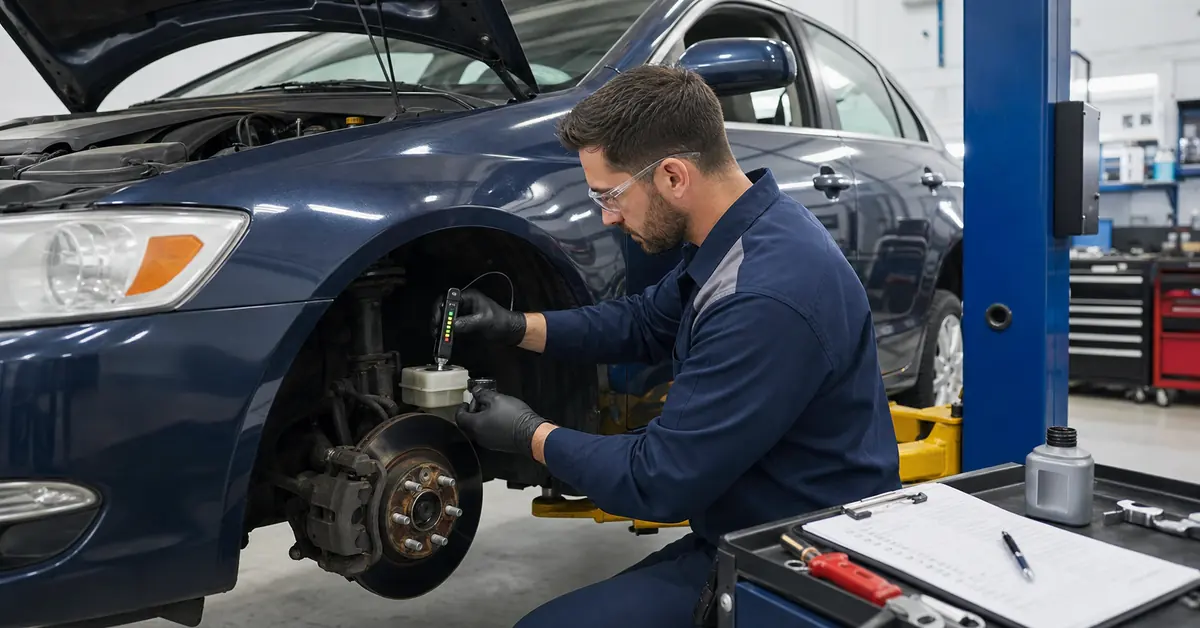
Quick Answer: When Should a Used Car Get Brake Fluid Service?
A used car should get brake fluid service when the owner manual interval is due, the service history is missing, the fluid tests poorly, the reservoir shows contamination, the brake pedal feels abnormal, or a brake hydraulic repair requires fresh fluid and proper bleeding. A seller saying “the brakes are fine” is not the same as proof that the fluid is clean and within specification.
Brake fluid is hygroscopic, which means it can absorb moisture over time. Moisture can reduce boiling protection and contribute to internal corrosion in brake hydraulic parts. That matters most during repeated braking, mountain driving, hot weather, towing, or any situation where brake heat builds quickly.
For a buyer, brake fluid belongs inside the broader used car maintenance cost plan. If the car also needs tires, pads, rotors, battery service, fluids, and registration, the budget can change quickly after purchase.
Why Brake Fluid Matters on a Used Car
The brake pedal does not directly squeeze the wheels by itself. It pushes hydraulic pressure through brake fluid to calipers or wheel cylinders. If that fluid is contaminated, overheated, low, leaking, or full of air, braking can become inconsistent. The driver may feel a soft pedal, longer stopping response, pulsing that needs diagnosis, or a pedal that slowly sinks under pressure.
Brake fluid also protects internal metal components. Corrosion inside calipers, ABS valves, wheel cylinders, master cylinders, and brake lines can become expensive. A fluid exchange is usually cheaper than hydraulic-system repair, but only if the service is needed and performed correctly.
The Federal Trade Commission warns drivers that many vehicle systems are connected and that postponing maintenance can lead to more serious failures. Brakes are exactly that kind of system: pads, rotors, calipers, hoses, fluid, ABS electronics, and tires all affect stopping performance.
Brake Fluid Change Used Car: 6 Safety Checks Before You Pay
1. Check the Owner Manual Interval
Some vehicles list a mileage or time interval for brake fluid replacement, while others recommend inspection and service based on condition. Do not rely only on a generic shop schedule. Ask the shop to compare its recommendation with the manufacturer schedule for your exact year, make, model, and engine.
2. Ask for a Fluid Test, Not Just a Visual Opinion
Dark fluid can be a warning sign, but color alone is not a complete diagnosis. Shops may use moisture testers or test strips depending on the service process. Ask what test was performed and what result supports the recommendation.
3. Inspect for Leaks and Low Fluid
Low brake fluid can mean worn pads, a leak, or previous service that was not completed correctly. Simply topping off the reservoir without finding the reason can hide a safety problem. If the brake warning light is on, the vehicle needs diagnosis before normal driving.
4. Judge Pedal Feel Carefully
A soft, spongy, sinking, or unusually hard pedal should not be dismissed. Air in the system, internal master cylinder issues, hose problems, contamination, or ABS-related faults can all affect pedal feel. A fluid change may be part of the fix, but the root cause should be identified.
5. Confirm the Correct Fluid Type
Most passenger vehicles use DOT 3, DOT 4, or DOT 5.1 brake fluid, but the correct type depends on the vehicle. DOT 5 silicone fluid is different and should not be treated as interchangeable. Always confirm the fluid specification before service.
6. Get the Brake Inspection in Writing
A good invoice should show the reason for service, fluid type, labor, parts, inspection notes, and any brake-related concerns. The FTC recommends written estimates and completed repair orders so drivers know what work was performed and what parts or labor were charged.
Warning Signs That Need Brake Diagnosis
Brake fluid service should not be treated like a cosmetic upsell. If the car shows braking symptoms, get a real brake diagnosis. The FTC lists brake-related symptoms such as the vehicle pulling to one side when braking, a pedal that sinks to the floor while pressure is maintained, scraping or grinding during braking, or the brake light on the instrument panel.
| Warning Sign | Possible Cause | Best Action |
|---|---|---|
| Brake pedal feels soft | Air, moisture, leak, or hydraulic issue | Inspect system and bleed if needed |
| Pedal sinks under pressure | Leak or master cylinder fault | Do not rely on a flush alone |
| Brake warning light | Low fluid, parking brake, sensor, or system issue | Diagnose before driving normally |
| Pulling while braking | Caliper, hose, tire, alignment, or pad issue | Full brake and tire inspection |
| Grinding or scraping | Pad or rotor wear | Inspect friction parts immediately |
If the car is being inspected before purchase, combine this check with a complete used car inspection checklist. Brake fluid condition is only one part of a safe buying decision.
Brake Fluid Flush vs. Brake Fluid Exchange vs. Bleeding
Drivers often hear several terms at the service counter. A brake fluid exchange normally means old fluid is removed from the reservoir and hydraulic lines while fresh fluid is added. A flush may be used casually to describe a more complete exchange process. Bleeding the brakes removes air from the hydraulic system and may be required after certain repairs.
The exact method matters less than the result: the shop should use the correct fluid, avoid introducing air, protect painted surfaces, follow the manufacturer sequence, and verify pedal feel afterward. On some vehicles, ABS service procedures may require scan-tool support to cycle valves or follow a specific bleeding routine.
Ask the shop what process it will use. If the answer is vague, request clarification before approval. A poor brake fluid job can create a worse pedal than the car had before service.
What Brake Fluid Service Usually Includes
A professional service should start with inspection, not just a machine hookup. The technician should check reservoir level, fluid condition, visible leaks, hose condition, brake line corrosion, pad thickness, rotor condition, caliper behavior, and warning lights. Then the shop should replace fluid according to the correct procedure and test pedal feel afterward.
| Service Item | Why It Matters | Ask This |
|---|---|---|
| Correct fluid specification | Wrong fluid can damage the system | Which DOT rating does my car require? |
| Fluid condition test | Supports the recommendation | What result says it needs service? |
| Leak inspection | Low fluid may signal a safety issue | Did you inspect lines, hoses, calipers, and master cylinder? |
| ABS procedure | Some vehicles need special bleeding steps | Does this model need scan-tool bleeding? |
| Pedal verification | Confirms the system feels correct | Was the pedal tested after service? |
Cost Factors U.S. Drivers Should Understand
The cost of a brake fluid change used car service depends on the vehicle, local labor rate, fluid specification, whether a full inspection is included, and whether the car needs extra ABS bleeding steps. A simple compact car may be faster than a performance vehicle, truck, or luxury vehicle with more complicated procedures.
Do not compare only the headline price. One shop may quote a low fluid-only service while another includes a brake inspection, test drive, leak check, ABS procedure, and written report. If the second quote prevents a missed leak or unsafe pedal, it may be the better value.
If your car also needs pads or rotors, read the brake-fluid recommendation together with the full brake estimate. A separate guide on brake pad replacement cost for a used car can help you separate fluid maintenance from friction-part replacement.
Used Car Buying: What Brake Fluid Reveals About the Previous Owner
Brake fluid condition can reveal how seriously the previous owner handled maintenance. A clean service record with brake fluid replacement, pad measurements, and inspection notes is a good sign. Missing records, dark fluid, corrosion around brake lines, ignored warning lights, or a seller who refuses inspection are risk signals.
For older or higher-mileage vehicles, inspect brake lines in rust-prone states. Cars from the Midwest, Northeast, and snowy regions may see road-salt corrosion. A brake fluid change cannot repair rusted brake lines or damaged hoses. If lines are badly corroded, the issue is safety-critical and can become expensive.
This is also where buying discipline matters. If a seller says the car only needs “minor brake work,” get the vehicle inspected before negotiating. A bad brake system can turn a cheap car into a costly mistake, just like the problems covered in our guide on how to avoid buying a bad used car.
DIY Brake Fluid Service: When It Makes Sense and When It Does Not
Some experienced owners can bleed or exchange brake fluid at home, but it is not a beginner job. Brake fluid can damage paint, the vehicle must be safely supported if wheels are removed, and air introduced into the brake system can create a dangerous pedal. The risk is higher when the vehicle has ABS procedures that require scan tools.
DIY may make sense if you have the proper tools, correct fluid, service information, safe workspace, and experience. A professional shop is better when the vehicle is newer, uses complex ABS procedures, has brake warning lights, shows leaks, or has an unclear service history.
If you do any maintenance yourself, keep receipts and notes. Good records help future troubleshooting and can support resale value. They also prevent double-paying for service when you forget what was done.
Moisture, Heat, and Why Brake Fluid Gets Worse Over Time
Brake fluid works in a hot, sealed hydraulic system, but it is not immune to aging. Moisture can enter slowly through rubber hoses, seals, reservoir openings during service, and normal long-term exposure. Once moisture is present, the fluid can become less resistant to heat and more likely to support internal corrosion.
This matters most during repeated braking. A commuter who drives flat roads may not notice a problem immediately, while a driver descending a mountain road, towing, carrying passengers, or making repeated highway stops may heat the brakes harder. If fluid boils locally, vapor can compress and the pedal can feel soft or unpredictable. That is why brake fluid condition matters even when the vehicle appears to stop normally during a short test drive.
Used cars from humid coastal areas, hot Southern states, and regions with heavy winter road salt deserve extra attention. The risk is not only the fluid inside the reservoir; it is the condition of lines, fittings, calipers, and bleeder screws underneath the vehicle.
How to Read a Brake Fluid Recommendation From a Shop
A strong recommendation should sound specific. The shop should be able to explain the test result, the vehicle interval, the fluid type, and whether any related brake problem was found. A weak recommendation sounds generic: “You need a flush because it is dirty” or “We recommend it on every used car.” Generic advice is not always wrong, but it is not enough to approve work confidently.
Ask the advisor to separate maintenance from repair. Maintenance means the fluid is due or degraded but the hydraulic system is otherwise healthy. Repair means there is a leak, failing hose, bad caliper, master cylinder issue, or ABS fault that requires diagnosis. If repair is needed, fresh fluid alone will not solve the problem.
State and Driving Conditions That Change the Decision
A Florida driver, a Colorado mountain commuter, a Michigan winter driver, and a Texas rideshare driver do not stress brake fluid the same way. Heat, humidity, hills, traffic, towing, road salt, and stop-and-go driving can all change how quickly the brake system needs attention.
If the car lives in a rust-prone area, inspect the underside before approving a simple fluid service. A stuck bleeder screw, rusted brake line, or leaking caliper can turn a basic maintenance visit into a larger repair. If the car is used for delivery, rideshare, mountain driving, or frequent heavy loads, brake inspections should be more frequent than on a low-mileage weekend car.
Common Mistakes That Make Brake Fluid Service Worse
- Approving service without a reason: Ask for the test result, interval, or visible condition that supports it.
- Using the wrong fluid: DOT ratings are not all interchangeable for every vehicle.
- Ignoring leaks: New fluid will not fix a leaking line, hose, caliper, or master cylinder.
- Skipping ABS procedures: Some cars need specific bleeding steps to protect pedal feel.
- Confusing pad wear with fluid failure: Pads, rotors, calipers, tires, and fluid all affect braking.
- Not saving the repair order: Documentation matters for warranty, resale, and future diagnosis.
How Brake Fluid Fits With Other Maintenance
Brake fluid should not be checked in isolation. Tires, suspension, brake pads, rotors, ABS lights, wheel bearings, and alignment all influence how safely a used car stops. A vehicle with fresh brake fluid but bald tires still has a serious safety problem.
If you are building a first-year maintenance plan, group brake fluid with tires, battery, engine oil, coolant, transmission fluid, and spark plugs. For ignition-related starting or misfire issues, see our guide on spark plug replacement on a used car. For starting reliability, compare it with used car battery replacement cost.

FAQ
How often should brake fluid be changed on a used car?
Follow the owner manual first. If the service history is missing, ask for fluid testing and a brake inspection. Many shops recommend time-based intervals, but the correct answer depends on the vehicle and condition.
Can old brake fluid make the pedal feel soft?
Contaminated fluid, moisture, or air in the system can contribute to poor pedal feel. A soft pedal can also come from leaks, hose problems, caliper issues, or master cylinder failure, so diagnosis matters.
Is brake fluid service the same as replacing brake pads?
No. Brake fluid service deals with the hydraulic fluid. Brake pad replacement deals with friction material. A car may need one, both, or neither depending on inspection results.
Should I buy a used car with dark brake fluid?
Dark fluid alone does not automatically mean the car is bad, but it should trigger a deeper brake inspection and service-history review. Use it as a negotiation and safety-check point.
Can I drive with the brake warning light on?
You should not ignore a brake warning light. It can indicate low fluid, a hydraulic issue, parking brake status, or another brake-system problem. Get the system inspected before normal driving.
Bottom Line
A brake fluid change used car recommendation should be based on evidence: owner manual interval, service history, fluid test results, reservoir condition, brake symptoms, and a real inspection. The goal is not to buy every service a shop suggests. The goal is to protect braking performance and avoid hidden hydraulic problems.
For U.S. used-car buyers, the best move is simple: ask for the test result, confirm the correct fluid type, inspect for leaks, understand the labor, and keep the receipt. If the car shows a sinking pedal, brake warning light, grinding, pulling, or low fluid, treat it as a safety issue before you drive it like a normal car.
Sources: FTC Auto Repair Basics, NHTSA interpretation on brake warning lights and low fluid, NHTSA driver assistance and braking technology overview, and Car Care Council maintenance guidance.