
Used car battery replacement cost is not only the price printed on the shelf. For U.S. drivers, the real decision includes the battery type, the age of the vehicle, cold-cranking needs, installation labor, warranty coverage, possible registration or programming, and whether the charging system is healthy enough to protect the new battery.
If a used car starts slowly, needs repeated jump-starts, or shows battery warning lights, do not buy the cheapest replacement immediately. A weak battery can be the problem, but the alternator, starter, loose terminals, parasitic draw, or poor previous repairs can create the same symptoms. This guide explains how to estimate used car battery replacement cost before paying, what to ask the shop, and how to avoid replacing the battery twice.
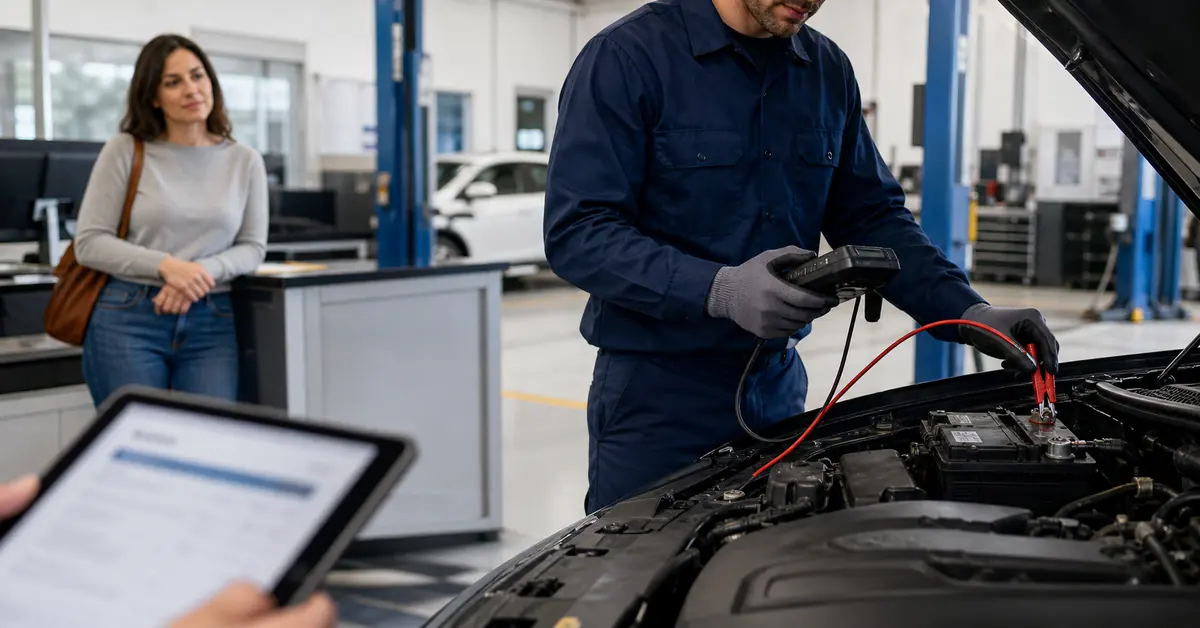
Quick Answer: What Should U.S. Drivers Budget?
Most drivers should think of battery replacement as a small but important ownership-cost decision, not a random emergency purchase. The final price depends on the group size, battery technology, warranty period, vehicle electronics, local labor, taxes, and whether a core charge is refunded when the old battery is returned.
A basic flooded lead-acid battery normally costs less than an AGM battery, while vehicles with stop-start systems, premium electronics, German luxury platforms, some hybrids, and newer cars with battery management systems can cost more to service correctly. The lowest advertised price is not always the best value if the battery has a short free-replacement warranty or was sitting on the shelf too long.
Use the battery replacement decision together with your larger used car maintenance cost plan. A battery is one of the first items to inspect after buying a used car because a weak one can leave you stranded and can also hide charging-system problems.
Used Car Battery Replacement Cost: What Changes the Price?
The phrase used car battery replacement cost sounds simple, but several line items can change the final bill. A shop or parts store may quote the battery alone, while a repair facility may include testing, installation, disposal, taxes, and system registration. Before comparing quotes, make sure each quote includes the same services.
| Cost Factor | Why It Matters | Buyer Question |
|---|---|---|
| Battery group size | The battery must physically fit and match terminal layout. | Is this the exact group size for my VIN? |
| Battery type | Flooded, AGM, and EFB batteries have different prices and uses. | Does my car require AGM or start-stop support? |
| Cold cranking amps | CCA affects cold-weather starting ability. | Does this meet or exceed the owner manual requirement? |
| Warranty | A longer free-replacement period can protect ownership cost. | How many months are full replacement, not prorated? |
| Labor and testing | Some vehicles need extra access time or battery registration. | Is charging-system testing included? |
| Core charge | Retailers often refund it when the old battery is returned. | Is the core fee included or refunded separately? |
For a shopper comparing two used cars, battery cost should not decide the whole purchase. But it can reveal how the previous owner treated the vehicle. A fresh battery with a receipt, correct group size, and clean terminals is a good sign. A swollen case, corrosion, mismatched battery, or no service record should push you toward a deeper inspection.
8 Checks Before You Pay for a Battery
1. Confirm the Battery Age
Every battery has a date code or manufacturing sticker. If the battery is older than three to five years, replacement may be reasonable, especially in hot climates or on vehicles that sit for long periods. Consumer Reports advises proactive battery testing because many drivers wait until the car will not start, which usually forces a rushed purchase.
2. Ask for a Load Test
A voltage reading alone is not enough. A weak battery can show decent voltage at rest but fail under load. Ask for a printed or digital test result showing state of health, cold-cranking performance, and whether the battery should be charged, retested, or replaced.
3. Test the Charging System
If the alternator is weak or overcharging, a new battery may fail early. A professional test should confirm that the alternator, voltage regulation, and belt-driven charging system are working correctly. This is especially important if the car has repeated jump-start history.
4. Inspect Terminals and Cables
Corroded terminals, loose clamps, damaged ground cables, or poor previous repairs can mimic a bad battery. Cleaning or repairing a cable connection may solve the starting problem, while ignoring it can make a brand-new battery look defective.
5. Match the Battery Type
Many modern cars use AGM batteries because they support heavier electrical loads and repeated charge cycles. If your vehicle came with AGM, replacing it with a cheaper flooded battery can create reliability problems. Always confirm the correct type by VIN, owner manual, or manufacturer service information.
6. Check Warranty Terms
Battery warranties are not all equal. Look for the free-replacement period, not only the total prorated coverage. A battery advertised with a long prorated warranty may still offer limited real value after the first replacement window ends.
7. Ask About Registration or Programming
Some vehicles, especially European and newer electronically managed platforms, may need battery registration so the charging system knows a new battery was installed. Skipping this step can shorten battery life or create warning messages.
8. Keep the Receipt and Test Report
Save the receipt, warranty document, and test result with the vehicle records. These papers help if the battery fails early, and they also support resale value because they show the next buyer that the replacement was done correctly.
Battery Warning Signs Drivers Should Not Ignore
AAA lists several warning signs that can point to a weak or failing battery, including dim headlights, clicking sounds, electrical problems, slow cranking, battery or charging warning lights, frequent jump-starts, unusual smells, and a bulging battery case. Those symptoms do not always prove the battery alone is bad, but they do mean the car needs testing before the next long drive.
| Symptom | Possible Cause | Best Next Step |
|---|---|---|
| Slow crank in the morning | Weak battery, cold weather, high resistance cable | Load test battery and inspect terminals |
| Clicking but no start | Dead battery, loose cable, starter issue | Test battery before replacing starter |
| Battery light while driving | Charging-system fault | Test alternator and belt system |
| Repeated jump-starts | Battery failure or parasitic draw | Run battery, charging, and draw tests |
| Rotten smell or swollen case | Overheating or internal battery damage | Stop driving and get professional help |
Do not ignore a warning sign just because the car starts today. Used cars often hide delayed maintenance. If you recently bought the vehicle, combine the battery test with a broader used car inspection checklist so you can catch tire, brake, fluid, and electrical issues in the same visit.
Battery Type: Flooded, AGM, EFB, Hybrid and EV 12-Volt Batteries
Flooded lead-acid batteries are the traditional and usually lower-cost option. They work well in many older and basic vehicles when the correct group size and cranking rating are used. AGM batteries cost more, but they handle deeper discharge and heavier electrical demand better. Enhanced flooded batteries, often called EFB, are used in some start-stop vehicles as a middle ground between standard flooded and AGM designs.
Hybrid and electric vehicles add another layer. Their high-voltage battery is separate from the small 12-volt battery that powers lights, computers, modules, and startup electronics. NHTSA notes that EV and hybrid high-voltage batteries require trained technicians, while the 12-volt battery may often be jump-started according to the owner manual. That distinction matters because a driver may say “battery problem” when the safe repair process depends on which battery system is involved.
For shoppers, the practical rule is simple: replace the battery with the type the vehicle requires. If a shop suggests downgrading from AGM to flooded to save money, ask why, ask whether the charging system supports it, and get the recommendation in writing.
How Climate and Driving Habits Affect Battery Life
Heat is hard on batteries. Drivers in Arizona, Texas, Florida, Nevada, and Southern California may see battery life shorten because high under-hood temperatures speed internal wear. Cold weather creates a different problem: the battery must deliver more cranking power while the engine oil is thicker and chemical performance is reduced.
Short trips also matter. If a used car is driven only a few miles at a time, the alternator may not fully recharge the battery. Long parking periods can drain the battery through normal electronic memory systems or through a parasitic draw. A car used mostly for short urban errands should have its battery tested more often than a highway commuter with regular longer trips.
This is why two drivers with the same model can have different used car battery replacement cost outcomes. One driver may get several years from a battery, while another replaces it early because of heat, vibration, short trips, and repeated deep discharges.
Battery or Something Else? Avoid the Wrong Repair
Replacing the battery is easy to recommend because it is visible and familiar. But a no-start diagnosis should be more careful. A failing starter, alternator problem, poor ground cable, blown fuse, aftermarket alarm, or parasitic electrical draw can all create symptoms that look like a dead battery.
Before paying, ask the shop to explain the evidence. “The car needed a jump” is not enough. Better evidence includes a failed load test, low measured cold-cranking capacity, age beyond expected life, visible case damage, or a charging-system test showing that the alternator is healthy while the battery cannot hold load.
This same discipline applies to other maintenance decisions. If the car misfires after starting, the problem may not be the battery at all; it might connect to ignition service such as spark plug replacement on a used car, fuel delivery, sensors, or compression. Good diagnostics prevent parts guessing.
What to Ask the Shop Before Approving Replacement
The FTC’s auto repair guidance recommends comparing shops, understanding labor charges, asking for a written estimate, and keeping repair documentation. Those basics are useful even for a battery job because the cheapest quote can become expensive if the wrong battery is installed or no warranty support is provided.
- What is the exact battery group size and type for my VIN?
- What are the cold cranking amps and reserve capacity?
- Is this battery fresh stock, and what is the manufacture date?
- How long is the free-replacement warranty?
- Is installation included?
- Is battery registration or system reset required?
- Will you test the charging system after installation?
- Is there a core charge, and how do I get the refund?
- Will the receipt show part number, labor, warranty, and odometer?
If the shop cannot answer these questions clearly, slow down. A reliable repair facility should be comfortable explaining the difference between the battery price and the total installed price.
DIY Replacement vs. Paying a Shop
DIY replacement can make sense for simple older cars where the battery is easy to access, the owner has the correct tools, and no registration procedure is needed. Still, batteries are heavy, acidic, and capable of producing dangerous sparks if handled incorrectly. Always follow the owner manual and safety instructions.
A shop is usually better when the battery is buried under trim, inside the trunk, under a seat, or connected to a modern battery management system. Paying labor can also be worth it if the quote includes testing, correct disposal, warranty support, and documentation.
For a buyer evaluating a used car before purchase, do not let the seller solve a no-start issue with a quick jump and a promise that “it just needs a battery.” A no-start car should be priced as a risk until the electrical system is tested. This is one reason our guide on how to avoid buying a bad used car recommends verifying problems before negotiating.
How to Add Battery Replacement to Your Maintenance Budget
A smart buyer treats battery replacement as part of the first-year ownership budget. If the battery is old, the terminals are corroded, or there is no receipt, plan for replacement or at least immediate testing. If the battery is fresh and documented, keep the record and check it during seasonal maintenance.
Budget planning also prevents bad financing decisions. A buyer who spends every dollar on the purchase price may struggle with a battery, tires, brakes, fluids, insurance, and registration in the first months. If you are financing the vehicle, compare the monthly payment with realistic ownership costs, not only the sale price. Our used car loan rates by credit score guide explains why a low payment can still become stressful when maintenance is ignored.
Common Mistakes That Raise Battery Costs
- Buying only by price: The cheapest battery may have weaker warranty terms or the wrong specification.
- Skipping the charging-system test: A failing alternator can damage the new battery.
- Ignoring corrosion: Dirty terminals can keep creating starting problems.
- Using the wrong battery type: Some vehicles need AGM or EFB support.
- Forgetting the core refund: Returning the old battery can reduce the net cost.
- Not saving paperwork: Missing receipts can make warranty claims difficult.
- Assuming EV battery means high-voltage battery: Many EV no-start issues involve the 12-volt system, but high-voltage systems need trained service.
FAQ
How much should used car battery replacement cost?
Used car battery replacement cost depends on battery type, group size, warranty, labor, tax, core charge, and whether the vehicle needs programming or registration. Compare installed quotes, not just shelf prices.
Should I replace the battery before it dies?
Yes, if testing shows weak capacity, the battery is near the end of its service life, or the car is showing slow-crank and jump-start symptoms. Proactive replacement is usually easier than an emergency no-start.
Is an AGM battery worth the extra money?
An AGM battery can be worth it when the vehicle requires it, has stop-start technology, carries heavy electrical loads, or needs better deep-discharge tolerance. Do not downgrade from AGM without confirming compatibility.
Can a bad alternator ruin a new battery?
Yes. An alternator or voltage regulation problem can undercharge or overcharge the battery. That is why charging-system testing should be part of the replacement decision.
What paperwork should I keep after battery replacement?
Keep the receipt, warranty details, battery test result, part number, installation date, and odometer reading. These records help with warranty claims and support the car’s resale history.
When Battery Replacement Should Wait
Battery replacement should wait when the only evidence is a single slow start after the car sat unused for weeks. In that case, charge the battery fully, test it under load, and check for a parasitic draw before approving parts. This prevents spending money on a new battery when the real problem is storage, a small electrical drain, or a charging issue.
Bottom Line
Used car battery replacement cost is worth checking before a no-start problem becomes urgent. The right decision starts with testing, not guessing. Confirm the battery age, type, CCA rating, warranty, charging-system health, and whether the vehicle needs registration after installation. Then keep the records with your maintenance file.
For U.S. used-car buyers, the best battery choice is not always the cheapest one. It is the battery that fits the vehicle correctly, has a strong warranty, is installed safely, and solves the real starting problem without hiding a deeper electrical issue.
Sources: FTC Auto Repair Basics, Consumer Reports Car Battery Buying Guide, AAA battery warning signs, and NHTSA EV and hybrid battery safety.