
coolant flush used car matters because used cars rarely come with perfect service history. For U.S. drivers, the safest maintenance decision is not always the cheapest repair today; it is the repair that prevents bigger costs later.
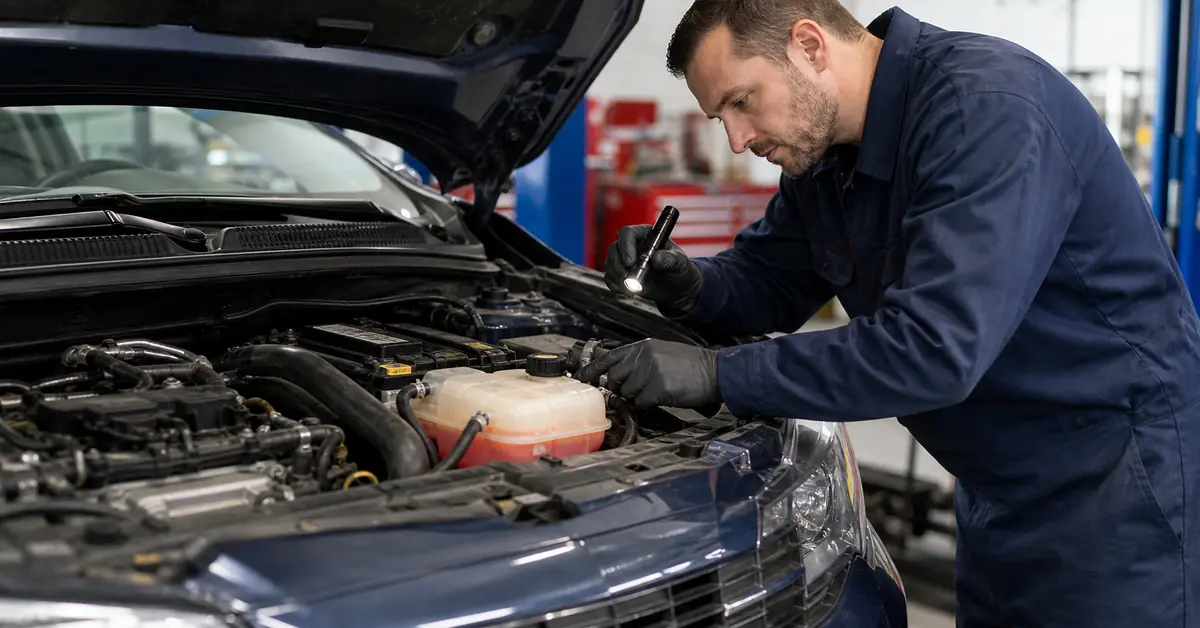
This guide explains how coolant flush used car fits into a real used-car maintenance plan, what warning signs to check, what questions to ask a mechanic, and when the service should be done before a small issue becomes an expensive repair.
Quick Answer for U.S. Drivers
A coolant flush used car decision should start with coolant condition, temperature behavior, leak checks, and service history. The best move is to compare mileage, service records, symptoms, and repair cost before approving work. If records are missing, coolant flush used car should be treated as a priority inspection item.
Why coolant flush used car Matters
Coolant protects the engine from overheating, corrosion, and freeze damage. A neglected cooling system can turn a cheap used car into an expensive engine repair.
Used-car buyers should not treat maintenance as one generic bill. A strong plan separates safety items, fluid services, wear items, and high-risk engine or transmission repairs. That helps you decide what to fix now, what to monitor, and what should reduce the price before purchase.
Cost and Risk Checklist
| Check | What U.S. drivers should do | Risk if skipped |
|---|---|---|
| Coolant color | Check for rust, oil, or sludge | Corrosion or head gasket risk |
| Temperature gauge | Watch overheating or swings | Engine damage |
| Leaks | Inspect hoses, radiator, water pump | Low coolant and overheating |
| Heater performance | Check weak cabin heat | Air pocket or clogged system |
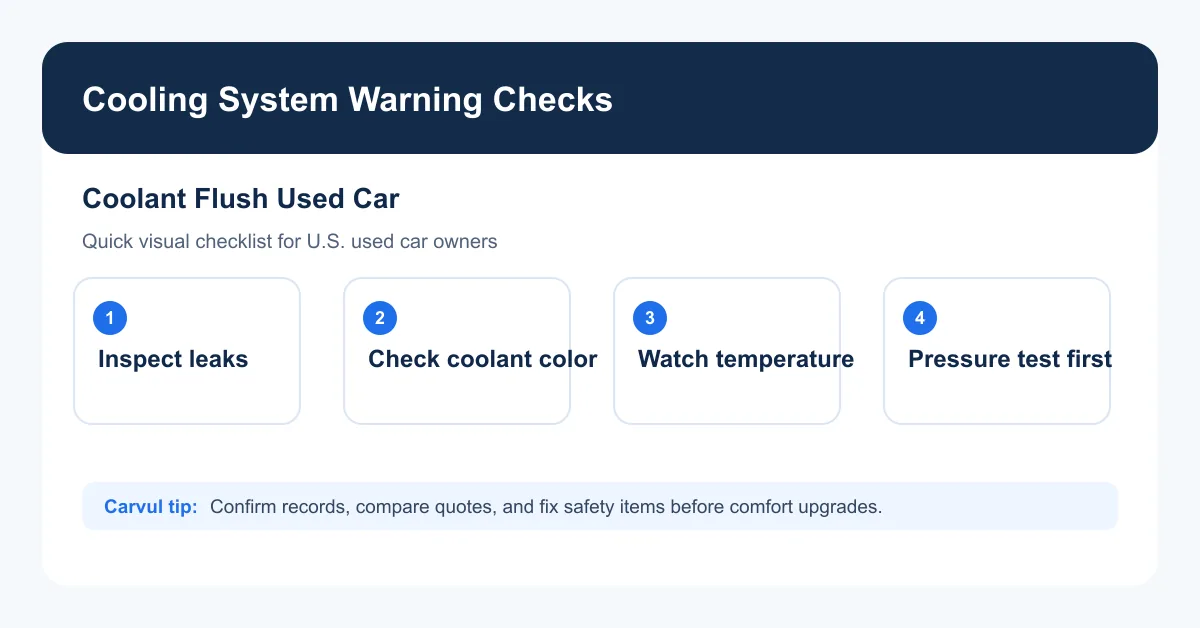
When a Coolant Service Becomes a Buyer Priority
A coolant flush used car decision matters most when the cooling system shows age, leaks, corrosion, overheating history, or mixed coolant colors. Many U.S. buyers focus on engine oil and tires, but coolant protects the radiator, water pump, heater core, hoses, and engine from heat damage. If the coolant is old or contaminated, a small service delay can become a much more expensive repair.
Before paying for a coolant flush used car service, ask the shop to pressure-test the system and inspect hoses, clamps, radiator condition, and the cap. If there is an active leak, flushing alone will not solve the real problem. The best choice is to repair the leak first, then refill with the correct coolant type for that vehicle.
Warning Signs to Check
- Temperature gauge climbs in traffic
- Sweet coolant smell
- Rusty or muddy coolant
- White crust around hoses
- Low coolant with no clear reason
If two or more warning signs are present, schedule an inspection before a long trip or before buying the vehicle. For purchase decisions, ask the seller for receipts, not just verbal claims.
When to Service It
Inspect coolant after purchase and before summer road trips. If coolant is rusty, contaminated, low, or unknown, ask a mechanic whether a flush, pressure test, or repair is needed first.
For high-mileage used cars, a pre-purchase inspection should include this item even when the vehicle seems to drive normally. Many expensive failures begin as small symptoms that are easy to miss during a short test drive.
Buyer Checklist Before Paying
- Ask for service records and mileage dates.
- Check whether the service interval matches the owner’s manual.
- Ask whether the quote includes parts, labor, disposal fees, and taxes.
- Compare dealer, independent shop, and specialist pricing.
- Keep the receipt for resale and warranty documentation.
Related Carvul Maintenance Guides
Use this article with Carvul’s used car maintenance guide, used car maintenance checklist, and 100k mile maintenance checklist. These pages help connect coolant flush used car to the full ownership plan.
Sources and Method
This article uses general maintenance guidance from authoritative automotive resources and frames it for U.S. used-car shoppers. Always confirm the interval and fluid/specification from the exact vehicle owner’s manual.
Sources: AutoZone coolant flush guide and Kelley Blue Book coolant flush advice.
FAQ
When does a used car need a coolant flush?
When coolant is contaminated, service is overdue, or the manual interval has passed.
Can I drive with rusty coolant?
It is not recommended because corrosion can damage cooling-system parts.
Should I flush before fixing a leak?
Find and repair leaks first; otherwise new coolant may be lost quickly.
Quote Check Before a Cooling-System Service
A fair quote should list coolant type, labor, inspection steps, and any parts being replaced. A coolant flush used car service should not be sold as a cure for every temperature problem. If the thermostat, radiator fan, water pump, or hose condition is questionable, those items need separate diagnosis.
For a used vehicle, the strongest protection is a simple written service note: what was checked, what was replaced, what fluid was used, and when the next inspection should happen. That record helps the owner avoid duplicate work and gives the next shop a cleaner starting point.