
A counterfeit airbag warning should be taken seriously by used car buyers because airbag repairs are difficult to judge from photos or a short test drive. The safest approach is to verify history, inspect warning lights, and use a qualified professional before purchase.
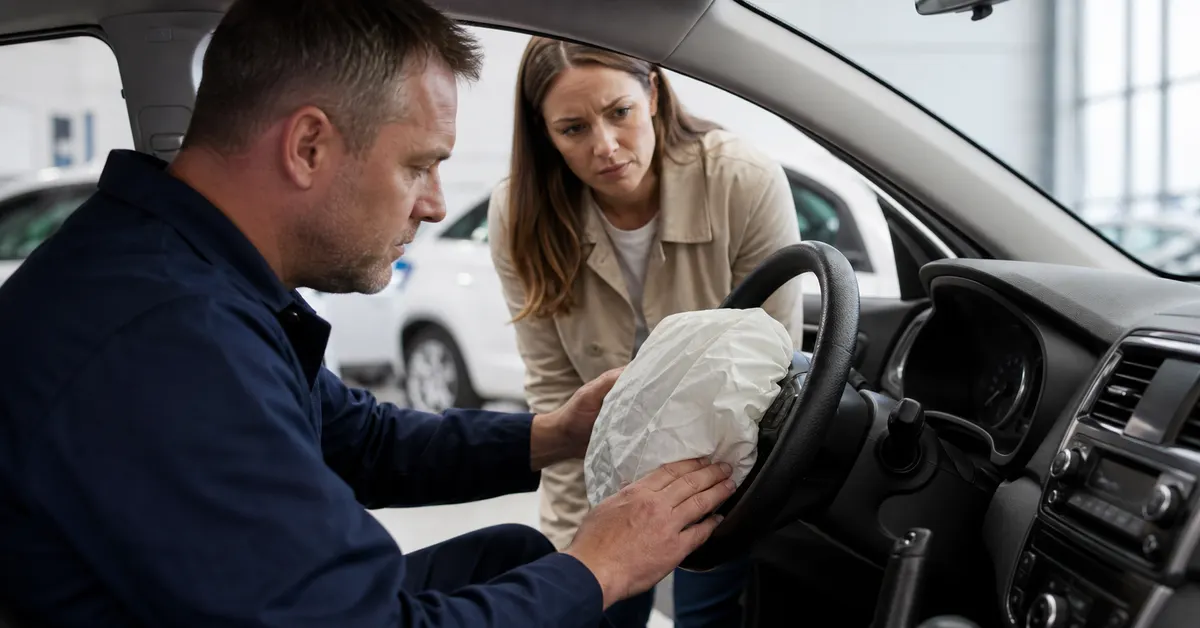
Counterfeit airbag warning: why it matters
Airbags are safety systems, not cosmetic parts. After a collision, improper repairs, missing components, or non-genuine parts can create major risk. Buyers should be extra careful with vehicles that have accident history, rebuilt titles, dashboard work, or unexplained warning lights.
Used car checks before buying
Start with the VIN and accident history, then check recall status through NHTSA. During inspection, confirm that the airbag warning light turns on briefly at startup and then turns off. Ask for repair invoices from a reputable repair facility and pair this step with the used car maintenance checklist.
Questions to ask the seller
- Has the vehicle ever had airbag deployment?
- Who completed the repair and are invoices available?
- Was the steering wheel, dashboard, or seat airbag area replaced?
- Does the airbag warning light behave normally at startup?
- Can an independent mechanic inspect the SRS system?
A safer inspection path for airbag concerns
If a used car has accident history or dashboard repairs, the airbag system deserves extra attention. A normal-looking interior does not prove the safety system was repaired correctly. A buyer should look for warning lights, mismatched panels, poor steering-wheel fitment, missing labels, or repair invoices that do not clearly identify the work performed.
The safest path is to pause the deal until a qualified mechanic or dealer service department checks the Supplemental Restraint System. This is especially important for rebuilt-title vehicles, heavily discounted listings, or cars sold with incomplete repair documentation.
When to walk away
- The seller refuses an independent inspection.
- The airbag warning light is covered, disabled, or stays on.
- Repair records are missing after a reported deployment.
- The title history does not match the seller’s explanation.
- The vehicle price is low but safety documentation is unclear.
Counterfeit airbag warning documentation check
A counterfeit airbag warning is most important when a car has crash history, rebuilt-title history, or interior repairs around the steering wheel, dashboard, seats, or pillars. The buyer should not rely on appearance alone because a dashboard can look clean while the restraint system still needs professional verification.
Ask for repair invoices that name the repair facility, the parts used, and the system inspected. If the vehicle history says an airbag deployed but the seller has no paperwork, pause the deal. The risk is not only resale value. It is occupant safety.
For broader safety education, compare the inspection with NHTSA resources and Carvul’s avoid buying a bad used car guide.
This article is designed to protect the buyer from a hidden safety risk. When documentation is weak, a lower price is not enough. Safety-system uncertainty should be resolved before the vehicle becomes a daily driver.
For publication, this article should stay careful and safety-focused. It does not diagnose a vehicle from photos. It tells buyers when to ask for documentation, when to request inspection, and when safety uncertainty is too high.
Documents that reduce airbag risk
A counterfeit airbag warning is strongest when the paperwork does not match the vehicle story. Ask for collision repair invoices, parts receipts, airbag module records, and any insurance documentation related to previous front-end or side-impact damage. A clean title does not always prove that no airbag repair happened, so the paper trail matters.
For U.S. buyers, the safer process is to combine history reports with a professional inspection. Ask the inspector to check dashboard warning lights, steering-wheel trim fit, seatbelt pretensioner status, airbag module codes, and evidence of non-factory repair. If the seller refuses an inspection, treat that as a reason to walk away or renegotiate strongly.
FAQ
Can I spot a counterfeit airbag by looking?
Not reliably. Some warning signs exist, but a proper inspection and repair records are safer.
Should I buy a used car with previous airbag deployment?
Only after confirming professional repairs, records, and a clean safety inspection.
What should I do if the airbag light stays on?
Treat it as a safety concern and have the system inspected before purchase or regular driving.
| Buyer check | What U.S. drivers should verify |
|---|---|
| Recall status | Use the exact VIN and confirm whether a repair is open, pending, or completed. |
| Cost impact | Check whether the update changes insurance, financing, resale value, or near-term repair planning. |
| Documentation | Save official notices, dealer repair records, and service receipts before buying or selling. |
| Next step | Contact the dealer, lender, insurer, or manufacturer only after verifying the source of the news. |
Related Carvul guides
- used-car inspection checklist
- used-car financing guide
- used-car insurance cost guide
- best car comparisons guide
- used-car maintenance guide
Carvul Newsroom Verification Notes
For this Counterfeit Airbag Warning story, the safest reader action is not to rely on a headline alone. U.S. owners should verify the exact vehicle by VIN, read the official recall language, and confirm whether the remedy is available before scheduling repairs or buying the vehicle used.
| Reader question | What to verify | Why it matters |
|---|---|---|
| Is my exact vehicle affected? | Use the VIN on NHTSA or the automaker recall page. | Model year alone is not precise enough. |
| Is the repair available now? | Ask the dealer whether parts and service instructions are ready. | Some recalls open before every dealer has parts. |
| Can I keep driving? | Follow the official safety instructions in the recall notice. | Some defects need urgent action, parking guidance, or limited use. |
| What if I am buying used? | Request repair records and check open recalls before payment. | Open safety recalls can change the risk of a used-car deal. |
Carvul recommends pairing this update with the used car inspection checklist and the VIN recall check guide before making a purchase decision.