
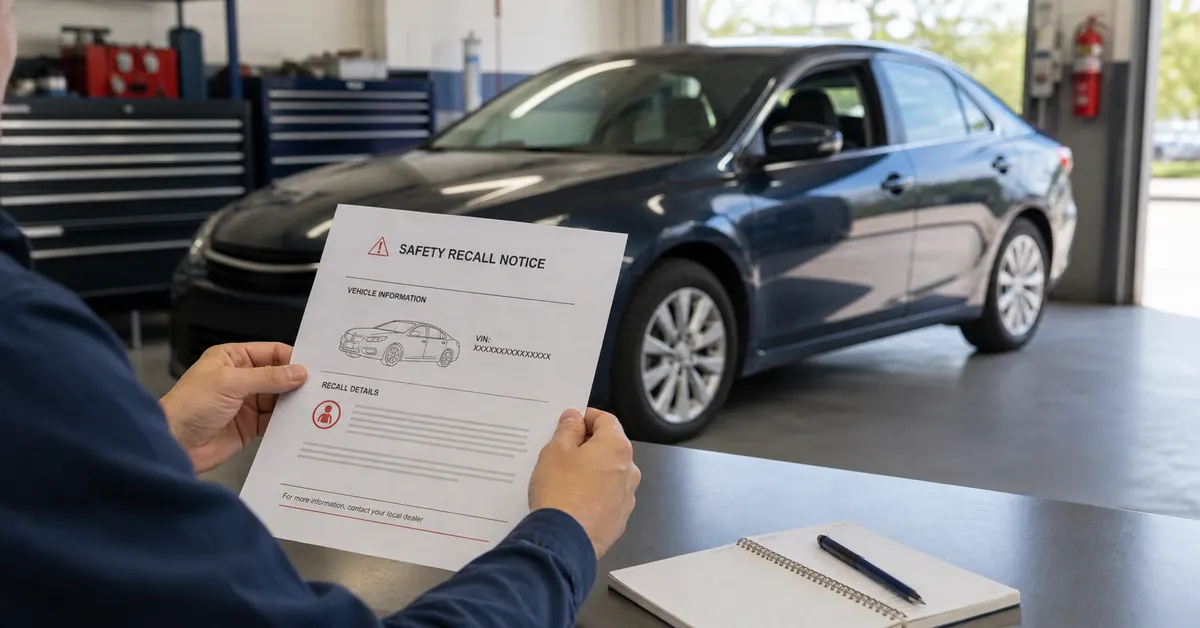
Toyota recall news can matter to a U.S. shopper even when the headline does not mention the exact car on a local listing. The safe move is to check the VIN, confirm whether the repair is open, and ask for documentation before buying or driving long distances.
Toyota recall news: what changed for buyers?
A recall headline usually names a brand, model, model year, or safety system. That does not automatically mean every similar vehicle is affected. Recalls can depend on production dates, equipment, parts suppliers, or specific VIN ranges. For that reason, a Toyota recall news update should be treated as a signal to verify, not as proof by itself.
For used-car buyers, the risk is simple: a vehicle can look clean, drive normally, and still have an open safety repair. That is why recall checking belongs in the same process as vehicle history, inspection, title review, and service records.
How to check a Toyota VIN for recalls
Start with the 17-character VIN from the windshield, driver-side door jamb, title, insurance card, or seller paperwork. Then check the VIN through the official NHTSA recall lookup and Toyota’s official owner or recall resources. If either source shows an open recall, call an authorized Toyota dealer and ask whether the remedy is available.
| Step | What to verify |
| 1. Copy the VIN | Use the exact 17 characters, not only the model name |
| 2. Check NHTSA | Confirm open recalls by VIN |
| 3. Check Toyota resources | Compare manufacturer recall status |
| 4. Call dealer service | Ask if the remedy and parts are available |
| 5. Save records | Keep repair invoice and completion date |
What U.S. used-car buyers should do next
- Ask the seller for recall repair documentation before purchase.
- Do not rely only on a listing description or verbal promise.
- Use open recalls as part of inspection and negotiation, not as an automatic rejection.
- For airbags, brakes, steering, fire risk, seat belts, or electrical issues, treat missing repair proof seriously.
- Link recall checks with the used car inspection checklist before visiting a seller.
Records to save after a recall repair
After the repair, save the dealer invoice, mileage, date, remedy description, and any follow-up notes. Add those records to the maintenance folder. Good documentation helps with resale value and gives the next buyer confidence that the safety issue was handled correctly.
If you already bought the car, keep checking for recall updates a few times per year. A good maintenance routine should include recall checks, tire inspection, brake condition, fluid levels, and battery health. Carvul’s used car maintenance guide can help connect recall work with regular ownership planning.
Questions to ask the Toyota dealer service department
After a Toyota recall news update, the dealer service department is often the best place to confirm the repair path. Ask whether the VIN is affected, whether the recall remedy is available now, whether parts need to be ordered, and how long the appointment usually takes. If the car is being sold by a dealer, ask whether the recall will be completed before delivery.
For a private-party sale, the buyer may need to schedule the repair after purchase. That does not automatically make the vehicle a bad choice, but it changes the timing and risk. A safety-related recall should be handled before the car becomes a daily driver, especially if the issue involves braking, steering, airbags, seat belts, fuel leaks, or fire risk.
Example: using recall news while shopping
Imagine a buyer finds a used Toyota sedan at a fair price. The listing says “clean title” and the test drive feels normal. Before making an offer, the buyer copies the VIN and checks recall status. If the VIN has no open recalls, the buyer can move on to inspection, price, financing, and insurance. If an open recall appears, the buyer asks the seller for proof of repair or asks a Toyota dealer when the fix can be completed.
This process keeps the buyer from making two common mistakes: ignoring a real safety issue or rejecting a good car because a headline sounded scary but did not apply to that exact VIN. The VIN decides the next step.
Helpful Carvul resources for recall-related buying decisions
Recall research works best when it is part of a larger buying checklist. Compare the recall result with the vehicle history report, title status, maintenance records, and pre-purchase inspection. For broader shopping help, use Carvul’s best used cars guide and the bad used car warning signs guide.
If the recall repair is complete, save the paperwork with oil changes, tire replacements, brake work, battery records, and inspection notes. A complete file makes ownership easier and can help when it is time to sell or trade the vehicle.
FAQ
Where should I check Toyota recall news first?
Use the exact VIN through NHTSA and Toyota’s official recall resources. News articles are useful for awareness, but VIN lookup gives the vehicle-specific answer.
Is an open recall a reason not to buy?
Not always. It depends on the safety system, remedy availability, seller transparency, and whether the repair can be completed before regular use.
Can a recall repair improve resale trust?
Yes. A completed recall with clear records can reassure future buyers that the vehicle was maintained responsibly.