
Carvul U.S. Buyer Guide
This used car maintenance guide helps U.S. drivers plan safer ownership, avoid surprise repairs, and decide which maintenance jobs matter first.
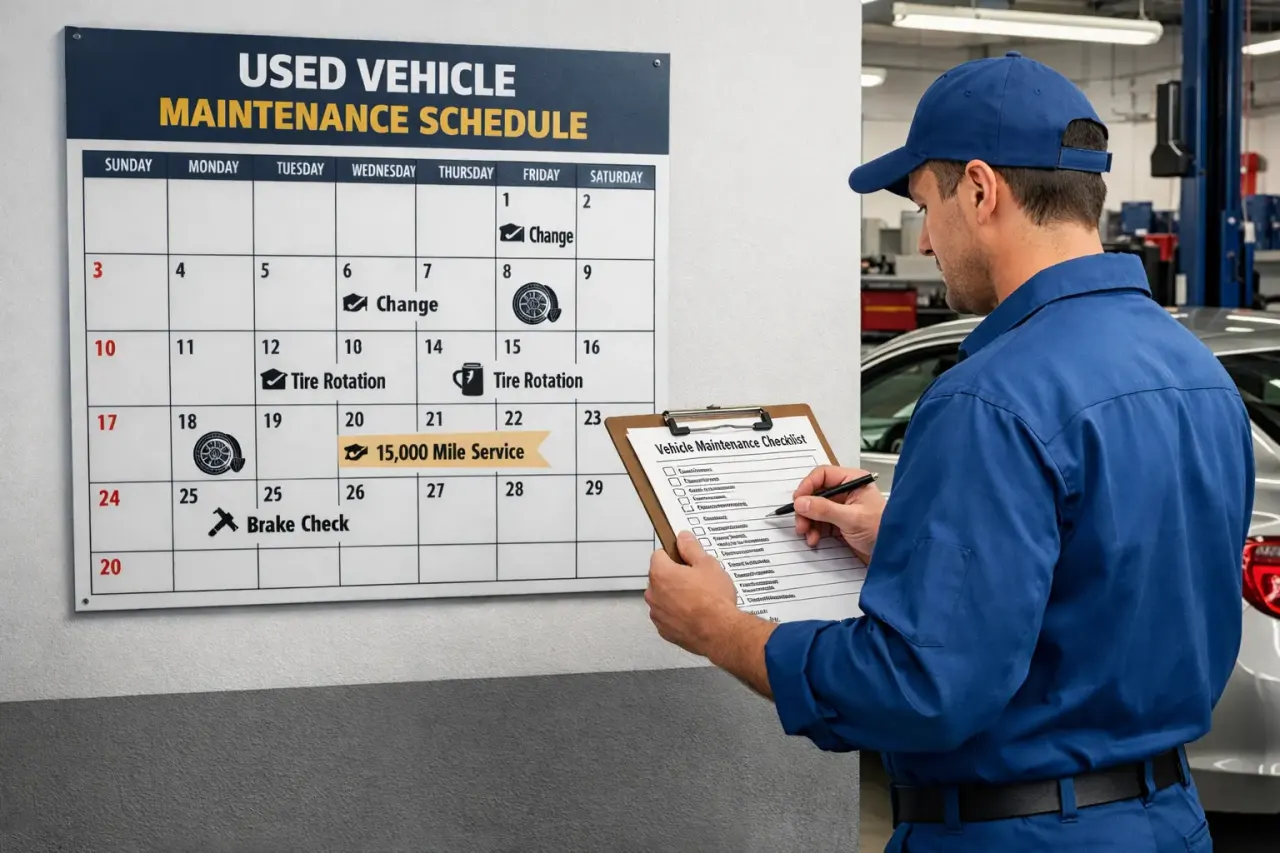
Best quick answer: used car maintenance guide works best when you use a clear checklist, fix safety items first, and keep maintenance records for every repair.
Table of Contents
Table of Contents
Key Takeaways
- Focus on real maintenance decisions, safety, and total ownership cost.
- Use practical U.S. driving conditions to plan service intervals.
- Use records, inspections, and mileage-based planning instead of guessing.
Why Used Car Maintenance Matters
A used car can be a smart buy, but the ownership cost depends on what happens after the sale. Maintenance protects safety, fuel economy, resale value, and the parts that are expensive to replace. For U.S. drivers, the best plan is simple: set a baseline in the first month, follow mileage intervals, and document every service.
This guide is built as the Maintenance hub for Carvul. Start here, then use the related checklists for oil, tires, brakes, battery, and 100,000-mile service.
The First-Month Baseline
After buying a used car, do not assume the previous owner followed the schedule. Check engine oil, coolant, brake fluid, transmission service history, tire condition, battery age, filters, belts, lights, wipers, and open recalls. If records are missing, treat basic services as due unless a trusted mechanic confirms otherwise.
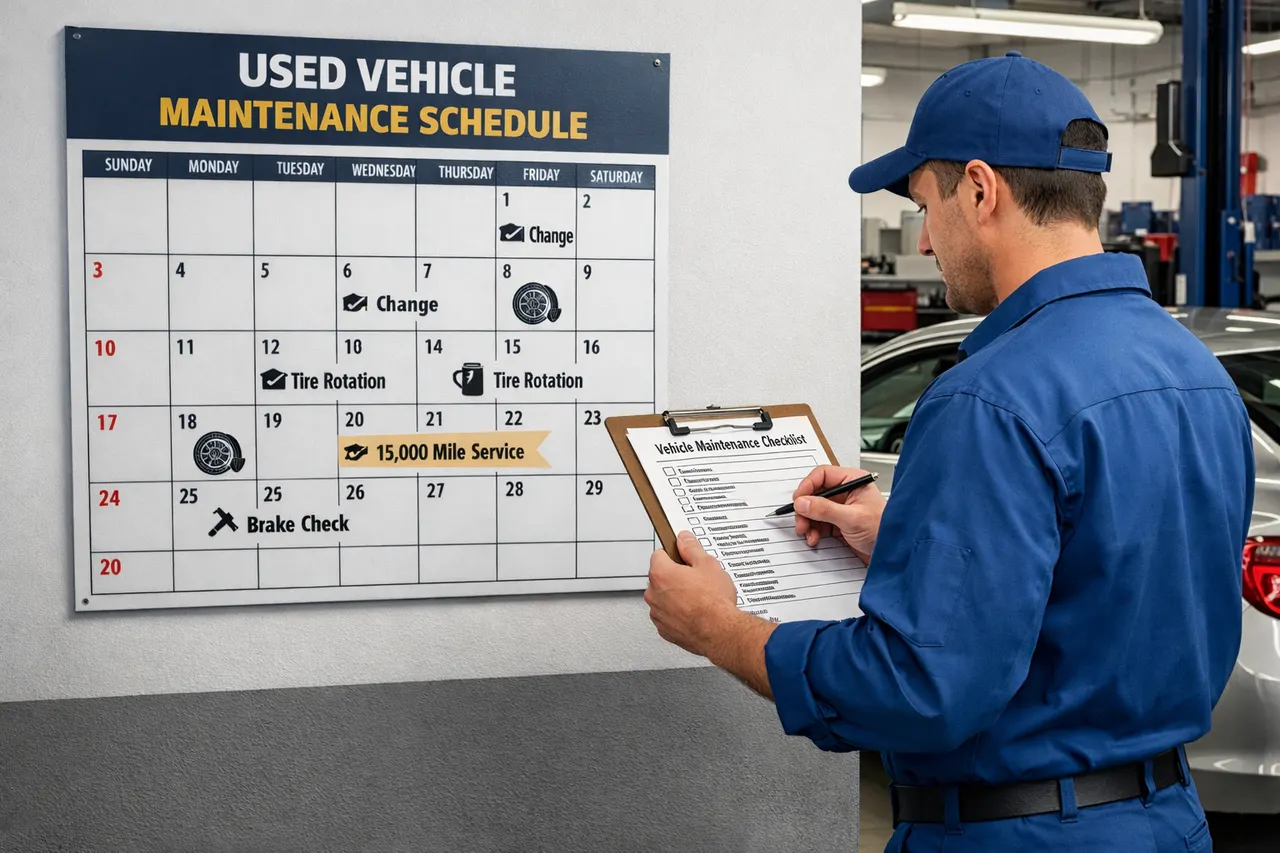
Maintenance Schedule by Mileage
Every vehicle has a factory schedule, but most U.S. used-car owners can think in three layers: monthly checks, 5,000 to 7,500-mile services, and larger 30,000-mile services. Monthly checks include tires, lights, fluids, and leaks. Regular services usually include oil, filter, tire rotation, and brake inspection. Larger services may include coolant, spark plugs, transmission fluid, belts, and suspension checks.
When to Use a Mechanic
DIY checks are useful, but brakes, steering, suspension, overheating, electrical faults, and warning lights deserve professional diagnosis. A small inspection fee can prevent a much larger repair bill.
Maintenance Records Help Resale
Keep receipts, dates, mileage, part numbers, and notes. Buyers trust a car with proof. Records also help you avoid duplicate work and spot recurring problems.
Helpful U.S. Safety Sources
For tire safety and recall checks, use official resources such as NHTSA. For used-car buying and warranty basics, the FTC consumer site is also useful.
How to Prioritize Maintenance Without Overspending
The safest way to manage used car maintenance is to separate work into three buckets: urgent safety items, reliability items, and comfort items. Urgent safety items include brakes, tires, steering, suspension, overheating, fuel leaks, and warning lights that affect drivability. Reliability items include oil service, filters, battery testing, coolant, belts, hoses, and spark plugs. Comfort items include noisy trim, cosmetic fixes, infotainment problems, and small interior repairs.
This order matters because many U.S. used-car buyers have a fixed monthly budget. A clean interior does not matter if the tires are unsafe. A new stereo does not matter if the car overheats in traffic. Put money where it prevents breakdowns and protects the people inside the vehicle.
Simple Maintenance Budget for U.S. Used-Car Owners
| Priority | Examples | When to handle it |
|---|---|---|
| Safety | Brakes, tires, steering, lights | Immediately |
| Reliability | Oil, coolant, battery, belts | First 30-90 days |
| Preventive | Filters, rotation, alignment checks | Scheduled by mileage |
| Comfort | Cosmetic and convenience repairs | After the car is stable |
What Makes Maintenance Different in the U.S.
Climate and driving style change the plan. Arizona heat is hard on batteries and cooling systems. Midwest winters are hard on tires, wipers, underbody components, and batteries. City driving creates more brake wear than steady highway driving. Mountain areas can stress brakes and transmissions. That is why the best maintenance guide is not only mileage-based; it also considers where and how the car is driven.
Common Mistakes to Avoid
- Buying parts before diagnosing the real problem.
- Ignoring small leaks because the car still drives.
- Skipping tire pressure checks until a warning light appears.
- Using price alone to choose a repair shop.
- Losing receipts that could help resale value later.
Questions U.S. Drivers Ask Before Spending Money
Most used-car owners are not trying to make the vehicle perfect. They want to know what is urgent, what is optional, and what can wait until the next paycheck. The best answer is to start with safety and reliability. If the car stops, steers, cools, charges, and holds tire pressure correctly, you can plan the rest of the work calmly.
Before approving a repair, ask three simple questions: does this affect safety, does this prevent a larger failure, and is there proof that the part is actually worn? A written estimate with measurements is stronger than a vague recommendation.
Maintenance by Mileage: Quick Reference
| Mileage or timing | What to check | Why it matters |
|---|---|---|
| Monthly | Tires, lights, leaks, fluids | Catches safety issues early |
| 5,000-7,500 miles | Oil, filter, tire rotation, brake lookover | Protects engine and tires |
| 30,000 miles | Filters, fluids, belts, spark plug guidance | Prevents age-related failures |
| 60,000-100,000 miles | Coolant, transmission guidance, suspension, timing belt if equipped | Controls big repair risk |
When to Stop Driving and Diagnose
Some symptoms should not wait for the weekend. Stop driving or get help quickly if the temperature gauge climbs, the oil pressure light appears, the brake pedal becomes soft, the steering feels loose, the tire sidewall bulges, or a check engine light flashes. These are not cosmetic problems. They can turn into engine damage, brake failure, tire failure, or a more expensive repair.
Trusted Resources for U.S. Owners
For safety items, use official information first. The NHTSA tire safety guide is useful for tire pressure, tread, and age basics. For used-car paperwork, warranty language, and buyer protections, the FTC used-car buyer guidance helps owners understand what was promised at purchase.
How to Build a Used Car Maintenance Budget
A strong used car maintenance guide should help the owner plan money before a breakdown happens. A simple method is to create three budgets: immediate safety repairs, routine monthly maintenance, and long-term preventive work. Immediate safety repairs include tires, brakes, lights, steering, overheating, and major leaks. Routine maintenance includes oil, filters, wipers, tire pressure, rotations, and inspections. Long-term preventive work includes coolant, spark plugs, belts, suspension refresh, and transmission-related service when the manual recommends it.
For many U.S. drivers, the best strategy is to keep a small maintenance reserve separate from the car payment and insurance. Even a reliable used car can need tires, a battery, or brakes during the first year. Planning for those costs makes the vehicle feel less stressful and keeps small issues from turning into emergency repairs.
DIY Checks vs Mechanic Work
There is a clear line between owner checks and professional work. Most owners can check tire pressure, lights, wipers, visible leaks, oil level, coolant level when the engine is cold, and service records. A mechanic should handle brake diagnosis, suspension noise, overheating, warning lights, fluid leaks, steering problems, airbag lights, and electrical faults. This split saves money without putting safety at risk.
Do not use DIY maintenance to guess at expensive problems. If a warning light appears, scan the car and diagnose the cause. If the car pulls, vibrates, or makes grinding noises, inspection is cheaper than replacing random parts.
Used Car Maintenance Guide by Ownership Stage
| Ownership stage | Main goal | Best maintenance action |
|---|---|---|
| First week | Find safety problems | Tires, brakes, lights, leaks, recalls |
| First month | Create a baseline | Oil, filters, battery test, inspection |
| First 6 months | Stabilize the car | Fix small leaks, worn tires, weak battery |
| Every year | Prevent big repairs | Review records, fluids, suspension, alignment |
Maintenance Records That Actually Help
Good maintenance records do not need to be complicated. Save the date, mileage, shop name, service performed, parts used, and receipt. If you do your own maintenance, save the parts receipt and write the mileage down. This helps future buyers, but it also helps you. When a shop asks when the battery, brakes, or oil were last done, you will not have to guess.
What This Maintenance Cluster Covers Next
This Carvul Maintenance cluster is built around the most common ownership questions: what to check after buying, what 100,000-mile service means, how oil schedules work, when brakes need replacement, how to judge battery problems, and how tire maintenance affects safety. Together, these guides help U.S. drivers move from random repairs to a planned ownership system.
How to Choose a Repair Shop for Used Car Maintenance
Choosing the right shop is part of maintenance. Look for clear estimates, written inspection notes, and a willingness to explain which repairs are urgent and which can wait. A good shop should not pressure you into every service at once. It should help you build a safe order of repairs based on the vehicle condition and your budget.
For a used car, ask the shop to separate diagnosis from repair. Diagnosis tells you what is wrong. Repair fixes it. Paying for accurate diagnosis can save money because it prevents guessing with expensive parts.
Final Used Car Maintenance Guide Rule
The best rule is simple: do not ignore safety, do not guess at warning lights, and do not lose records. If you follow those three habits, your used car maintenance guide becomes a real ownership system instead of a random list of repairs.
Related Maintenance Guides
- used car maintenance checklist
- 100,000-mile maintenance for a used car
- oil change schedule for used cars
- brake pad replacement cost for used cars
- car battery replacement warning signs
- used car tire maintenance guide
used car maintenance guide works best when the driver follows a clear inspection plan, fixes safety items first, and keeps records for every service.
Used car maintenance guide: practical owner note
A useful used car maintenance guide should turn scattered repair advice into a simple ownership plan. For U.S. drivers, that means checking safety items first, keeping service records, and using mileage, symptoms, and inspection results before approving expensive work.
The strongest used car maintenance guide is not about replacing every part at once. It helps the owner decide what must be fixed now, what should be scheduled soon, and what can wait until the car is stable.
A good used car maintenance guide should make ownership easier, not more confusing: check safety first, follow the schedule, keep records, and fix small problems before they become expensive.
FAQ
What is the most important used car maintenance step?
Create a baseline inspection after purchase so you know what has been done and what is still due.
How often should I check fluids?
Check visible fluid levels monthly and before long trips, especially oil, coolant, brake fluid, and washer fluid.
Should I follow mileage or time?
Use whichever comes first. Low-mileage cars still age, and fluids, rubber parts, and batteries can deteriorate with time.