
Car recall news matters because a headline is not enough. U.S. drivers need to know whether their exact VIN is affected, whether the repair is open, and what documentation to request before buying or keeping a vehicle.
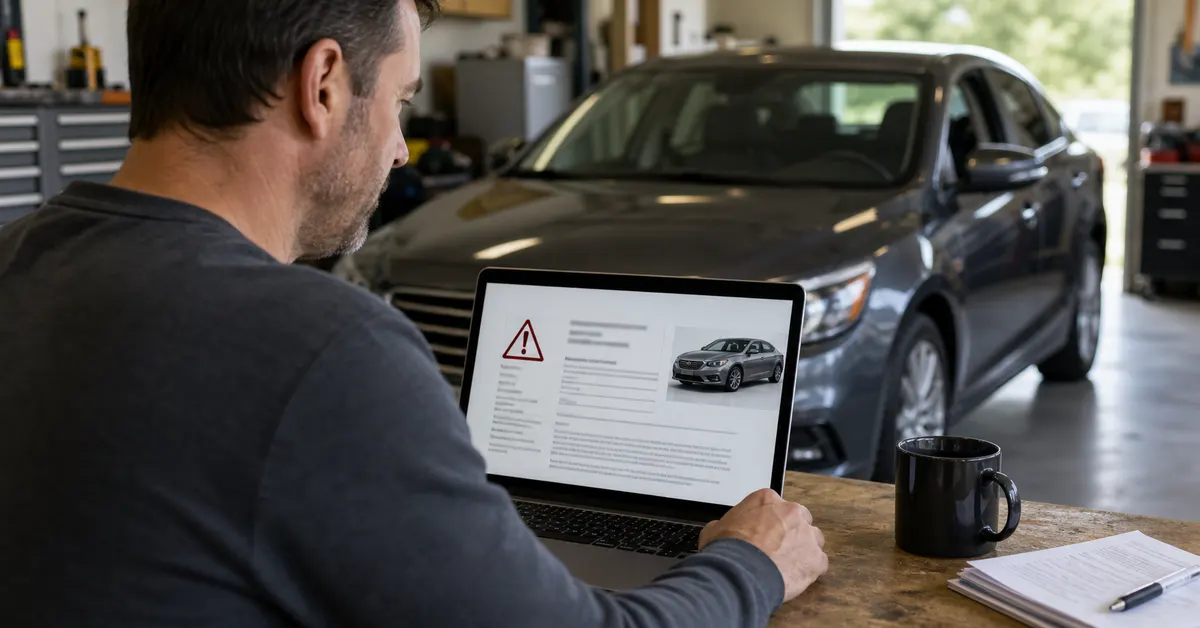
Car recall news: what happened?
A recall means a manufacturer or safety regulator has identified a potential safety-related defect or noncompliance. The headline can mention a model, year range, component, or risk. But the exact answer usually depends on the VIN. That is why recall research should happen before a used-car inspection, not after the paperwork is signed.
Who is affected by a recall?
Drivers should verify the vehicle through the official NHTSA recalls database and the automaker recall page. A model-year range in the news may include some vehicles but not others. Ask the seller for repair records and compare them with the used car maintenance checklist.
What U.S. drivers should do next
- Find the VIN on the windshield, door jamb, title, or insurance card.
- Run the VIN through NHTSA and the automaker recall page.
- Ask whether the repair is completed and get documentation.
- If buying, use open recalls as part of inspection and negotiation.
- For safety-critical items, call a dealer service department before driving long distances.
Example: how a recall headline becomes a buying decision
A shopper sees a recall headline for a compact SUV and finds a similar vehicle listed nearby. The right move is not to assume the listed car is affected. The shopper should copy the VIN, run it through the official recall lookup, ask the seller for service records, and confirm whether the remedy is available. If the repair is open, the buyer can ask the dealer service department how long the fix usually takes before committing to the vehicle.
This process protects the buyer from two common mistakes: ignoring a real safety issue or walking away from a good vehicle because of a headline that does not apply to that exact VIN.
Records to save after a recall repair
- Recall completion invoice from the authorized dealer.
- Date, mileage, and repair description.
- Any parts or remedy notes provided by the service department.
- Updated maintenance file for resale or insurance questions.
Car recall news mistakes to avoid
The biggest mistake with car recall news is treating a model name as proof. A recall may cover a production window, a specific plant, a component supplier, or only certain VINs. Another mistake is accepting a verbal promise that the repair was done. For a used car, the buyer should ask for paperwork and check the VIN independently.
If the recall involves brakes, airbags, steering, fire risk, seat belts, or electrical safety, make the repair status part of the purchase decision. A buyer can still like the vehicle, but the next step should be confirmation, not guesswork.
For wider safety context, compare recall findings with the NHTSA equipment safety information and Carvul’s used car inspection checklist.
For SEO and reader value, this article focuses on the action behind the headline: identify the exact vehicle, verify the VIN, and document the repair path. That makes the content useful for shoppers, owners, and anyone comparing a used car with possible safety history.
Car Recall News VIN Check Process
A strong car recall news process starts with the exact VIN, not only the model name. Many recalls apply to specific production dates, equipment packages, or component batches. A buyer should copy the VIN from the windshield, door jamb, title, or seller paperwork, then compare it with the official recall lookup before making a final decision.
If the VIN shows an open recall, the next step is to call an authorized dealer and ask whether the remedy is available. Some repairs can be completed quickly, while others may depend on parts availability. This matters for a used-car buyer because an open safety repair can affect timing, negotiation, and peace of mind.
| Recall check | What to confirm |
| VIN status | Open, repaired, or not affected |
| Repair remedy | Software, inspection, part replacement, or service action |
| Dealer timing | Appointment availability and parts status |
| Seller records | Invoice, mileage, and repair date |
What to Ask a Private Seller About Recall Repairs
Private sellers may not know whether a recall repair is still open. Ask for service records, the selling dealer name if available, and any repair invoices tied to the safety issue. If the seller cannot provide documentation, the VIN lookup becomes even more important. The buyer should not assume that a previous owner fixed everything.
When the issue involves airbags, brakes, steering, seat belts, fire risk, or electrical safety, treat missing documentation as a serious warning sign. The car may still be worth buying, but the repair path should be clear before money changes hands.
What to Do If Recall News Appears After Buying
- Check the VIN again through the official recall lookup.
- Contact an authorized dealer, not only an independent shop.
- Save emails, invoices, and appointment records.
- Avoid long trips if the recall involves a major safety system.
- Add the repair record to your maintenance file for resale value.
FAQ
Is an open recall always a reason not to buy?
Not always. But it should be checked, documented, and repaired before the vehicle becomes a daily driver.
Does a recall repair cost money?
Safety recall remedies are generally handled by the manufacturer, but drivers should confirm availability with an authorized dealer.
Can car recall news affect resale value?
Yes, especially if the repair is unresolved or the issue affects buyer confidence.